

Ukraine is seeking sovereignty in the space domain and wants to create Space Forces. But how long might it take? Spoiler: at least two-three years, according to experts and industry representatives.
In this edition:
Ukraine Moves Toward Creating Space Forces;
Ukrainian Mavic: First Impressions from the Front;
Russia upgrades Iskander seekers to hit Kyiv bridges;
And 10+ additional developments in Ukraine and Russia.
Subscribe to my newsletter to receive the latest weekly updates. VIP subscribers also get access to my weekly Ukraine Drone Brief, which brings 20–30 updates on drone warfare in Ukraine and Russia, drawn mostly from Ukrainian- and Russian-language sources. It’s an essential read for anyone in the defence and security sector who doesn’t want to miss key technological developments and cooperation deals.
Ukraine Moves Toward Creating Space Forces
Ukraine is pushing for sovereignty in space and has taken one more step toward creating Space Forces, a new branch that would serve as the “single window” for all of the country’s military space work. But setting up the institution is the easy part. Reaching real satellite sovereignty will be a long technological road.
On November 9, Ukraine’s parliament passed a bill in first reading to create Space Forces as a new branch of the Armed Forces. The bill still has to pass further readings before it becomes law. As reported by Deutsche Welle, the new branch is meant to give Ukraine its own capabilities in several areas, such as satellite reconnaissance and secure satellite communications
The days after the vote, on 12 November, President Zelensky said Ukrainian units again had spent several days seeing systematic Starshield speed limits of 161 km/h along the whole front line and in occupied territories. He said this made it much harder to intercept Russian jet-powered drones, and that some targets had already got through because interceptors could not reach the speeds they needed.
Another problem for Ukraine’s air defence is Russia’s Oreshnik missile. Its warheads separate outside the atmosphere, so only space-level countermeasures could stop them, not conventional air defence. The responsibility of the Air Force ends at the edge of the airspace, and it has no systems that can hit targets above about 20–30 km.
All these problems need to be addressed by one body coordinating all defence space projects. The Space Forces could fill that role as customer, operator and integrator, and would also write doctrine and train personnel. According to MP Fedir Venislavskyi, one of the bill’s co-authors, British and American space commands told Ukrainian delegations that they had “no one to talk to” in Ukraine on space matters.
Oleh Katkov, editor-in-chief of AIN.UA, told Ukrainian Radio that Ukraine should partner with state-led initiatives rather than commercial providers. Military space capabilities, he says, cannot depend on private business, at least not to any significant degree.
In terms of personnel, according to Katkov, Ukraine already has military units whose work will form the core of the new branch. Ukraine was monitoring space well before Russia’s full-scale invasion, and it has publicly shown radar stations in service that can track objects in orbit. The units operating those radars would naturally move into the Space Forces. The same goes for existing intelligence capabilities, including a Ukrainian satellite working in the SAR (synthetic aperture radar) band. The force will grow over time, but Katkov does not expect it to be large. He estimates it at around 1,000 people, possibly 1,500 to 2,000.
However, experts warn that setting up the institution can happen quickly, but building real space capabilities will take much longer. For instance, launchers are in short supply worldwide, and a rocket has to be booked about two years in advance. Katkov cautions that Ukraine cannot simply copy the approaches of China, Russia or France, because its budget is much different. France, for instance, operates its own spaceport in South America. Ukraine will not have a launch site of its own, so it must look for entirely different paths.
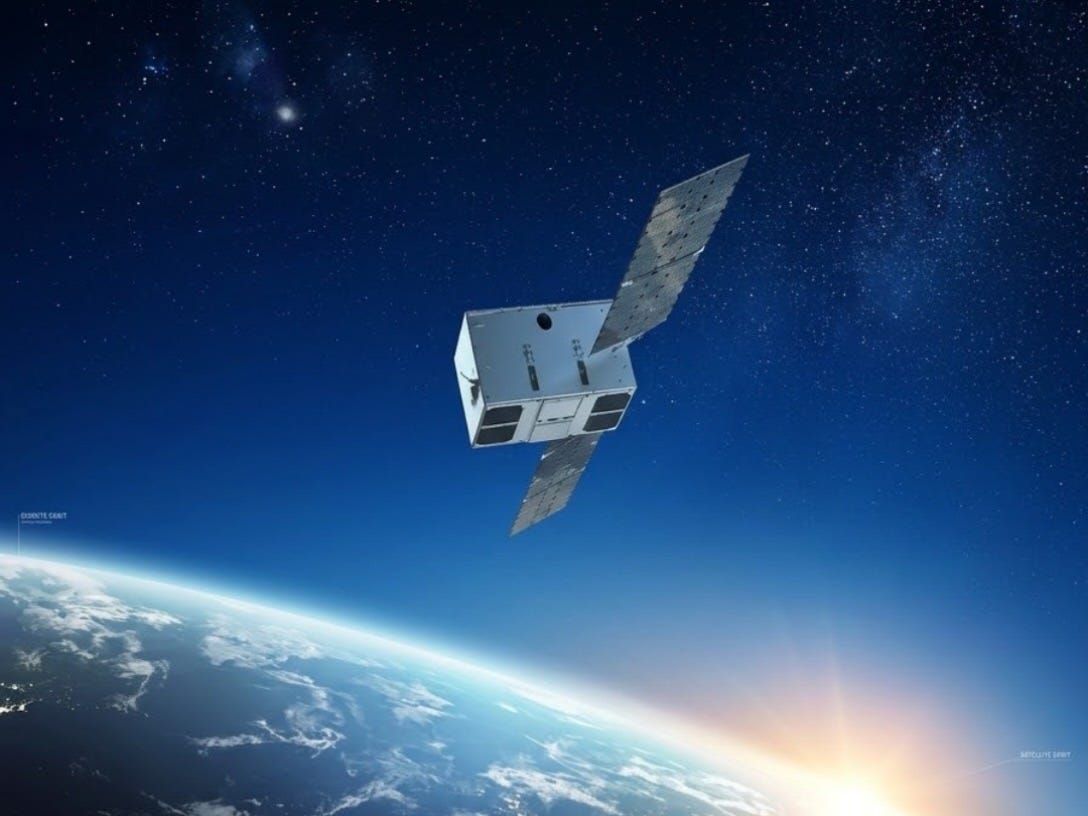
In early October, Ukrainian communications equipment manufacturer Himera and Danish space company GomSpace launched their first communications satellite into orbit as part of the Obria project. The first results will be ready in a few months. Dmytro Khmara, vice-president for satellite technologies at Ukrainian company HIMERA, said that even in an optimistic scenario, deploying the OBRIA network will take at least two to three years.
Last week’s developments in cyber warfare (see my report here) and now the creation of Ukraine’s Space Forces point to the same lesson: success on the modern battlefield requires integrating all warfare domains. For several years, our attention has centred on drones and their multi-domain operations. Yet the recent Starlink/Starshield restrictions have shown how fragile those operations become without sovereignty in space.
Ukrainian Mavic: First Impressions from the Front
I recently covered the first specifications of the Slavic, a drone from Ukrainian manufacturer Vyriy Industries. It’s pitched as a Ukrainian tactical quadcopter meant to gradually replace DJI products. The first reports from combat use are now coming in.