

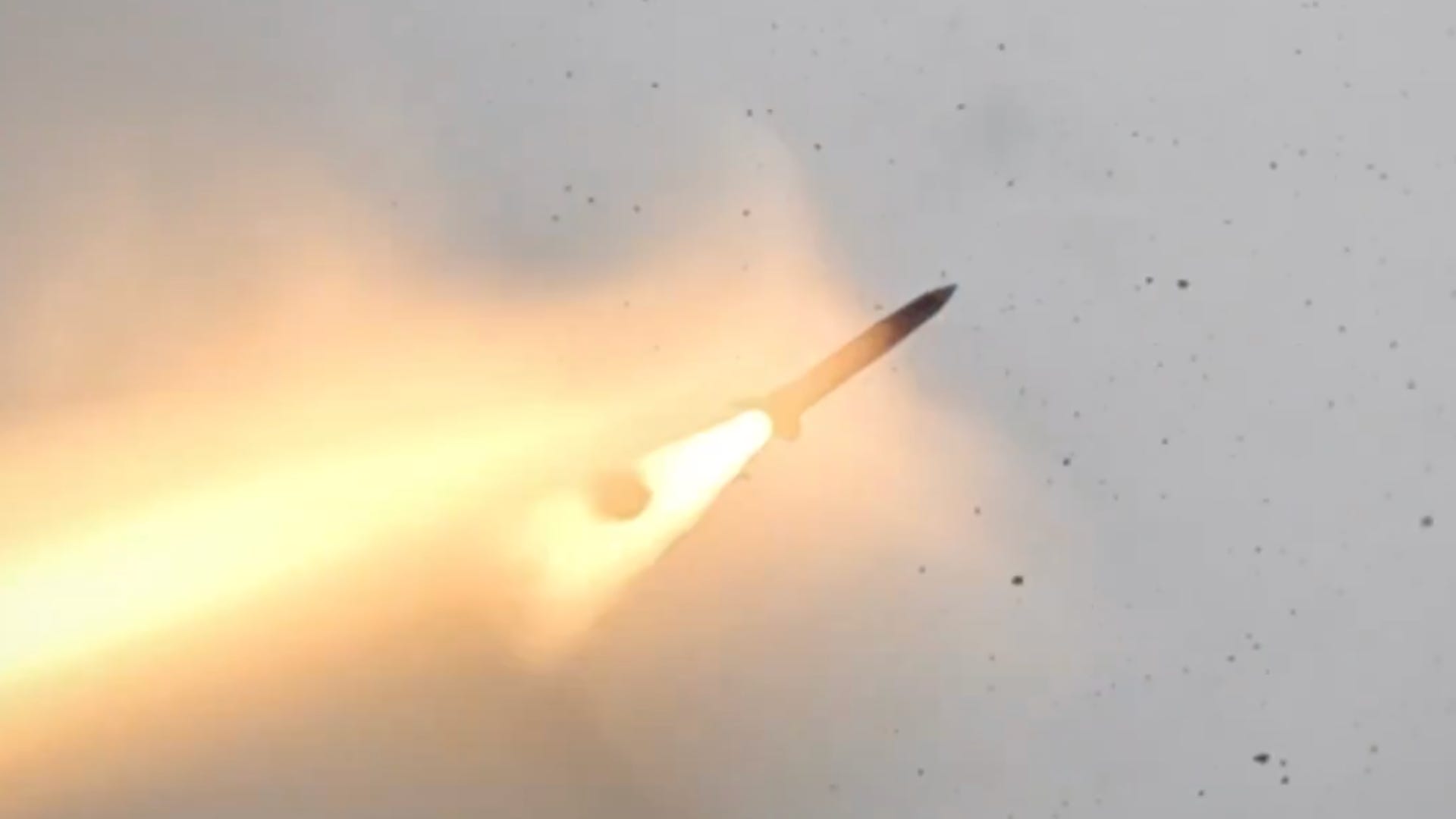
In the face of a global shortage of anti-ballistic interceptors, Ukraine is testing its domestic technology, which is expected to be cheaper and more scalable than existing solutions. The system will be based on already available technologies, which should shorten the development timeline.
As in many other areas of this war, Ukraine is demonstrating that there may be faster and more practical solutions to existing problems. Rather than relying solely on delayed allied supplies, Ukraine is increasingly focused on developing its own capabilities.
In this edition:
Anti-Ballistic Interceptors in Ukraine;
Tanks Are Adapting, Not Disappearing, Despite the Drone Threat;
How UFORCE, a Ukrainian-Origin Defence Integrator, Plans to Become the Next Anduril;
and 10+ additional developments in Ukraine and Russia.
Last week, my article on ground drones was finally published in the UK-based Defence Procurement International. For this piece, I interviewed the Third Army Corps’ NC13 — currently one of the leading Ukrainian units in employing ground drones — as well as the Ukrainian company DevDroid. If you want to understand what the future of ground drone warfare may look like, you can read the article here, page 34.
Thank you for reading and supporting my work!
Anti-Ballistic Interceptors in Ukraine
Last week, Ukrainian Fire Point demonstrated tests of the FP-7.x missile, which is expected to become the basis for Ukraine’s FREYJA anti-ballistic interceptor.
The FP-7.x has a flight speed of 1,500–2,000 metres per second and is 7.25 metres long. Tests of this type of missile were already shown in February 2026, when it was described as being designed for rapid engagement of targets at medium ranges.
Back in April 2026, Fire Point announced plans to deliver a new air-defence system to the Ukrainian army as early as 2027, capable of intercepting ballistic missiles. At the time, the Chief Engineer Shtilerman said the system would provide a cheaper alternative to Patriot, with each interceptor costing less than $1 million.
Ukrainian analysts at Defense Express note that one of the key factors determining whether the system can intercept ballistic targets such as the Iskander-M will be the FP-7.x's ability to perform intensive maneuvers.
For effective and reliable interception of ballistic missiles, it is not enough for an air-defence missile to simply explode nearby. It must accurately strike the warhead directly, using the so-called “hit-to-kill” principle. Such a high level of accuracy must be achieved even when the enemy ballistic missile is actively maneuvering at speeds of several Mach.
The entire surface-to-air missile system will be assembled from existing solutions already available in Ukraine and Europe. This should significantly reduce both the development timeline and the overall cost of the program, which is critically important for Ukraine at this stage.
The Russian military channel Voyennyi Osvedomitel suggests that the FP-7 may no longer be viewed by Ukraine primarily as a ballistic missile for striking ground targets. Instead, it may have been redirected for use within an air-defence system, while the more powerful and longer-range FP-9 may become Ukraine’s full-fledged ballistic strike missile.
Last week, the Chief Engineer of Fire Point said that the first FP-9 strike on Moscow could take place “in the summer or, at the latest, in early autumn.” Stillerman added that the company will initially produce around a dozen test missiles. After the weapon is codified, Fire Point plans to expand ballistic missile production. Stillerman also suggested that potential targets in Moscow could include energy facilities.
Russian bloggers noted that Ukraine’s possession of its own ballistic missiles — even if they are not the most advanced — creates a serious threat to targets near the front line and to critical infrastructure in rear/frontline areas, because not all air-defence systems are capable of effectively countering such targets.
According to Bloomberg report, Ukraine has asked Germany to provide dozens of additional Patriot interceptor missiles from its own stockpiles. Ukraine proposed a deal under which it would receive the missiles now in exchange for supplying Germany with interceptor drones in the future.
Defense Express wrote that even if Ukraine receives all available Patriot interceptor missiles, it will still not be enough for its defence needs.
According to Ukrainian intelligence data, if we consider only the types of missiles that require Patriot systems for interception, Russia produces the following quantities each month:
9M723 ballistic missiles for the Iskander-M system: 60 units
PM-48U ballistic missiles for S-300/400 systems: 40 units
Kh-47M2 Kinzhal aeroballistic missiles: 10 units
Tsirkon hypersonic missiles: up to 3 units
In total, Russia produces up to 113 ballistic, aeroballistic, and hypersonic missiles per month.
At the same time, throughout all of 2025, the U.S. company Lockheed Martin produced 620 PAC-3 MSE interceptors — around 51–52 missiles per month. I
Even if Washington radically changed its policy and sent every newly produced interceptor to Ukraine, this would still not be enough. This remains true even under a 1:1 interception ratio, which Ukraine’s Air Force currently tries to use, despite the standard practice of launching at least two interceptors per target.
Meanwhile, actual deliveries of Patriot interceptors to Ukraine are already complicated by the fact that the United States wants to replenish its own stockpiles after the war with Iran, during which it reportedly used 45% to 61% of its Patriot interceptor stocks. Bahrain, Kuwait, Qatar, the UAE, and Saudi Arabia have similar concerns, as they also reportedly fired several thousand Patriot interceptors.
According to the analysts, interceptor missiles alone cannot be the answer to Russia’s ballistic missile threat. Without strikes on launchers, missile stockpiles, and production facilities, no missile-defence system will be able to cope with a threat of this scale.
Tanks Are Adapting, Not Disappearing, Despite the Drone Threat
According to Russian sources, despite the sharply increased role of drones in modern combat, tanks remain an important means of firepower.