A mix of good and not so good developments unfolded in Ukraine last week.
First, Ukrainian troops have been retreating from Russia’s Kursk Oblast. In the early stages of an operation that began in August 2024, the Armed Forces of Ukraine managed to gain control of approximately 1,300 square kilometers (500 square miles) of Russian territory. However, due to recent shifts in the U.S. administration and logistical challenges, sustaining this operation has become unfeasible.
On the other hand, Ukraine’s defense sector has achieved new milestones. The first thousand drones fully produced from local components have been announced, emphasizing the country’s growing self-reliance. Ukraine has successfully used the domestic Neptune long-range missile against Russian infrastructure.
Additionally, the United States has resumed military transfers to Ukraine—but will it be enough to restore the trust of Ukraine and European partners?
Military Transfers and Cooperation Between Ukraine and Its Partners
On March 11, the United States resumed the supplies of military aid and intelligence sharing with Ukraine following the successful meeting between the US and Ukraine delegations in Saudi Arabia.
Reuters reported citing its sources, that the U.S. is set to restart deliveries of Ground-Launched Small Diameter Bombs (GLSDB) to Ukraine following enhancements designed to improve their resistance to Russian jamming. Over the past few weeks, 19 GLSDBs were test-fired to evaluate the effectiveness of recent upgrades. The GLSDBs could return to the battlefield within days, as a stockpile is already available in Europe. The last recorded use of these weapons by Ukrainian forces was several months ago.
At the same time, Ukraine faces shortages of deep-strike missiles and air defense missiles.
According to reports, Kyiv no longer has any of the longer-range Army Tactical Missile System, or ATACMS, missiles. The U.S. official said the U.S. provided fewer than 40 of those missiles overall and that Ukraine ran out of them in late January.
Additionally, Ukraine approached the Italian and French governments with an urgent request for additional Aster-30 missiles for Samp-T air defence batteries, as the existing stockpile is nearly depleted. Ukrainian authorities had been requesting Italy and France for at least 50 Aster-30 missiles for several weeks. However, the Italian government is reluctant to make a decision, as its own stockpile is close to reaching the untouchable reserve level. France has larger reserves, but it also faces certain limitations.
Last week, Franco-Italian SAMP/T air defense system was successfully used to shoot down a Russian Sukhoi warplane for the first time, marking a significant milestone in its fight against Russian air superiority. The SAMP/T, Europe’s answer to the U.S. Patriot system, provides a much-needed alternative as Ukraine faces an uncertain future with U.S. military aid in question.
However, SAMP/T batteries are in short supply, both in Ukraine and across Europe, making additional deliveries difficult in the near term.
Additional developments:
A German parliamentary coalition has agreed to allocate 3 billion euros (approximately $3.2 billion) in new military aid to Ukraine as part of a plan to dramatically scale up Berlin's defense spending, incoming chancellor Friedrich Merz announced on March 14.
On March 13, Sweden presented an artillery package worth approximately 300 million USD to Ukraine. Sweden will procure and donate 18 additional Archer artillery systems and 5 ARTHUR (artillery hunting radar) systems to Ukraine. The Swedish Archer is one of the latest fully automated wheeled self-propelled howitzers (SPH) in the 155mm caliber class, featuring a 52-caliber barrel. This allows for a firing range of 30 to 50 km.
Finland announced its 28th military aid package for Ukraine, valued at approximately 200 million euros ($217.4 million). The package includes artillery ammunition.
Ukraine received the first tranche of 2.5 billion CAD (close to 1.7 billion USD) promised funds from the proceeds of Russia’s frozen Canadian assets. These funds will go directly toward Ukraine’s priority budget needs.
Recently, the Portuguese Ministry of Defense published the list of military aid provided to Ukraine. The most notable item on the list was the transfer of eight SA 330 Puma helicopters to Ukraine at the end of 2024, which was not revealed earlier. According to Defense Express, it is likely that the SA 330 Puma helicopters in Ukraine will serve the same roles as they did in Portugal—transportation and search-and-rescue operations. However, this helicopter can also be armed with onboard 7.62mm machine guns and 20mm mounted automatic cannons.
Domestic Defense Production, Joint Ventures and Internal Affairs
Ukraine prioritizes the localization of its defense production by increasing the share of domestically produced components in final products.
Last week, we saw an announcement of the first 1,000 FPV drones assembled exclusively from local components. The drones were produced by the Ukrainian company Vyriy Drone.
According to their recent interview with Forbes Ukraine, published just at the beginning of March 2025, full localization makes their product 3,000 UAH (72 USD) more expensive. The company was able to quickly localize some components such as frames and propellers (parts that do not contain electronics). As for electronics, Ukrainian manufacturers could also meet the market demand, but this potential is currently hindered by the VAT taxation system.
On March 14, the CEO of the Ukrainian Council of Defense Industry underlined the ongoing issues with VAT taxation: “Ukrainian FPV drones are not more expensive than Chinese ones. But there’s a problem – Chinese components are exempt from VAT, while Ukrainian ones are not. This needs to be fixed”. Ukraine’s goal for 2025 is to produce 4.5 million drones.
Interestingly, localization estimates from the state and private sectors differ. A representative from the Ministry of Defense of Ukraine stated “Complete localization of drone manufacturing is not achievable, as some countries specialize in manufacturing particular components”. Apparently, Ukraine's private sector is more optimistic.
For the context, at the end of February 2025, a coalition of private defense companies formed the Ukrainian Council of Defense Industry—a platform designed to establish effective cooperation between businesses and state institutions. The council's key objectives include advocating for the interests of Ukrainian defense producers at the state level, supporting the development of Ukrainian defense industry companies in national and international markets, and creating a platform for experience exchange. Ihor Fedirko was elected as the CEO of the Council.
Additional developments:
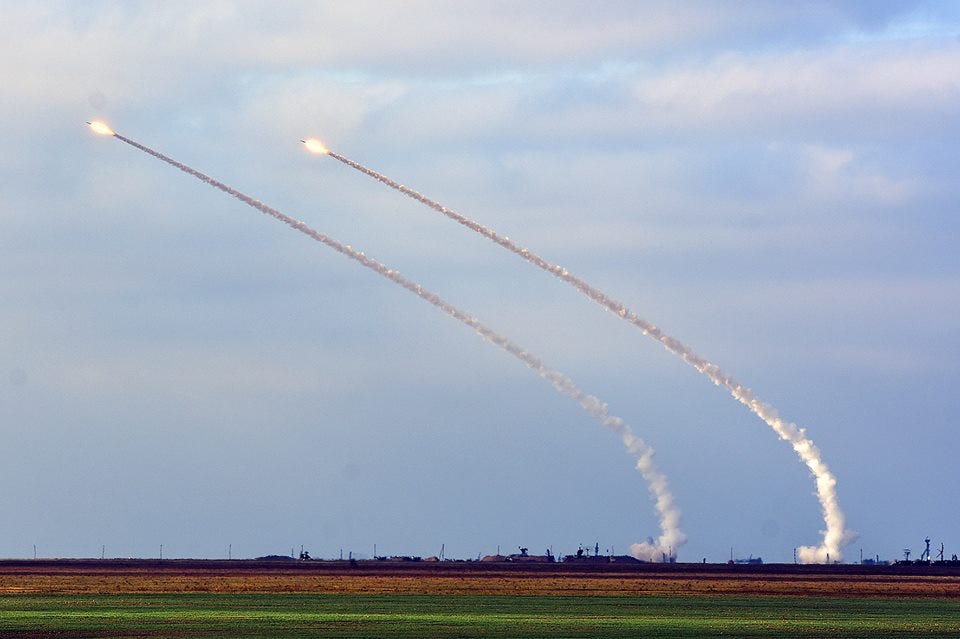
Ukraine’s long-range Neptune missile was tested in combat according to President Zelensky. Its range is 1,000 kilometres. Reportedly, it was used in a strike on an oil refinery in Tuapse, southern Russia, approximately 450 km from the front line in Ukraine.
Neptune is called by experts “by far the most mature of these large missile projects”, compared to other long-range missiles announced by Ukraine. It was a Neptune that struck and sank the Russian cruiser Moskva back in April 2022.
Ukrainian Skiftech has become the first MilTech company from Ukraine to secure a contract with the U.S. Army to develop laser simulators. Skiftech is not the only company involved in this project – alongside it, leading global companies have joined the contract, including General Dynamics Mission Systems, Lockheed Martin, Cubic Defense, Saab, Athena Technologies, Cole Engineering Services, Mettle Ops, Ravenswood Solutions, and Vertex Aerospace.
The Prague-based conglomerate, Colt CZ, has set up assembly of its Bren 2 assault rifles inside Ukraine under the name “Sich”. Today, Colt CZ can assemble 400 of their Bren 2 Siches per day in Ukrainian factories. The company’s goal is to “get rid of Ukrainian dependence on Soviet weapons. The Sich offers swappable components for alternating between Soviet and NATO calibers.
The Swedish defense company Saab and Ukraine’s Radionics signed a memorandum of intent to establish a strategic partnership in military electronics. The collaboration will focus on the joint development and maintenance of sensor systems and electronics, leveraging the strengths of both companies.
Ukrainian Defense Minister Umerov signed a memorandum of understanding with German defense manufacturer Diehl Defense to triple the supply of IRIS-T air defense systems and missiles to Ukraine and establish longer-term industrial projects that will strengthen Ukraine's air defense.
Leading companies of the Belgian military-industrial complex are actively establishing ties with Ukrainian partners. The parties are making progress in preparing for joint production, the Ambassador of Belgium stated.
Due to bureaucracy within the Defense Procurement Agency, Ukraine and the Czech Republic have been unable to start the production of 155mm ammunition - the Defense Express reported. Nearly six months have passed, yet, as it turns out, the Defense Procurement Agency of Ukraine’s Ministry of Defense has not placed any orders for these munitions. Bureaucratic delays within the ministry continue to stall the production process, and the company currently plans to begin manufacturing only later this year—provided an order is placed.
The Ukrainian 3D-printing organization, WinUaHub, announced they provided 8,000kg of 3D-printed objects to the Ukrainian forces in February alone (FPV assembly components, Mavic and Autel parts, heavy bomber components, shrapnel bombs, tail fins (stabilizers)).
Major Developments on the Battlefield and Beyond
Ukrainian troops retreat from Russia’s Kursk oblast, but the retreat is organized. Zelensky stated that the Ukrainian troops in Russia are not encircled, contrary to what Trump has said, and the operation in Kursk has reached its goals.
On March 16, Ukraine’s General Staff has released a map showing the complete withdrawal of the Ukrainian Armed Forces from the town of Sudzha.
On the other side, the Russian army is amassing forces to launch an attack on the Ukraine’s Sumy region.
The French Air and Space Forces conducted a reconnaissance flight over the Black Sea. This activity was tracked by the Flightradar24 monitoring service and the Itamilradar (X) project.
Seventy-four drones were shot down on approach to Moscow in the early hours of March 11, marking the largest drone attack against Russia's capital during the full-scale war. The strike occurred as Ukrainian and U.S. delegations were going to meet in Saudi Arabia to discuss possible peace terms with Russia.
On March 14, two Russian gas compressor stations (the Davydovskaya gas compressor station (Tambov Oblast) and the Novopetrovskaya gas compressor station (Saratov Oblast)) and an S-300/S-400 missile depot near Radkovka (Belgorod Oblast) in Russia have been hit by Ukrainian Security Service (SSU) drones.
Also, Ukrainian drones struck the Tuapse oil refinery in Russia's Krasnodar Krai overnight on March 14, setting fire to a gasoline storage tank. Reportedly, the Neptune missile was used in this strike.
Other news:
Key results of the US-Ukraine meeting in Saudi Arabia on March 11:
Ukraine agreed to a US proposal for an immediate, interim 30-day ceasefire, renewable by mutual agreement. However, this ceasefire is contingent on Russia's acceptance and full implementation. The US will communicate to Russia that its reciprocity is essential for achieving peace.
The US will resume security assistance to Ukraine and lift the pause on intelligence sharing.
Discussions on humanitarian assistance will begin, including POW exchanges and the return of forcibly deported Ukrainian children.
Both nations committed to long-term security and economic agreements, including the development of Ukraine's vital mineral resources.
US Secretary of State Marco Rubio said he would present the ceasefire offer to Russia and that "the ball is in their court".
Russia is ready to agree to the U.S.-proposed ceasefire in Ukraine but demands guarantees that Kyiv will not mobilize or train troops, nor receive military aid during it, Putin said on March 13.
Ukraine has drawn up a series of red lines - The Independent reports. These include:
No further territory to be ceded, despite Putin’s desire to take four Ukrainian regions partially occupied by the Russian military since 2014
The return of thousands of Ukrainian children abducted by Russia
The return of thousands of civilians illegally held by Russia, who are not considered Prisoners of War and so would not be included in PoW exchanges
A need for international security guarantees, should Putin infringe any ceasefire deal
Trump and Putin are expected to speak this week about ceasefire terms.
The UK and France lead “the coalition of the willing” - the group of countries committed to working together on the ceasefire deal with Ukraine, including the possibility of sending the peacekeeping troops. This approach allows NATO members to act in a group but not under the NATO umbrella, avoiding vetoes from member states who don't approve or don't wish to be involved (like Hungary or Slovakia).
On March 15, the UK Prime Minister Starmer held a call with international leaders in the Coalition of the Willing. He announced plans to deploy a peacekeeping contingent of approximately 10,000 troops to Ukraine. About 35 countries have agreed to provide weapons and support for the peacekeeping operation in Ukraine.
Italy does not plan to send peacekeepers to Ukraine. It will continue to work with European and Western allies to "define credible and effective security guarantees" for Ukraine. Poland and Germany are also among those not expected to send troops as peacekeepers.
Opinion and Analysis
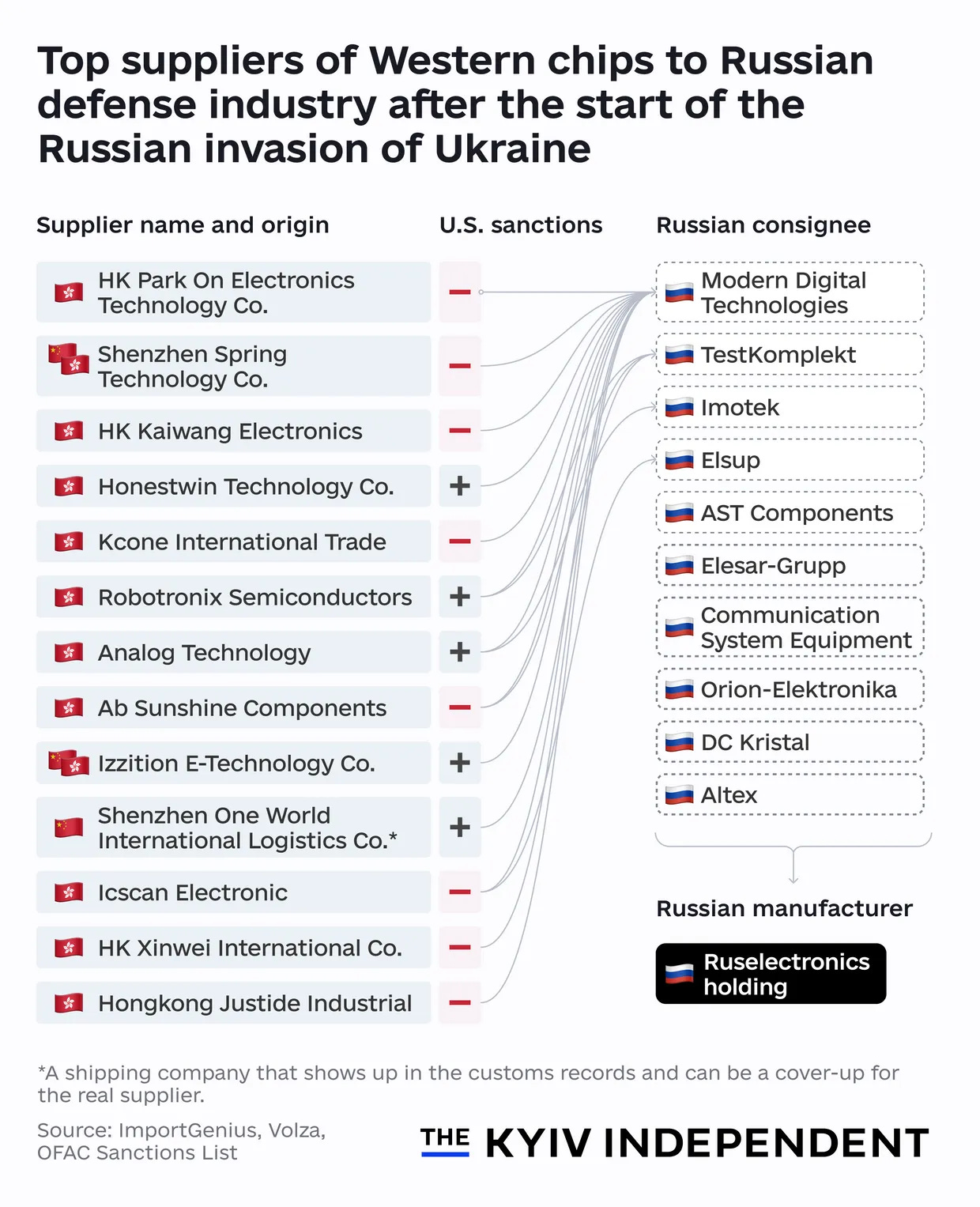
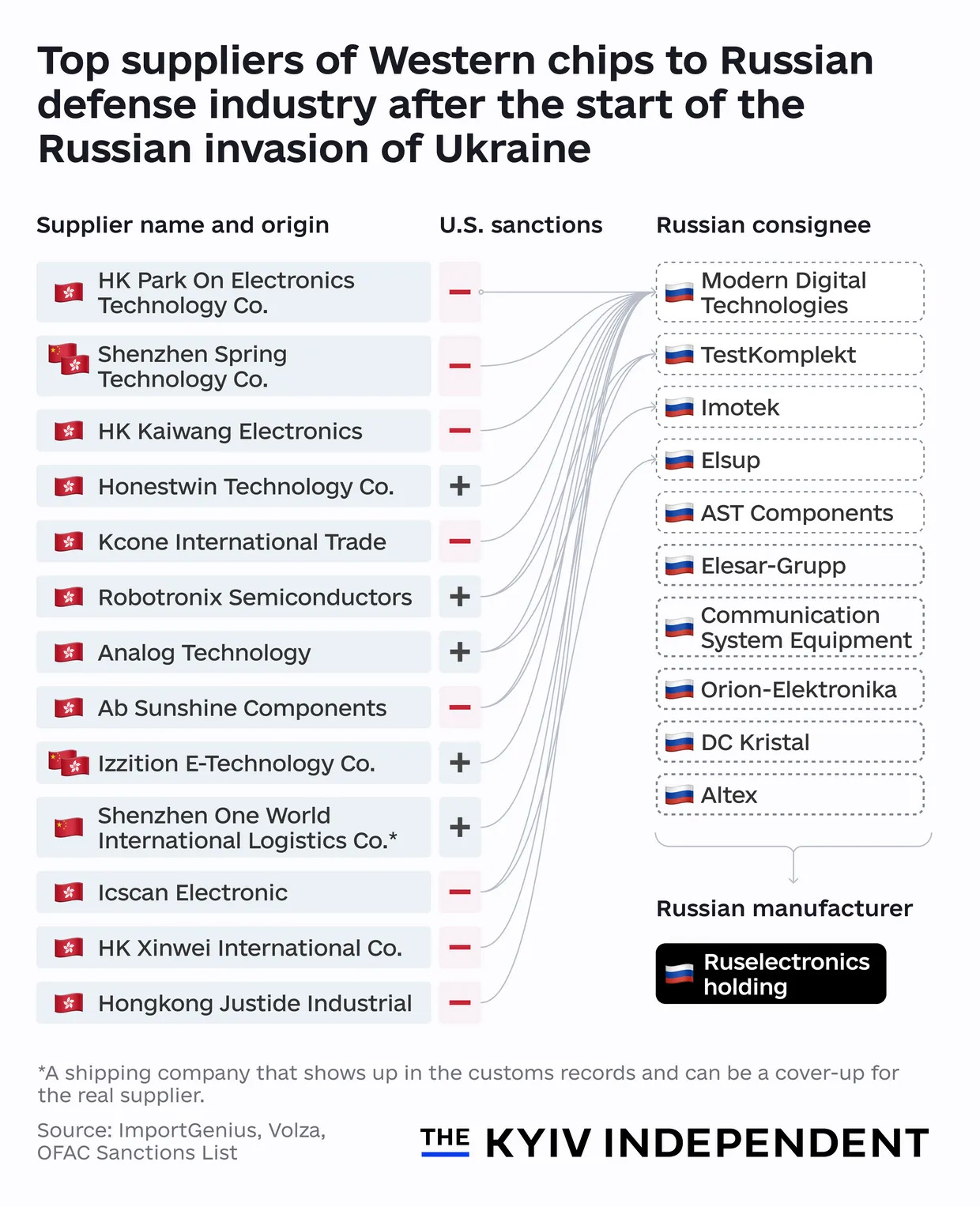
Investigation: We tried to buy American chips as a Russian defense manufacturer — and it worked (Alisa Yurchenko for The Kyiv Independent). Without Western chips, Russia would not be able to produce key weapons. To prove that this line of supply continues despite bans from the U.S. and Europe, the Kyiv Independent conducted an undercover experiment trying to order American microchips. The experiment confirmed that in the fourth year of Russia's full-scale war in Ukraine, those chips are still available to Russian intermediary firms, and through them — to Russian arms manufacturers. Western chips enter Russia through third countries that have not imposed restrictions. The main suppliers of American chips to Russia are China and Hong Kong.
How Ukraine’s defense tech is shaping the future of warfare (Anatoliy Khomenko for The Kyiv Independent). The ongoing Russia-Ukraine war is rewriting the rules of modern warfare. The evolving needs are driven by three interlocking factors. First, adaptation to small-scale threats. Traditional air defense systems, designed to counter large, fast-moving aircraft, have proven inadequate — and too costly — against smaller, slower-moving drones. Recognizing this gap, Ukraine has accelerated the development of both kinetic and electronic anti-drone technologies. Second, economics of attrition. Innovation is focused on maximizing value for money, making low-cost, high-impact solutions like drones the perfect weapon for the 21st century. Third, speed of innovation. According to Ukrainian Armed Forces representatives, any innovation not reaching production within six months risks becoming obsolete.