

As of January 12, Russia’s war against Ukraine has become longer than the Soviet–German campaign. Russian forces are losing 1,000–1,400 troops per day, and their battlefield gains over the past three years have been marginal. Instead, they have intensified exhaustive attacks against civilians, seeking to destabilize Ukrainian society and exert pressure for political change inside the country.
In the midst of all this, Ukraine has a new Minister of Defence, who is expected to address multiple challenges, including frontline supplies and ongoing mobilization issues.
In this edition:
Priorities and First Decisions of the New Defence Minister of Ukraine;
How Weather Affects the War in Ukraine;
Ukraine and the UK expand cooperation;
Ballistic Missiles and AI: Forecasts for 2026 from the CEO of the Ukrainian Council of Defence Industry;
10+ additional developments in Ukraine and Russia.
Thank you for reading and supporting my work!
Priorities and First Decisions of the New Defence Minister of Ukraine
Minister of Digital Transformation Mykhailo Fedorov has been appointed as the new Minister of Defence of Ukraine. 34-year-old Fedorov is the youngest Minister of Defence in Ukraine’s history. He is one of the few public figures who have remained on Zelensky’s team since 2019.
Fedorov was behind the creation of the digital system Diia, an app that allows Ukrainian citizens to access digital documents on their smartphones—now used by more than 23 million Ukrainians.
Thanks to Fedorov and his team, Ukraine has deployed Starlink, launched the Army of Drones, Drone Line, Brave1, the e-points motivation system, UNITED24, and the world’s first “Amazon for war,” Brave1 Market (read my report on the Brave1 Market).
President Zelensky has set the following tasks for Fedorov:
The main priority is the protection of Ukraine’s skies.
The second priority is significant strengthening of the technological component to halt Russian advances on the battlefield, in coordination with the military.
The need to resolve problematic issues related to the frontline supply.
More large-scale changes to the mobilisation process, which will ensure greater opportunities both for Ukraine’s Defence and Security Forces and for the country’s economic processes.
Fedorov told the parliament: “The Defense Ministry is coming into my hands with a minus 300 billion [hryvnias] ($6.9 billion), 2 million Ukrainians who are wanted, and 200,000 in AWOL (absent without leave) status”.
Some points from his inaugural speech:
Ukraine is moving toward full autonomy on the battlefield—from machine vision and data analytics to drone swarms. “Our ambitious goal is to make Ukraine the first country in the world capable of predicting and neutralizing enemy attacks using AI”.
One of the first decisions as Minister of Defense will be to ensure a baseline level of drone availability for brigades, which is currently clearly insufficient. This will increase predictability and improve planning quality.
“Today, the top 50 units out of roughly 400 account for 70% of enemy losses. Imagine the potential of Ukraine’s Defense Forces if we help the remaining 350 units grow”.
The Minister set a goal to increase the volume of international military assistance. Integrating partners—particularly their scientific and research potential—will strengthen Ukraine’s defence system while simultaneously enhancing their own defence capabilities.
Defence tech will become one of Ukraine’s key industries on global markets and a driver of the country’s economic growth. There is still important groundwork to be done to develop Ukraine’s own air defence systems and laser-guided artillery munitions. This will allow artillery to operate more accurately, faster, and more effectively, while reducing risks to Ukrainian servicemembers.
A day later, Ukraine’s MoD launched a fully automated system for distributing UAVs among military units. According to Fedorov, the time from warehouse receipt to drone delivery to a unit will be reduced by 2–3 times, down to roughly 1 day.
Due to this change, MoD will receive high-quality data, allowing it to:
see unit requests in real time within a single system;
track drone inventories in warehouses;
generate issue orders within minutes;
plan deliveries without delays or duplication.
The automated drone distribution between units runs on the SAP platform. The system covers the entire drone supply chain, from procurement to handover to the unit.
How Weather Affects the War in Ukraine
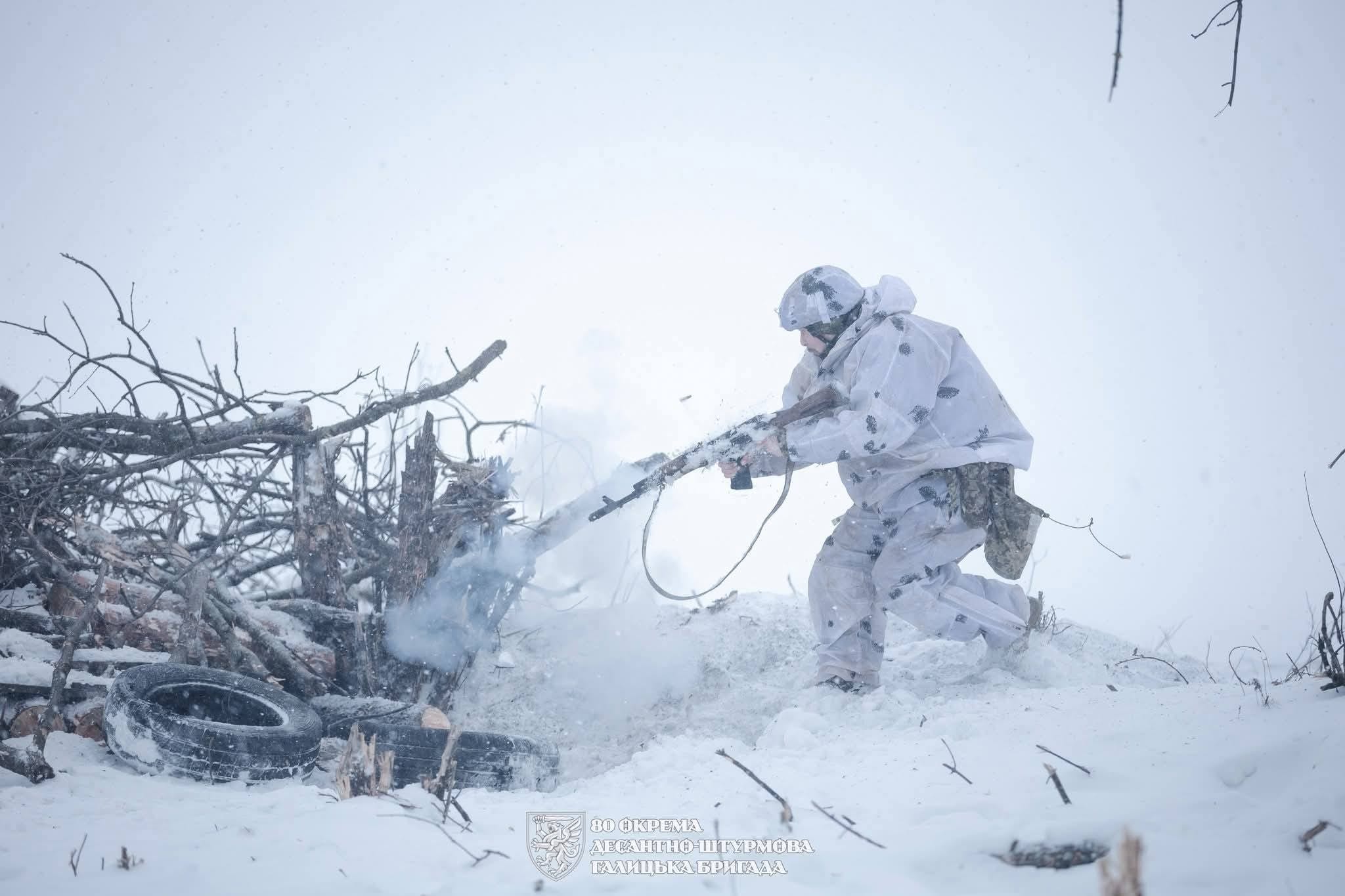
Under conditions where Ukraine is covered in snow and temperatures remain at –15 to –20°C, conducting combat operations is extremely difficult, as well as defending Ukrainian cities from Russian missiles and drones.
Previously, I published a section on how extreme cold affects drones in Ukraine and Russia, and below is a section on the impact of freezing temperatures on combat operations more broadly.