

No decision on Tomahawks. Military aid to Ukraine has declined by 43%. Instead of waiting for others, Ukraine is betting on its own capabilities — according to Zelensky, by 2025, half of all weapons used on the battlefield will be domestically produced.
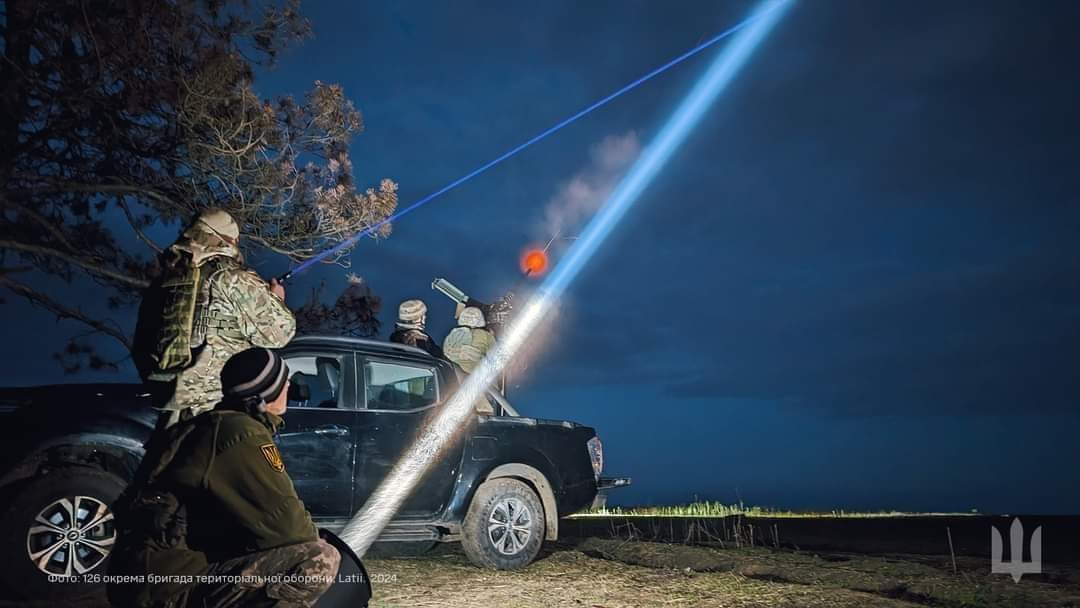
The lack of weapons is being partly offset by bravery, ingenuity, and tactical innovation. In this edition, I’ll be talking about mobile fire groups — Ukraine’s own solution to counter Shaheds — which are now adapting to new challenges and using helicopters for their operations.
In this edition:
Ukraine’s Partners Announce New Pledges at Ramstein;
Ukraine’s Mobile Fire Groups Turn to Helicopters to Counter Shaheds;
No Air Defence System Can Intercept 100% of Targets: Interview;
Ukraine Can Produce 10 Million Drones Per Year (but needs $12–20 billion in assistance);
and 20+ other key developments in Ukraine and Russia.
Thank you for reading and supporting my work!
Foreign Military Aid and Direct Purchases
The Tomahawk saga continues. Apparently, President Trump is still far from deciding whether to supply these missiles to Ukraine. President Zelensky, during his visit to Washington last week, said that Ukraine could provide the US with “thousands of drones” if Washington allows it to use Tomahawk missiles.
“That’s why we can cooperate — we can help strengthen American production. We have a major proposal regarding our drones,” the Ukrainian president said. Trump smiled and nodded.
The day before, in the call with Trump, Putin suggested he would be willing to surrender parts of two other regions of Ukraine he has partly conquered, Zaporizhzhia and Kherson, in exchange for full control of Donetsk.
The FT reported that Washington could spare some 20 to 50 Tomahawks for Ukraine, “which will not decisively shift the dynamics of the war”.
One Ukrainian military expert, who wished to remain anonymous, commented to Ukraine’s Arms Monitor that currently Tomahawks serve as a tool of deterrence and as leverage to push Russia to the negotiating table.
A separate issue is the actual transfer of Tomahawk missiles and their use in strikes. For Ukraine, technical readiness and personnel capability to employ these systems are not critical concerns.
What is uncertain is the outcome of Tomahawk strikes. The effectiveness of Russian air defences at detecting launches and shooting them down is unknown.
“Imagine a scenario in which interception rates reach, say, 30% — that would severely undermine the perceived combat power of those missiles and could become a reputational liability for the United States. It is therefore possible that the U.S. will hesitate to transfer Tomahawks to Ukraine, or will delay their deployment even if they are transferred. In addition, supplying Tomahawks would create further escalation and tension between Russia and the U.S., and would require an adequate Russian response — what that response would be is anyone’s guess,” an expert said.
At the same time, strikes with cruise missiles deep inside Russia do not deliver a tactical advantage on the frontline, nor do they reduce the intensity of various types of UAV employment, including strike drones controlled via fibre-optic links.
“For the military, the key question is how — and by what means — we can create conditions that secure Ukraine’s superiority on the battlefield,” he added.
Additional developments:
Ukraine’s European partners announced new military assistance amid the October 15 Ukraine Defense Contact Group (the Ramstein Format) meeting.
🇺🇸 U.S. Secretary of Defense Hegseth stated at the Ramstein meeting that the U.S. “expects” European NATO member states to “donate [and] purchase even more to provide for Ukraine” through NATO’s new Prioritized Ukrainian Requirements List (PURL) initiative.
According to reports, participants in the PURL initiative plan to raise $1 billion in monthly contributions to purchase U.S. weapons for Ukraine.
According to a NATO source, planning is underway through 2026, and the PURL initiative currently has no defined end date.
🇫🇮 Finland announced the decision to join the PURL initiative. Later, Finland said it is preparing its 30th military aid package to Ukraine worth €52 million. The package will consist mainly of new orders from Finnish companies.
🇸🇮 Slovenia decided to join the PURL programme.
🇳🇴 Norway will allocate 5.9 billion euros (roughly $6.86 billion) of its 2026 national budget for military aid to Ukraine.
🇩🇰 Denmark will provide Ukraine with a new military aid package worth 1.1 billion kroner ($171 million), including 400 million kroner ($62 million) earmarked for training Ukrainian troops.
🇱🇹 Lithuania will allocate $30 million for the PURL program.
🇳🇱 The Netherlands will provide Ukraine with 90 million euros (roughly $104.7 million) for the production of reconnaissance and strike drones in Ukraine.
🇨🇦 Canada announced new contributions, including:
Contributing an additional $12 million to the Drone Capability Coalition’s Common Fund to bolster Ukraine’s drone capabilities;
Providing $30 million in winter gear for the Armed Forces of Ukraine, with deliveries already underway; and
Donating surplus CAF equipment, including AIM-7 missile components, LAU-7A rocket launchers, and M113 vehicles and parts.
Last week, Canadian media reported that Ukraine has yet to receive the more than two dozen refurbished light armoured vehicles Canada promised in September 2023. The vehicles remain stuck in bureaucratic and corporate limbo — even though the Department of National Defence delivered the decommissioned vehicles to an Ontario-based company for reconstruction almost two years ago.
Drone coalition, led by the UK together with Latvia, will provide Ukraine with about 35,000 interceptor drones to fight Russian “Shaheds”. The agreements with manufacturers will be signed in the coming months. Funds from coalition countries will be used to finance the purchase.
🇯🇵 Japan delivered an additional 30 military vehicles to Ukraine. In total, Ukraine has now received over 130 military vehicles from Japan.
🇸🇪 The aviation coalition of partner countries advised Sweden to refrain, for now, from transferring its Gripen multirole fighter jets to Ukraine.
The Swedish Defence Minister did not rule out the possibility of such a transfer in the future and confirmed Ukraine’s interest in the aircraft.
The decision to temporarily withhold the transfer of the fighters, he explained, is due to infrastructural and technical challenges: “I think it would be difficult to introduce three types of combat aircraft at the same time. Right now, these are the F-16s and also the Mirages,” he said.
Military aid to Ukraine fell by 43% in July and August compared to the first half of the year, according to the Kiel Institute. After the US stopped announcing new aid packages at the beginning of 2025, European countries stepped in and significantly expanded their military support. As a result, the monthly average of military aid allocations in the first half of 2025 exceeded those of 2022–2024—despite the lack of US contributions. However, this momentum collapsed in the summer: military allocations from European countries fell by 57 percent compared to January–June 2025, even when their contributions to the NATO PURL initiative were included.
Ukraine’s Mobile Fire Groups Turn to Helicopters to Counter Shaheds
Mobile fire groups were once considered the most efficient way of countering Shaheds in Ukraine. The teams engage their target rapidly and then move away.
As of December 2025, Ukraine had around 500 of these units, with numbers differing across regions depending on the nature of drone threats.