

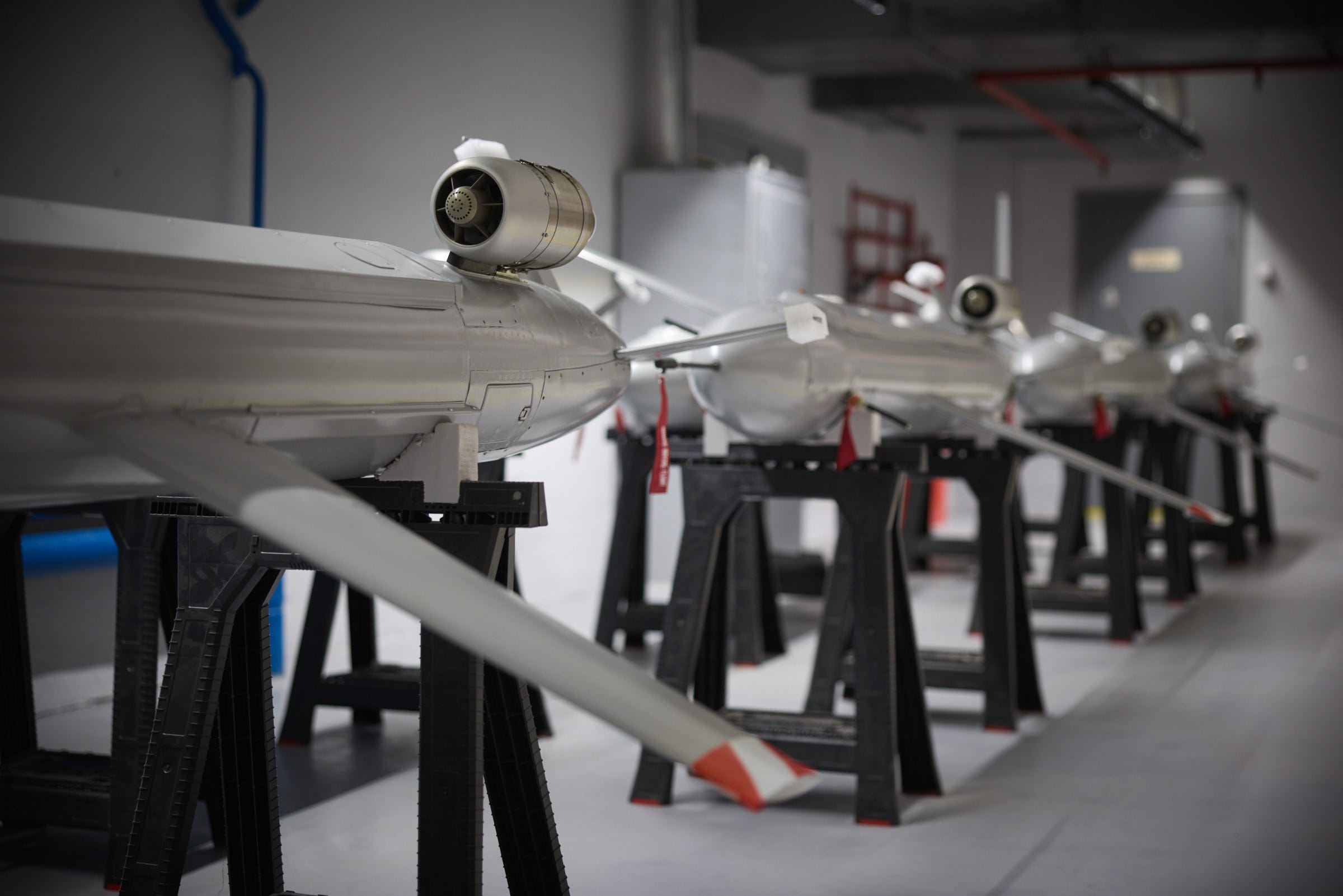
The Norwegian-American NASAMS received major media attention last week when Ukraine's Air Force claimed it had destroyed 11 Russian cruise missiles in a two-minute battle using this air-defense system. This development aligns with ongoing meetings between Norwegian and Ukrainian officials, which include discussions on joint ventures. Reportedly, the Norwegian company Kongsberg plans to begin production of air defense missiles in Ukraine.
This digest also highlights stories about the increased production of the domestic Bohdana howitzer, with a surprisingly high number of systems being produced monthly. Additionally, it covers Ukraine's innovations in the production of communication systems used for military needs.
Thank you for reading and supporting my work!
Military Transfers to Ukraine
New Zealand is far from the frontlines in Ukraine, but since the beginning of Russia’s full-scale invasion, it has voiced unwavering support for Ukraine and committed funding primarily to non-lethal assistance, including personnel training and humanitarian aid.
Last week, New Zealand announced the extension of the deployment of up to 100 New Zealand Defence Force personnel to train Ukrainian soldiers in the UK and throughout Europe, and provide intelligence, liaison, and logistics support through to December 2026.
New Zealand trainers have worked with the British to train more than 54,000 soldiers on Operation Interflex, which is the British-led scheme of training and supporting military forces in Ukraine.
Since Russia’s invasion of Ukraine on 24 February 2022, New Zealand has pledged over $152 million in financial assistance and in-kind support to Ukraine, including:
Support for military training, equipment, and material valued at $102.3 million, including NZDF personnel deployed to Europe.
$31.9 million in humanitarian assistance to conflict-affected Ukrainian communities in Ukraine and in neighbouring countries.
$5.2 million in support for international legal processes and human rights monitoring.
Earlier last week, on April 24, the United Kingdom announced plans to purchase unmanned vehicles produced by New Zealand’s SYOS Aerospace for Ukraine under a contract worth £30 million (approx. US$40m). One of the drones, the SA5 UAS, is a vertical take-off and landing (VTOL) system powered by a petrol engine. It has a flight time of eight to ten hours and supports swarm operations via the AAIMS system, as well as GNSS-independent navigation using MuV-NaP. Another model, the SA200 UAS, is an unmanned helicopter with a payload capacity of 200 kg and a base range of 230 km. An auxiliary fuel tank increases its range to nearly 1,000 km, and its endurance exceeds eight hours. It is suited for reconnaissance, electronic warfare, and logistics missions.
Additional developments:
Denmark allocated DKK 317 million (approximately €42.5 million) for the purchase of artillery shells for Ukraine. The funding is provided under the 25th military aid package. The purchase will be made through Estonia.
Czechia had delivered another 400,000 rounds of large-callibre ammunition to Ukraine by the end of April through its international initiative. The country aims to continue supplying 125,000 shells to Ukraine each month for the rest of this year.
The first of two Swedish Saab 340 AEW&C ‘flying radar’ airborne early warning and control (AEW&C) systems arrived in Ukraine. The aircraft is reported to have already made its first test flight in the Lviv Region. The donation of the aircraft was announced on May 29, 2024, by the Swedish Ministry of Defence as part of the 16th military support package to Ukraine.
90% of the barrels for the Caesar self-propelled howitzer, produced by the defense consortium KNDS, are supplied to Ukraine. Additionally, France has ramped up the production of the wheeled self-propelled artillery systems of this type. The number has increased from two self-propelled howitzers leaving KNDS factories each month before the full-scale Russian invasion of Ukraine, to six, with the aim of reaching twelve by the end of 2025.
Japan agreed to provide satellite imagery to Ukrainian intelligence following negotiations held earlier this year. Japan’s Institute for Q-shu Pioneers of Space (iQPS), based at Kyushu University, will supply Ukraine with satellite images obtained via synthetic aperture radar (SAR) reconnaissance. The iQPS Institute currently operates five satellites in orbit and plans to launch a seventh by the end of 2026.
Ukraine received a shipment of equipment from the IT Coalition, financed by Luxembourg and Iceland. The shipment included 3,288 access points, 500 routers, 460 charging stations with solar panels, and 872 phones – with a total value of about 2 million euros ($2.3 million).
The US funding had amounted to Ukraine’s largest source of support on cybersecurity - Bloomberg reported. The largest USAID contract related to Ukraine’s cybersecurity was a $128 million project to protect the country’s critical infrastructure from attack. With DOGE dismantling USAID, many projects were stopped halfway, contractors were let go before finishing their work, and a lot of plans didn’t get the chance to reach their full potential.
Ukraine’s Air Force shared details about the work of NASAMS system operators and said that 11 enemy cruise missiles were destroyed in a single air defense battle. The combat operation lasted no more than two minutes. The NASAMS system is designed to engage aerodynamic targets such as aircraft, helicopters, various types of cruise missiles, and UAVs. The system is not capable of intercepting ballistic targets — the NASAMS radar cannot lock onto a ballistic missile, and the AIM-120 AMRAAM is not designed to shoot one down.
Domestic Defense Production and Internal Affairs
A Ukrainian walkie-talkie developer has attracted the attention of the U.S. military.