

In recent months, amid a series of Ukrainian achievements, multiple sources have claimed that the war has reached a turning point. In this newsletter, I want to highlight several problems that Ukraine still faces. Its successes in some areas are taking place alongside persistent vulnerabilities in others.
At this point, more than ever, Ukraine needs strong support from its partners across all dimensions: the provision of requested and still-missing capabilities, financing for drone production, and sanctions against Russian war-related individuals and organizations. It’s too early to relax.
In this edition:
Ukraine’s Asymmetric Counteroffensive;
Military Perspectives of the Current Situation;
Flamingo Missiles: New Results;
and 10+ additional developments in Ukraine and Russia.
Thank you for reading and supporting my work!
Don’t forget to check out my recent report on Hornet strike drones, and the latest edition of my Ukraine Drone Brief.
Ukraine’s Asymmetric Counteroffensive
President Zelensky announced on June 25 that he authorized a 40-day intermediate- and long-range strike campaign to influence Russia to end the war in Ukraine.
This, and a series of developments over the past weeks, reminded me of the words of the commander of Ukraine’s Third Army Corps, Andrii Biletskyi, who recently argued that Ukraine has a six- to nine-month window to seize the battlefield initiative from Russia and strengthen its position ahead of potential peace negotiations.
According to him, the Russian army is exhausted and currently unable to achieve major breakthroughs. If Ukrainian forces can increase and sustain the tempo over the next several months, they could regain the initiative along the front line and force Russia to abandon its plans to capture the contested parts of the Donetsk region.
Last week, NATO Deputy Secretary General said that Ukraine has managed to create a window of opportunity, but that this window will not remain open forever and must be used. The German Chancellor highlighted that Ukraine is now in a new position of strength on the battlefield and that Russia should therefore begin talks to freeze the front line.
Among the key developments of the past few months has been the parallel advancement of Ukraine’s long- and medium-range strike campaigns.
Some of the key long-range targets struck by Ukrainian forces in recent weeks included:
VNIIR-Progress defence plant known for producing Kometa anti-jamming navigation modules used in Shahed drones (June 10);
The Moscow Oil Refinery that supplies around 35% of Moscow’s fuel market, including 40% of its gasoline, 50% of its diesel, and fuel for Moscow’s airports (June 16);
The Voronezh Semiconductor Devices Plant that produces components for Russian weapons, including cruise missiles (June 22);
The Titan-Barrikady plant that produces launchers for the Iskander-M ballistic missile system (June 27).
A separate topic is Ukraine’s campaign in Crimea. For several weeks in a row, Ukraine has been attacking targets in the peninsula, as well as bridges, to isolate Crimea from other Russian-controlled territories.
Last week, Russian authorities in Crimea declared an “emergency situation”. According to the OSINT channel ASTRA, a 15-kilometre queue formed on the road out of Crimea via the bridge, as people attempted to leave the occupied peninsula.
Regarding the situation on the front lines, ISW calculated that the Russian rate of advance was about 4.6 square kilometers per day between January 1, 2026, and May 21, 2026 — less than half the Russian daily average during the same period in 2025.
Ukraine currently estimates Russian losses at over 32,000 personnel per month, with a declared goal of increasing that figure to 50,000 personnel per month. Russia mobilizes approximately 40,000 to 50,000 people every month.
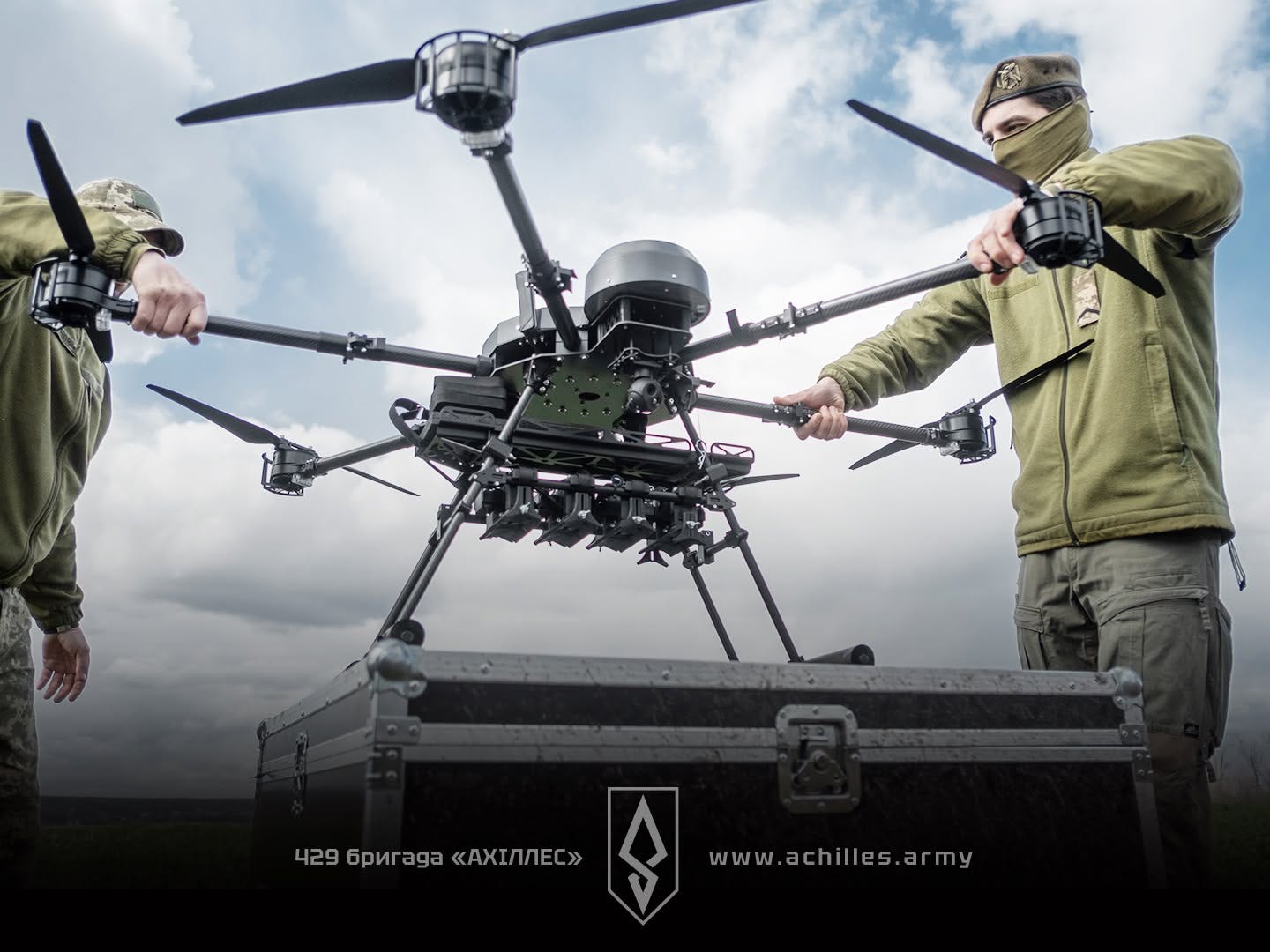
Yurii Fedorenko, commander of the Achilles Unmanned Systems Brigade, described the current stage of the war as an “asymmetric counteroffensive.”
The main objective of this campaign is to achieve a systemic effect: the social, economic, and military destabilization of the enemy. Judging by economic statistics, polling data, and the battlefield situation, he argues, this approach is working, while Russia’s military-political leadership is finding it increasingly difficult to respond effectively.
This campaign has a cognitive element and can also be seen as an attempt to influence segments of Russian society that have remained largely indifferent to the war.
As Serhiy “Flash,” an adviser to Ukraine’s defence minister, put it, the real opportunity to accelerate the end of the war lies in how the Russian population reacts to Ukraine’s actions. Previously, Russia’s so-called “special military operation” felt distant for many Russians; now, it is suddenly getting much closer.
All of this is based on the expectation that, at some point, sustained attacks across multiple directions will force the Russian authorities to reconsider their maximalist demands. For now, this is not happening.
In his June 28 speech to the ruling United Russia Party Congress, Putin reaffirmed his commitment to pursuing Russia’s objectives through military means and dismissed diplomatic pathways to ending his war against Ukraine.
Military Perspectives of the Current Situation
When I briefly interviewed two of my contacts in Ukraine’s defence forces, serving in different sections of the front line, their assessments of the current situation differed.