

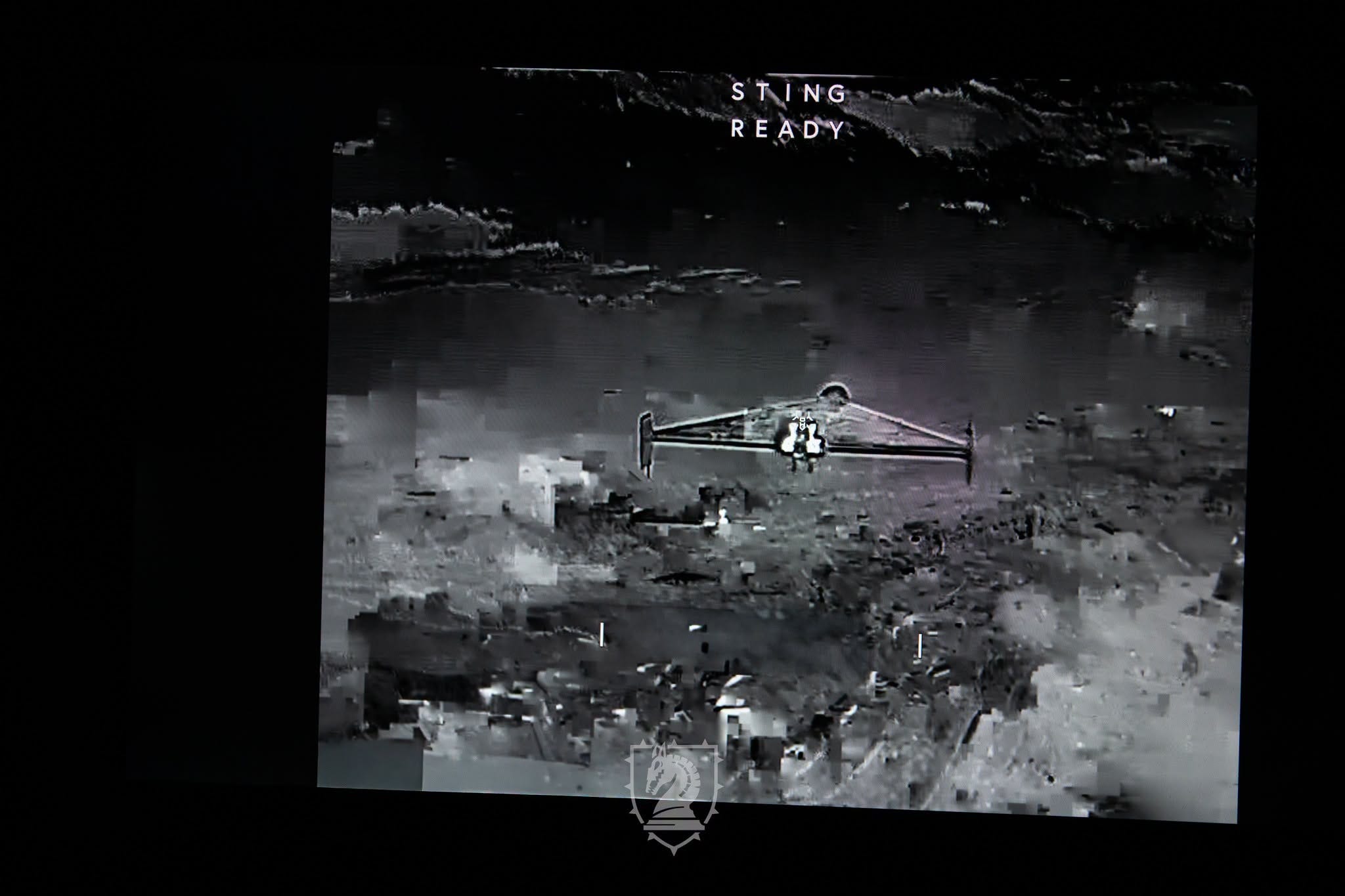
Ukraine has opened its arms exports, but beyond drones that may become obsolete on the battlefield within a matter of months, it has much more to offer: its experience of constant adaptation and innovation, tailored air defence solutions, and unique systems for battlefield data processing and analysis.
In this edition:
Ukraine Opens Arms Exports: What to Expect;
DELTA as the Backbone of Ukraine’s Warfare;
Flamingo Missiles Got Intercepted Again;
and 10+ additional developments in Ukraine and Russia.
Thank you for reading and supporting my work!
Ukraine Opens Arms Export: What to Expect
On July 2, Ukraine’s Prime Minister announced that the Ukrainian government had approved a transparent mechanism for exporting defence technology and weapons without undermining Ukraine's wartime needs.
Under the new framework, Ukrainian technologies will be available only to partner states that have concluded drone-related agreements with Kyiv. President Zelensky said that, as of June, Ukraine had already concluded Drone Deal partnerships with 27 countries, including 15 NATO members and 12 non-NATO states.
A certain percentage of export deals will be transferred to a special fund of the state budget for the further development of Ukraine’s defence industry:
20% from the export of finished products and technologies;
30% from the export of components.
Ukrainian industry leaders actively welcomed this decision.
According to Ihor Fedirko, CEO of the Ukrainian Council of Defence Industry (UCDI), the new export mechanism contains several important provisions.
Exports will not be open to everyone, but only to Drone Deal partner countries with which Ukraine has intergovernmental agreements. This is about controlled cooperation.
Manufacturers’ applications must be reviewed within a defined timeframe — up to 30 days.
The mechanism concerns the transfer of weapons and defence technologies worth UAH 15 million (around 338,000 USD) or more. This is already the level of serious industrial agreements.
The state retains control over critical issues: the list of partner countries is formed by the MFA, while the list of goods that cannot be transferred is defined by the MoD together with other government bodies.
Ukrainian intellectual property remains protected. The transfer of technology does not mean the transfer of ownership rights. Re-export or transfer to third parties will be possible only with Ukraine’s written consent.
If products created using Ukrainian technologies are later exported to third countries, 20% of their value must go to the state budget.
Exports will be possible only if the Ukrainian military’s needs are guaranteed. If the state needs a specific type of weapon, permission may be denied. But if a manufacturer can fulfil both a state contract and an export order, it should be allowed to work externally.
Politico mentioned that products such as Ukraine's low-cost interceptor drones may also be exported, provided manufacturers can guarantee they can fully meet the Ukrainian military's needs.
Fedirko also draws attention to the capacity of Ukraine’s State Export Control Service. Ukraine already has thousands of companies in the defence technology sector. Even if not all of them apply for export permits, but only around 200–300 manufacturers do, it will be almost impossible to review that number of applications properly. Ukraine may quickly face a classic bureaucratic situation. Therefore, together with the launch of the export mechanism, the state should review at least two things: salaries and the staffing levels of the State Export Control Service.
On July 1, Ukraine’s State Export Control Service issued a permit to export a batch of F10 strike drones produced by F-Drones. The company had already shipped 2,000 drones to the United States under a contract awarded to F-Drones as one of the winners of the first phase of the U.S. Drone Dominance program.
According to Kateryna Mykhalko, Managing Director of New Age Defence, Europe’s leading drone alliance, Ukraine should not limit itself to exporting drones; it must also export its combat-proven expertise and help partners build full drone ecosystems.
In her view, an effective drone defence ecosystem requires three elements: a scalable industrial base, professional military end users capable of integrating unmanned systems into doctrine and operations, and a coherent state policy that establishes budgets, ensures predictable demand, and enables effective cooperation between the military and industry.
She warns that no country can simply buy the “best drone” and consider itself ready for modern robotic warfare, because technological superiority can disappear within months. Instead, partner countries need support to develop doctrine, military structures, procurement processes, and mechanisms to learn from Ukraine’s battlefield experience.
Mykhalko argues that Ukraine should create a clear framework for transferring combat experience to allies, potentially including licensed private military companies that could help train foreign militaries in the use of unmanned systems.
“Tyrannies can act quickly and in a centralized manner. That is why democracies need to learn how to be no less effective — not by abandoning their free-market values, but by building new models of cooperation between the state, the military, and industry,” Kateryna wrote.
DELTA as the Backbone of Ukraine’s Warfare
The command-and-control system DELTA has become a symbol of Ukraine’s asymmetric approach to resisting Russia’s invasion. It is built around drones, digital coordination, and the need to compensate for Russia’s greater manpower.
I’ve summarized recent materials on DELTA that were published in Ukrainian and international media.