

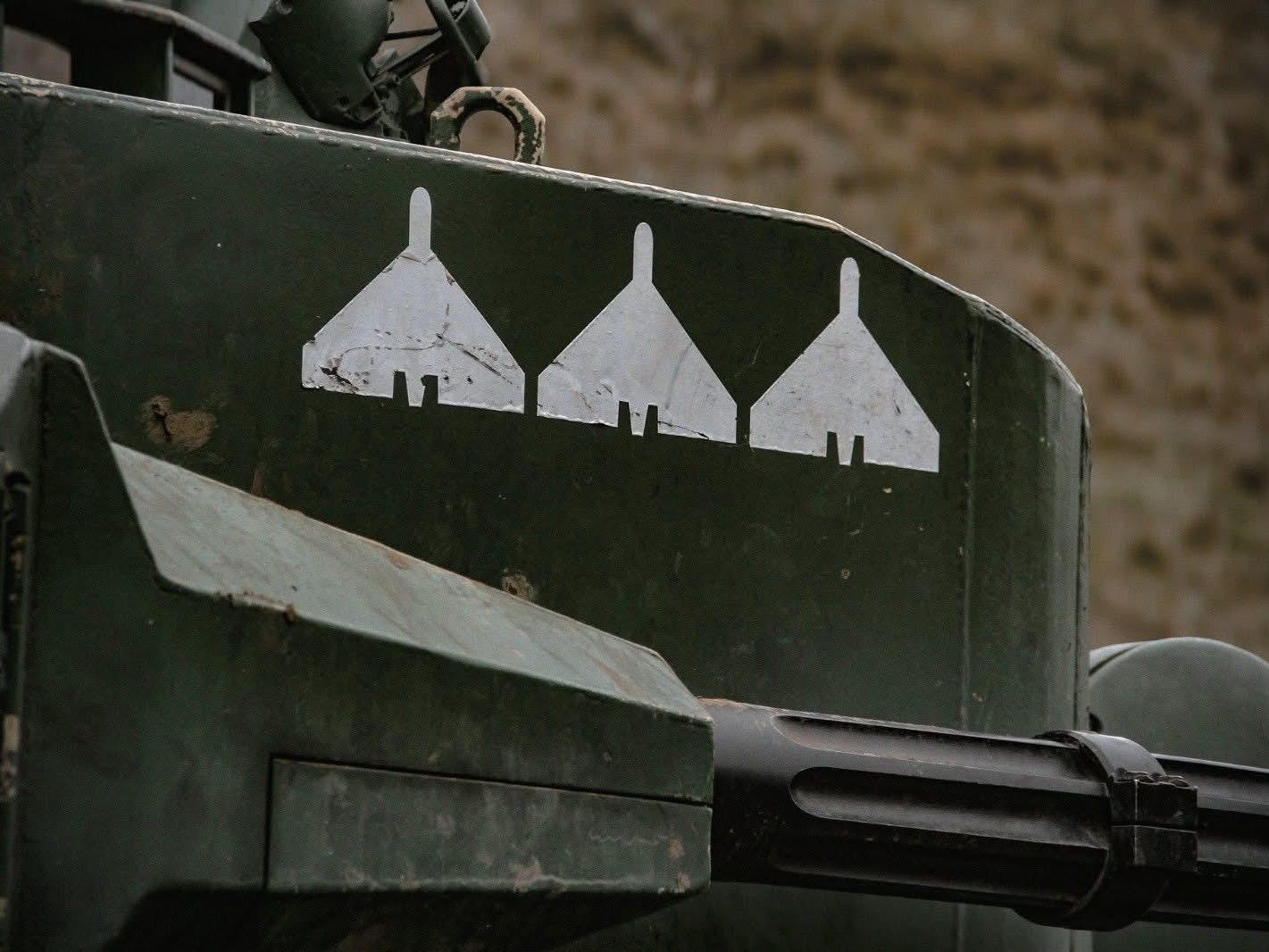
Ukraine is demonstrating innovative approaches to defence and security on a weekly basis—if not more often. Its latest initiative, private air defence, which allows key infrastructure companies to establish their own air defence units to protect their facilities, is gaining traction and has already begun delivering initial results in the Kharkiv region.
At the same time, concerns remain regarding the state’s monopoly on the use of force, as well as the potential broader diffusion of weapons and tactics within society.
In this edition:
Ukraine’s Private Air Defence Shows First Results;
5 Main Problems of Ukraine’s Defence Tech;
Why Ukraine Needs Private Military Companies, and What Options Exist;
and 10+ additional developments in Ukraine and Russia.
Thank you for reading and supporting my work!
If you find my digest useful, please consider supporting my fundraiser for a Mavic 3T drone for my friend Vasyl, who is serving in the Armed Forces of Ukraine. This is the fourth drone we are raising funds for, and I hope this campaign will be just as successful. Here is the link to the campaign page - PayPal.
Currently, almost 40% of the target amount has been raised!
Thank you 🇺🇦🇺🇦🇺🇦
As a side note, last week, in response to my newsletter section on the controversial statements made by Rheinmetall’s CEO about Ukrainian drone producers, Rheinmetall itself posted a comment. It brought a lot of unexpected attention and new subscribers to my newsletter, which is a positive outcome for me personally. However, the apology itself was missing from their public statements.
Defense Express reported that the German parliament has received a proposal to procure FV-014 drones/loitering munitions from Rheinmetall, worth €25 million, for approval. If the company’s drones successfully pass the qualification stage by April 2027, an order of nearly €300 million will be placed. In total, Rheinmetall is expected to deliver around 2,500 FV-014 drones, bringing the estimated unit cost to approximately €120,000 per system. The FV-014 is designed for both reconnaissance and strike missions, including the capability to operate as part of a swarm.
Two competitors—HX-2 by Helsing and Virtus by STARK—received the green light to supply their drones to the German military about a month ago. Both systems are already being used in Ukraine.
Ukraine’s Private Air Defence Shows First Results
Ukraine’s experimental government initiative to involve the private sector in air defence is beginning to deliver initial results - Defence Minister Fedorov informed. One of the participating companies has already formed its own air defence unit and joined combat operations in the Kharkiv region.
At the same time, the rollout of additional units is ongoing: 13 more companies have received official authorization from the MoD to participate in the new initiative. They are currently at different stages of readiness, ranging from training to full operational deployment.
Private units are integrated into the unified command-and-control system of the Air Force of the Armed Forces of Ukraine. This approach enables a rapid increase in defence capabilities without placing additional strain on frontline units.
The initiative also envisions opening up the air defence sector to the market and fostering a competitive environment. Businesses are given the opportunity to develop their own air defence capabilities and contribute to the protection of infrastructure.
The new framework removes ownership restrictions: both state-owned and private critical infrastructure companies are now allowed to establish their own air defence units.
Key features of this initiative:
Temporary transfer: The Air Force Command can temporarily provide companies with air defence systems and ammunition.
Reserve equipment: This includes systems that are not currently deployed with active combat units.
Case-by-case decisions: The transfer of systems is determined individually for each company.
Simplified replenishment: Expended ammunition is replenished through a simplified procedure based on documented usage.
The air defence units assigned to such facilities must meet established qualification requirements. To ensure this, personnel will undergo training and certification at institutions designated by the Ministry of Defence.
On air at Espreso TV, Oleksii Yizhak, an analyst at the National Institute for Strategic Studies, stated that the idea of private air defence is promising, but there is a fundamental issue related to the state’s monopoly on the use of force.
“Who in the state has the right to control and use weapons? We have a law on weapons that regulates their registration and who can use them. Before the full-scale war, the rights to use weapons were expanded for the Territorial Defence Forces. As for private air defence, this development is logical and understandable. There have long been decisions suggesting that at least the defence industry should have the ability to protect itself, because the Armed Forces cannot always do so,” Yizhak commented.
In his view, however, strict oversight is also necessary to prevent the excessive spread of private air defence. Otherwise, any company or private business in Ukraine could start using, for example, combat-configured drones and conduct surveillance. This is a serious issue that Ukraine will face after the war, when large quantities of weapons remain in circulation.
Key defence and infrastructure enterprises, and, in some cases, even municipal operators of critical infrastructure, should have a certain level of capability in place before the next winter. The question is what exactly this capability should entail: what types of drones and systems can be owned, accounted for, and operated not by the Armed Forces of Ukraine or military units, but by other actors.
5 Main Problems of Ukraine’s Defence Tech
Ukraine’s defence tech industry, public officials, and other stakeholders criticized the CEO of Rheinmetall's comments about Ukraine’s drone producers. While the claim about “housewives with 3D printers” is inaccurate, Ukraine’s defence tech sector still faces several challenges.