

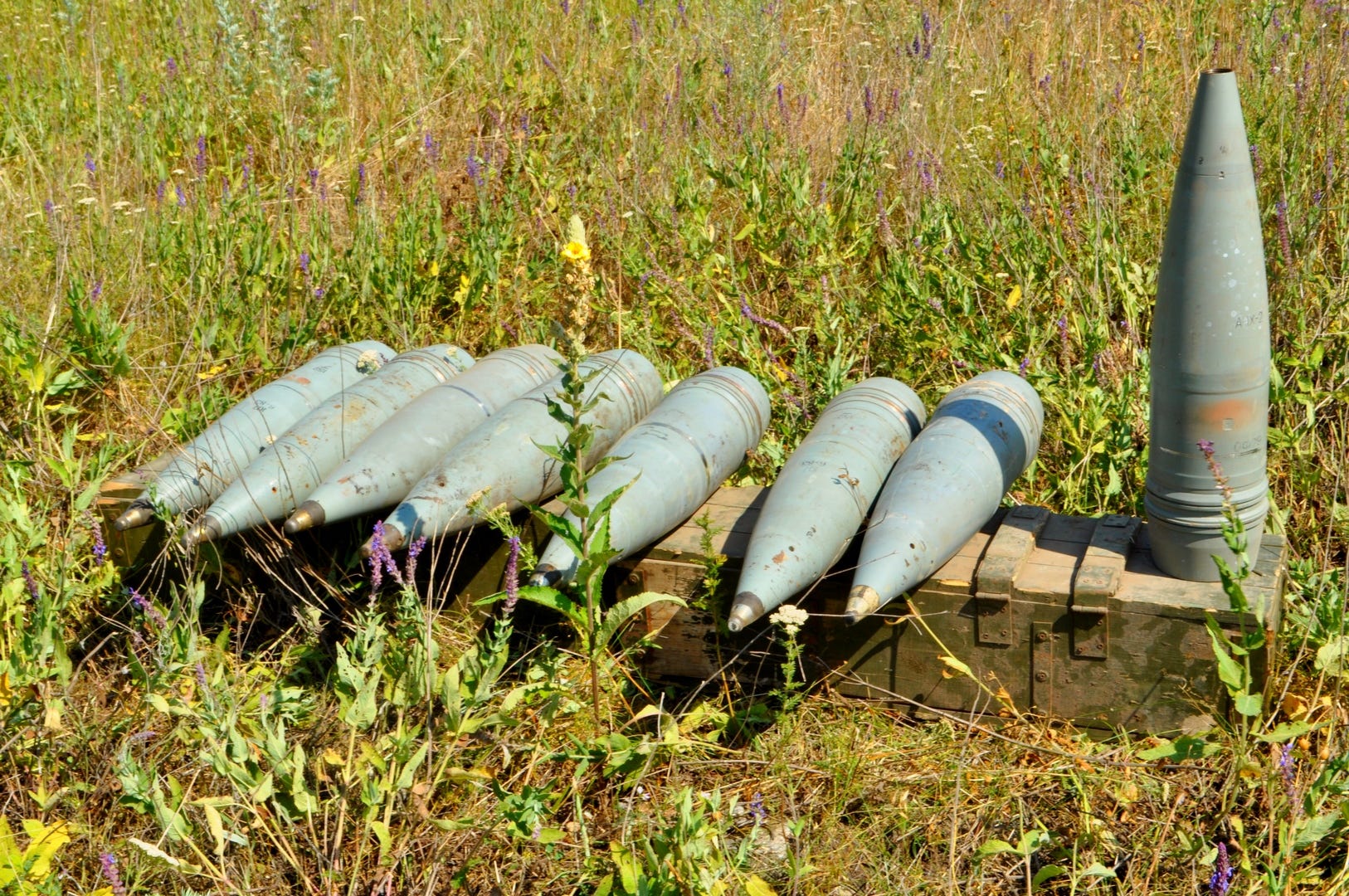
In this week’s digest, we focus on ammunition—what Ukraine can produce domestically and how Western allies contribute, particularly through the supply of artillery shells.
As of October 2024, the ratio of artillery fire between Ukraine and the Russian occupation forces at the front was approximately 1 to 2. At the beginning of last year, that ratio stood at around 1 to 7 or even 1 to 8, and in some months, it was even higher. Successful strikes by Ukraine’s Defense Forces on Russian ammunition depots played a key role in shifting this balance.
Currently, Ukraine’s ammunition and weapon supply comes from three main sources: domestic production; imports of items that are either not produced locally or produced in insufficient quantities; and military aid from partner countries, including artillery shells.
Thank you for reading and supporting my work!
Military Transfers and Cooperation Between Ukraine and Its Partners
An article from the independent Russian outlet Inside Stories reports that Ukrainian attack drones are responsible for up to 75% of Moscow’s battlefield losses, including significant damage to its heavy weaponry. It’s no surprise, then, that the military aid commitments made by European allies last week are aimed at boosting Ukraine’s drone warfare capacity.
The drone coalition, coordinated by Latvia and the UK, continues supplying unmanned vehicles to Ukraine’s Armed Forces. Last week, Latvia committed to sending a further 1,500 combat drones to Ukraine. The Netherlands unveiled a €500 million investment in Ukraine’s major, innovative drone project known as the Line of Drones. The initiative is part of a wider EUR 2 billion acceleration package for military aid planned for 2025. A portion of Denmark’s contribution last week was also allocated to drone support.
Ramstein Contact Group meetings have traditionally served as key platforms for announcing new military aid commitments. Over nearly three years of the Ramstein format, the allies have committed military aid totaling more than $145 billion.
The next meeting of the Ramstein Contact Group, which coordinates military aid to Ukraine, will take place on April 11 in Brussels and will be co-chaired by the UK and Germany. It will be the first meeting without the participation of the U.S. Defense Secretary. When asked about the U.S. absence, NATO General Secretary Rutte said that the U.S. remained committed and was not stepping back from participation in similar formats.
According to Zelensky, there are two main tasks for the next Ramstein meeting: the first is air defense, specifically the "Patriots," and the second task is related to foreign troop contingents.
Additional developments:
NATO allies have pledged more than 20 billion euros ($21.65 billion) in military support for Ukraine in the first three months of the year, General Secretary Rutte said.
European countries have already committed more than 50% of the 5-billion-euro ($5.5 billion) package for 2 million ammunition rounds requested by Ukraine.
On April 4, Germany announced its plans to provide the Ukrainian Defense Forces with 500,000 artillery shells in 2025, a significant increase of more than one-third compared to previous plans.
Czechia confirmed that Ukraine will receive guaranteed monthly ammunition deliveries until the autumn of 2025 through a Czech-led initiative enabling partner countries to jointly finance arms purchases on global markets.
On April 3, Denmark presented its 25th military aid package for Ukraine, totaling 6.7 billion Danish kroner (nearly $970 million). $203 million will be used to expand Ukraine’s artillery capabilities and supply ammunition. Another $290 million will be allocated for orders placed with Ukraine’s defense industry. These will include multi-year funding programs aimed at developing Ukraine’s defense sector. The allocation of another $477 million has not been detailed. However, it has been stated that the funds will be directed toward air defense, contributions to the Drone Coalition, and the IT Coalition.
Germany is financing Ukraine's access to a satellite internet network operated by the French company Eutelsat. Ukraine currently has fewer than 1,000 terminals connecting to Eutelsat's network, but Eutelsat CEO said the company aims to increase this to between 5,000 and 10,000 "relatively fast."
The Polish government transferred another 5,000 Starlink terminals to Ukraine, which provide communication for the military and civilians.
On March 31, Sweden announced the transfer of its largest military aid package to Ukraine, worth almost US$1.6 billion. The package includes support for Ukraine's air defence, artillery, satellite communications, and maritime capabilities. The government intends to authorise the Swedish Defence Materiel Administration (FMV) to purchase defence equipment from the Swedish, Scandinavian and European defence companies for the Armed Forces of Ukraine, based on Ukraine's needs.
U.S. General Christopher Cavoli said that more F-16 fighter jets are being prepared for transfer to Ukraine. On March 19, Zelensky confirmed that a new shipment of F-16 fighter jets arrived in Ukraine.
Zelensky stated that the US’s role as Ukraine’s biggest arms supplier is at an end, and if Ukraine wants American weapons in the future, it will only be for cash. From February 2022 to February 2025, the US transferred to Ukraine $64.1 billion worth of weaponry, while Ukraine’s other allies, led by Germany and the UK, sent $65.8 billion.
Zelenskyy instructed Ukraine’s defence and foreign ministers to intensify contacts with international partners on air defence and called on the US and Europe to increase the production of air defence systems and missiles.
Domestic Defense Production, Joint Ventures, and Internal Affairs
In an interview with New Voice, the CEO of Ukrainian Armor explained the situation with the ammunition production in Ukraine.