

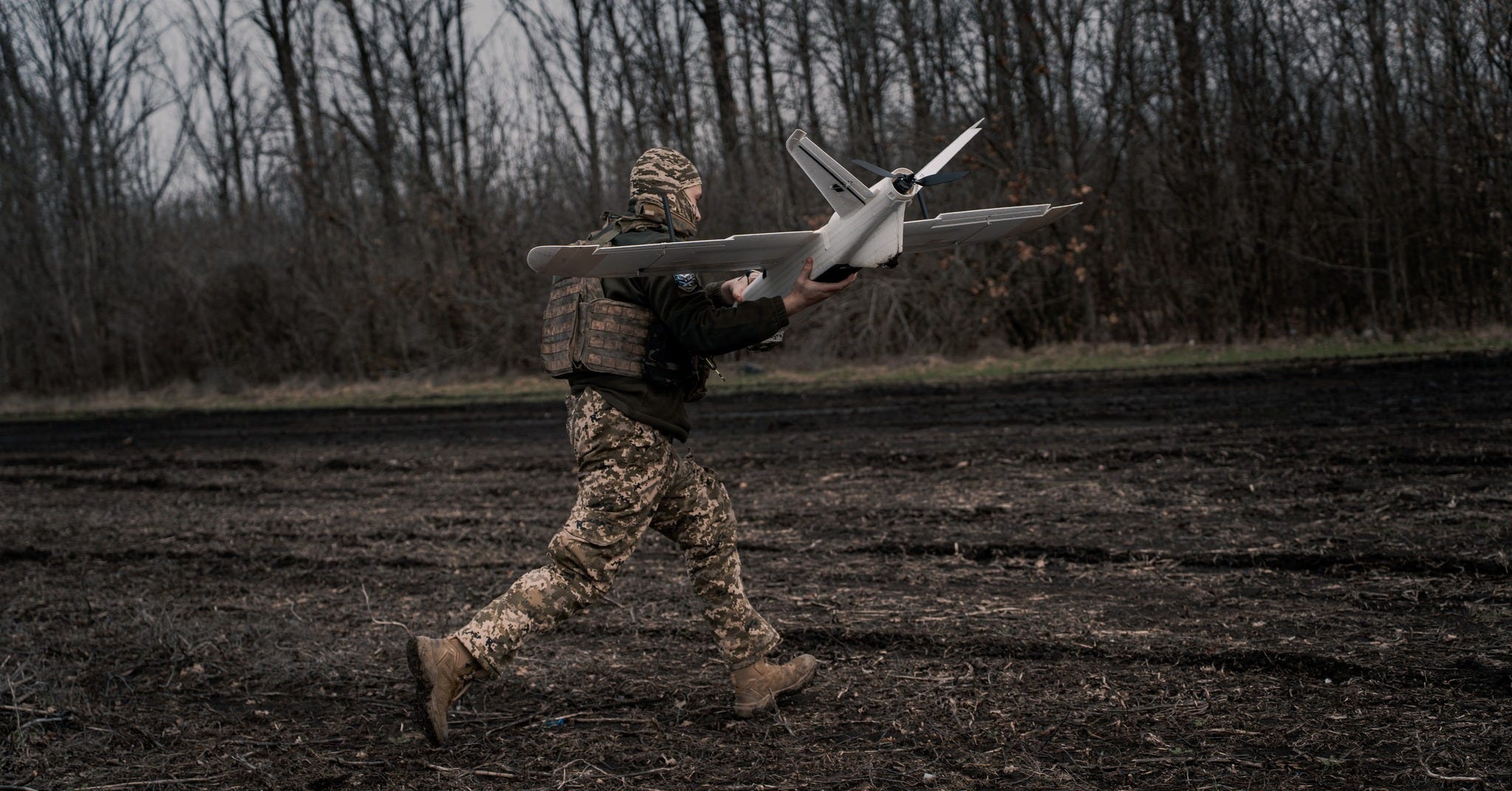
In the fifth year of the war, Ukraine not only produces over 50% of the military capabilities needed to protect itself, but also is ready to assist other regions — from the Middle East to the Baltic states — to help strengthen their air defences, while ironically guaranteeing the safety of the military parade in Moscow’s city center. What other cards does Ukraine have up its sleeve?
In this edition:
Ukraine Aims to Become a Global Security Exporter;
How Do Interceptor Drones Actually Work?
How Starlink Disruptions Undermined Russia’s Naval Drone Operations;
and 10+ additional developments in Ukraine and Russia.
Last week, Kyiv Post published my op-ed on the prospects for closer Canada–Ukraine cooperation on defence innovation. Personally, I believe Canada and Ukraine could become ideal partners in this field - read here why.
Due to my upcoming work trips in May, I will temporarily merge Arms Trends in Ukraine and Drone Warfare in Ukraine over the next few weeks.
My new product, Ukraine Drone Brief (the 2-page report), will continue to be published on Saturdays without any changes.
Thank you for reading and supporting my work!
Ukraine Aims to Become a Global Security Exporter
After four years of full-scale war against a technologically capable and resourceful enemy, Ukraine is seeking to turn its battlefield experience into a strategic asset by offering its expertise to countries and regions worldwide.
Developments in the Middle East in 2026, as well as Russian drone incursions into Poland in 2025, demonstrated that countries still have blind spots when it comes to modern warfare. Traditional military capabilities often remain too expensive and inefficient against low-cost threats such as drones.
In this context, Ukraine can provide not only technical expertise in the production of affordable counter-UAS solutions but also practical knowledge of tactics, force organization, and tailored approaches to modern defence.
President Zelensky stated that the world has seen the strength and experience of Ukrainian soldiers, adding that “security exports” should serve as the foundation of a new economic sector in which veterans can apply their professional expertise. Currently, Ukraine is preparing legislation to enable the creation of private military companies (PMCs) and similar structures as early as 2026.
According to analysts, PMCs remain a highly niche and sensitive tool, requiring strict oversight due to the potential for unpredictable consequences. They are inherently risky and must be supported by strong analytical frameworks. Read here my earlier report: Why Ukraine Needs Private Military Companies, and What Options Exist.
Ukrainian serviceman and founder of the Kruk drone pilot training school, Viktor Taran, noted that the creation of PMCs could help Ukraine retain thousands of veterans, instructors, drone operators, EW specialists, and personnel with real combat experience. According to him, this could create a new sector of the economy, generate tax revenues, expand service exports, and strengthen Ukraine’s position in the global security market.
At the same time, he warned about serious risks. Taran argued that Ukraine still faces significant influence from oligarchic groups, shadow financial flows, political patronage networks, and weak institutions. In this context, the emergence of armed structures with their own veterans, drones, communications systems, transport, and international contracts could become dangerous.
He cautioned that different PMCs could eventually align themselves with state institutions such as the Ministry of Internal Affairs, military intelligence, or security services, potentially leading to the emergence of “private armies of influence” used in political struggles, pressure on businesses, or conflicts between financial-political groups.
Taran also warned about the risks of combat technology leakage and the transformation of veterans from a state security asset into instruments of private interests. According to him, one of the greatest long-term risks is that, after the war, Ukraine will have a large number of people with combat experience, trauma, access to weapons, and a sense of injustice. Without strong state institutions, he argued, this could become an extremely volatile combination.
Currently, there are more than 1,8 mln veterans in Ukraine, according to the Ministry of Veterans Affairs. Also, Ukraine is estimated to have 880,000 to 1 million troops, or at least 6% of its workforce.
Separately, the consequences of the Russia-Ukraine war are increasingly spilling over into the Baltic and Scandinavian regions, creating opportunities for Ukraine to offer its expertise there.
Last week, Latvia and Lithuania called on NATO to strengthen air defences in the region after two suspected stray Ukrainian drones crossed from Russia and crashed on Latvian territory, with one exploding at an oil storage facility. According to the Latvian Defence Minister, the drones were likely launched by Ukraine against Russian targets but accidentally fell on the wrong side of the border.
Ukraine's Foreign Minister commented that Ukraine has never intentionally directed any drones toward Latvia.
Following this incident, Ukraine plans to send its experts to the Baltic states to strengthen air security and has contacted the Estonian embassy on the issue.
Cases of drone incursions are likely to be increasingly exploited by Russian disinformation narratives. Earlier last week, anonymous accounts circulated a video of a train fire while falsely claiming that a Ukrainian drone had struck a Latvian railway. Latvian authorities dismissed the report as deliberate disinformation.
Russian military bloggers continue to claim that there is documented evidence of official airspace closures or restrictions over eastern Latvia and Estonia aimed at enabling the unobstructed passage of Ukrainian drones for strikes against Russia. They suggest that Russia should use the same routes to launch attacks against Ukraine.
How Do Interceptor Drones Actually Work?
Ukrainian Militarnyi published an informative interview with the personnel from the Group 12 unit. In recent years, the unit has been developing a project-analytical model to study combat experience, focusing on how weapons systems behave under real battlefield conditions. Their work is based on field research — visiting frontline areas, interviewing operators, and working directly with personnel using the systems.
Here are some key insights from this interview: