

Both Ukraine and Russia understand that modern war is not about which side has more personnel, weapons, or military equipment. It is about who makes smarter and faster decisions.
It is about destroying the archer, not the arrow. This is why Ukraine’s long-range strikes — banned for years by Western governments — are aimed at Russia’s drone and missile production capacities. Destroying these facilities means fewer missiles and drones will be launched at Ukrainian cities, and fewer Ukrainian civilians will be killed in mass attacks.
Strikes on depots and logistical hubs have the same logic: the fewer supplies that reach Russian troops, the fewer problems Ukrainian soldiers face on the frontline.
And the growing introduction of AI technologies, which are gradually taking over more elements of decision-making in modern warfare, is elevating this transformation to a new level.
In this edition:
Ukraine Wants to Isolate Crimea from Russia;
Artillery After 2022: Guns Are Turning Into an IT System;
AI is Shaping a New Paradigm of Warfare in Ukraine;
and 10+ additional developments in Ukraine and Russia.
Don’t forget to check out my special open-access edition of Ukraine Drone Brief (usually reserved for VIP subscribers only).
Thank you for reading and supporting my work!
Ukraine Wants to Isolate Crimea from Russia
Robert “Magyar” Brovdi, commander of Ukraine’s Unmanned Systems Forces, told Reuters that Kyiv’s goal is to isolate Crimea and cut the occupied peninsula off from Russia. According to him, drone strikes have reduced the traffic using the Novorossiya highway - a critical Russian military supply route through occupied southern Ukraine to Crimea - by more than two-thirds over the past month.
“We will create conditions under which it will be extremely difficult for any serviceman or defence industry worker to remain in Crimea,” he added.
Russian milbloggers from the Razrabotchik BPLA channel appear to be seriously concerned over this issue, saying that “the most alarming part is that a country without a proper navy or air force is already, in practice, implementing this plan”.
For several months, Ukraine has waged a systematic campaign against Crimea’s air defence network — targeting SAM systems and radars.
In the first five months of this year, the units destroyed 174 Russian air defence complexes (not only in Crimea) worth about $5.4 billion, Brovdi said.
Now, Ukraine has moved to cutting the land corridor and damaging bridges, which is already contributing to fuel shortages.
A week ago, Ukraine struck the Chonhar bridge, which connects the occupied Kherson region to the occupied Crimea. This route is one of the key logistical corridors used to supply Russian forces on the peninsula. Read about drones used in this operation here.
Queues of Russian trucks heading from occupied Crimea to the temporarily occupied part of the Kherson region have formed at the approaches to the pontoon crossing near Chonhar.
Russian milbloggers are also concerned that Ukraine’s future ballistic missile strikes may not necessarily be aimed at Moscow. Instead, they worry that the real target could be the Crimean Bridge — the last major artery still connecting occupied Crimea with Russia.
The Ukrainian-made FP-7 surface-to-air missile is currently undergoing flight tests, while the more powerful FP-9 missile is already under development. Both missiles are ballistic.
Ukrainian analysts note that FP-7 and FP-9 could be perfectly capable of striking Russian military targets across Crimea. While the capabilities of the FP-7 (200 km range) would depend on the launch location, the longer-range FP-9 (900 km) could potentially reach targets anywhere on the peninsula.
A military expert from Crimea, a former Ukrainian officer and reserve lieutenant colonel, told Radio Free Europe/Radio Liberty that the FP-9 could be launched, for example, from the Kyiv, Zhytomyr, or Khmelnytskyi regions.
“FP-9 has a speed of Mach 2 — twice the speed of sound, or around 2,200 km/h. It would take less than half an hour, around 25 minutes, to reach the most distant targets in Crimea, such as Sevastopol or Kerch. If the launch distance is reduced, the flight time would also decrease,” the expert said.
Russia may struggle to counter Ukrainian ballistic missiles because they are fast, difficult to track, and can usually be intercepted only in the final phase of flight. This leaves air defence systems only seconds to detect the missile, calculate its trajectory, and launch an interceptor.
Although Russia deploys systems such as the S-400, S-300V, and possibly S-500, their real effectiveness against ballistic targets in combat remains unclear. Another weakness is that Russian interceptors reportedly rely on fragmentation rather than direct kinetic hits, which experts consider less reliable against ballistic missiles. As a result, Ukrainian FP-7 and FP-9 missiles could pose a serious challenge to Russian air defence in Crimea.
Russians point out that by 2026, the war moved from the trenches into the sky and deep rear areas. “Victory no longer belongs to whoever captures more tree lines. It belongs to whoever can launch drones, shells, and missiles farther, more accurately, and in greater numbers. There is no need to fight for some village if the enemy has no ammunition left to defend it — either because the factory producing that ammunition was hit, or because the vehicle carrying it never reached the front”.
They are now questioning Russia’s own unmanned capabilities in Crimea, asking how many unmanned surface vessels and interceptor drones the Russian military actually has defending the peninsula.
According to the ISW report, the Russian military command is planning to relocate remaining Black Sea Fleet (BSF) command structures out of occupied Crimea, as BSF headquarters are steadily losing functionality amid severe logistics issues due to Ukraine’s intensified strike campaign against Crimea.
Artillery After 2022: Guns Are Turning Into an IT System
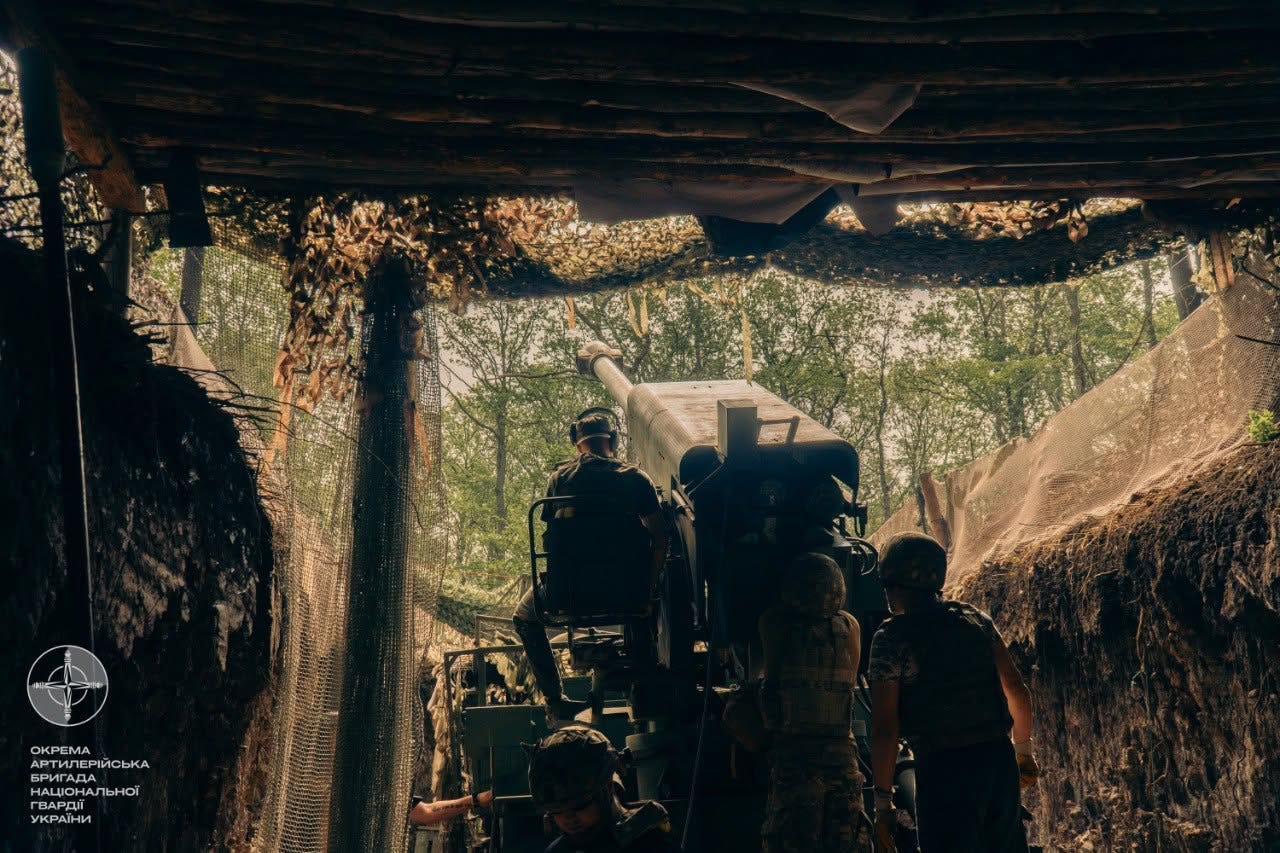
Even in the “age of drones,” artillery survives — and in some cases remains indispensable. Its speed and firepower, ability to operate in almost any weather conditions, and tactical adaptation to reduce risks still make certain artillery systems highly useful in both defence and offence.