

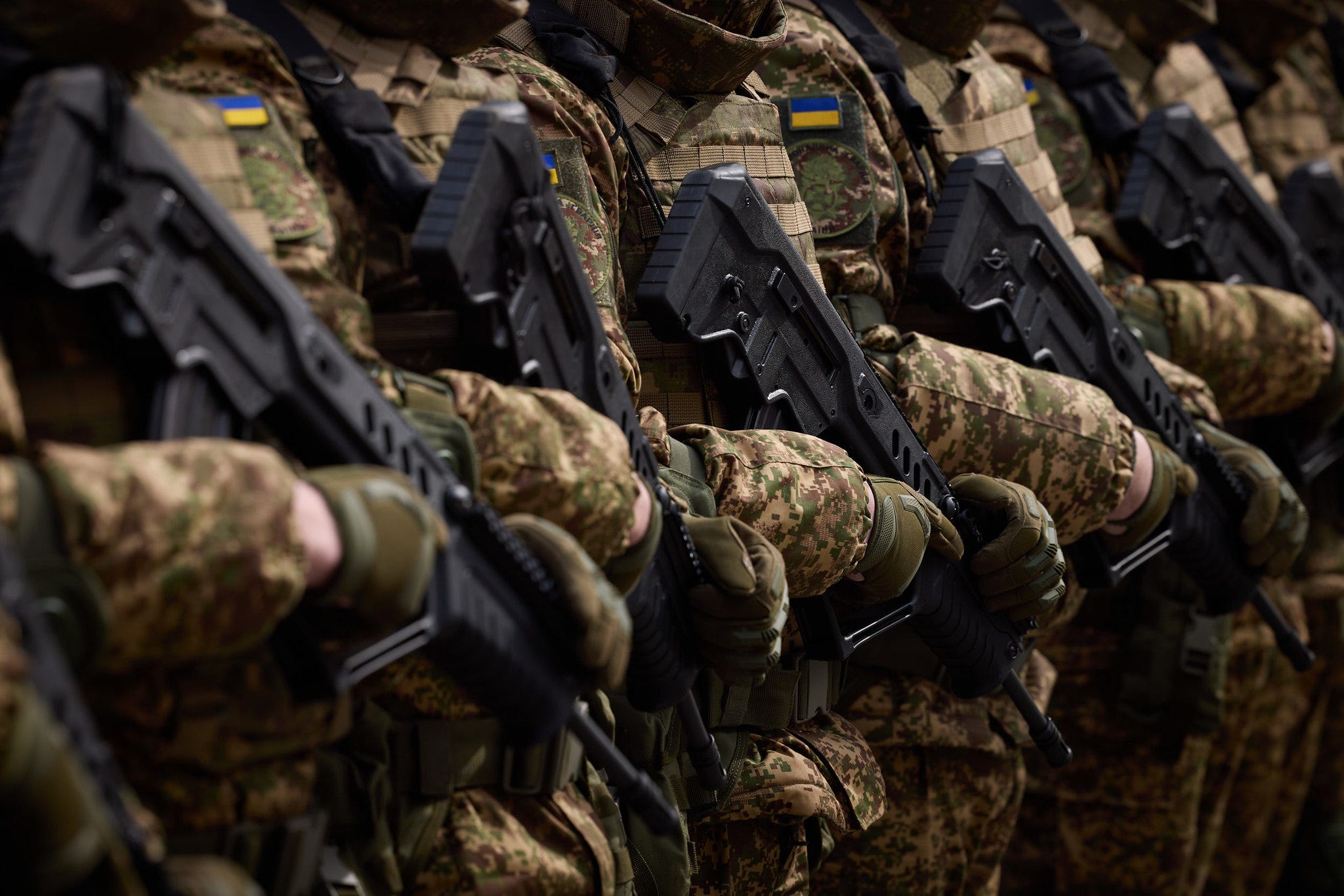
During the final week before Trump’s inauguration, several European leaders visited Ukraine, pledging additional support and enhanced military cooperation. Ukraine's domestic military production has increased significantly over the past year, with drones emerging as a key innovation. However, large-scale missile production faces challenges due to infrastructure vulnerabilities and ongoing Russian airstrikes. Meanwhile, Russia has strengthened its alliance with Iran by formalizing a 20-year strategic partnership and continues to rely on external military aid to compensate for significant equipment losses.
This updated weekly newsletter features key stories in five categories: Military Transfers and Cooperation Between Ukraine and Its Partners; Ukraine’s Military Production and Internal Affairs; Russia and Its Allies; Major Developments and Other news in the region and beyond.
Military Transfers and Cooperation Between Ukraine and Its Partners
Last week saw two major announcements of military transfers from Germany and the United Kingdom. Germany provided Ukraine with a substantial supply of ammunition, drones, and armored vehicles. Additionally, it was mentioned that certain equipment deliveries are still in execution, including 18 of the "world’s most advanced" RCH 155 howitzers; 5 infantry fighting vehicles (MARDER9 AiTO30 FDC); 277 Mine Resistant Ambush Protected Vehicles (MRAPs).
German Chancellor Scholz has faced significant criticism from Ukraine and within Germany over his decision to block a new arms package for Ukraine. A notable moment was captured in the photo of Scholz reaching out to stop Foreign Minister Baerbock, who was leaving a government meeting after refusing to pose with him. The continued support from Germany is vital for Ukraine, as it is the second-largest provider of financial and military aid after the U.S.
During an unannounced visit to Ukraine last week, German Defense Minister Pistorius denied media reports suggesting that Scholz blocked additional aid for Ukraine. Pistorius clarified that the German government is still deliberating on a proposed €3 billion ($3.09 billion) aid package.
The United Kingdom remains as committed as ever to supporting Ukraine, signing the One Hundred Year Partnership Agreement and promising to provide annual military assistance to Ukraine of no less than £3 billion until 2030/31 and as long as needed. This agreement focuses on modernizing Ukraine’s national security architecture, enhancing cyber capabilities, and maritime cooperation. The following provision “The UK and Ukraine will work together to ensure safety of navigation and protection of trade in the Black and Azov seas and beyond” was particularly painful for the Russians. On the same day, Russia stated that the Azov Sea is an internal sea of Russia, dismissing the likelihood of UK-Ukraine cooperation in this area.
In terms of military transfers, UK Prime Minister Starmer announced the delivery of 15 Gravehawk mobile air defense systems to Ukraine in 2025. Two prototypes of this system have already been successfully tested in Ukraine. This innovative system, the size of a maritime container, can fire air-to-air missiles and serve as a ground-based air defense system. It is also compatible with Ukrainian missiles currently in service with the Ukrainian Armed Forces.
Additionally, the UK announced a £61 million contract with BAE Systems to produce artillery barrels for Ukraine. This deal marks the first revival of UK barrel production in 20 years and will take place at Sheffield Forgemasters in Yorkshire.
Meanwhile, U.S. President Joe Biden faced criticism from Ukraine because of his farewell speech, in which he mentioned Ukraine only once. Although the Biden administration has provided Ukraine with $65.9 billion in military assistance since the start of Russia’s full-scale invasion—making the U.S. the largest donor—questions persist about delays in decision-making. Ukrainian professor Olexiy Haran noted, “…all the time support was delayed and not enough…As a result, we were not prepared enough for the counteroffensive in late 2022 and summer 2023. The lack of weapons and, therefore, the lack of success has decreased the levels of optimism for Ukrainian soldiers in the war of attrition and, among other reasons, created additional problems for mobilization.”
Ukraine’s Military Production and Internal Affairs