

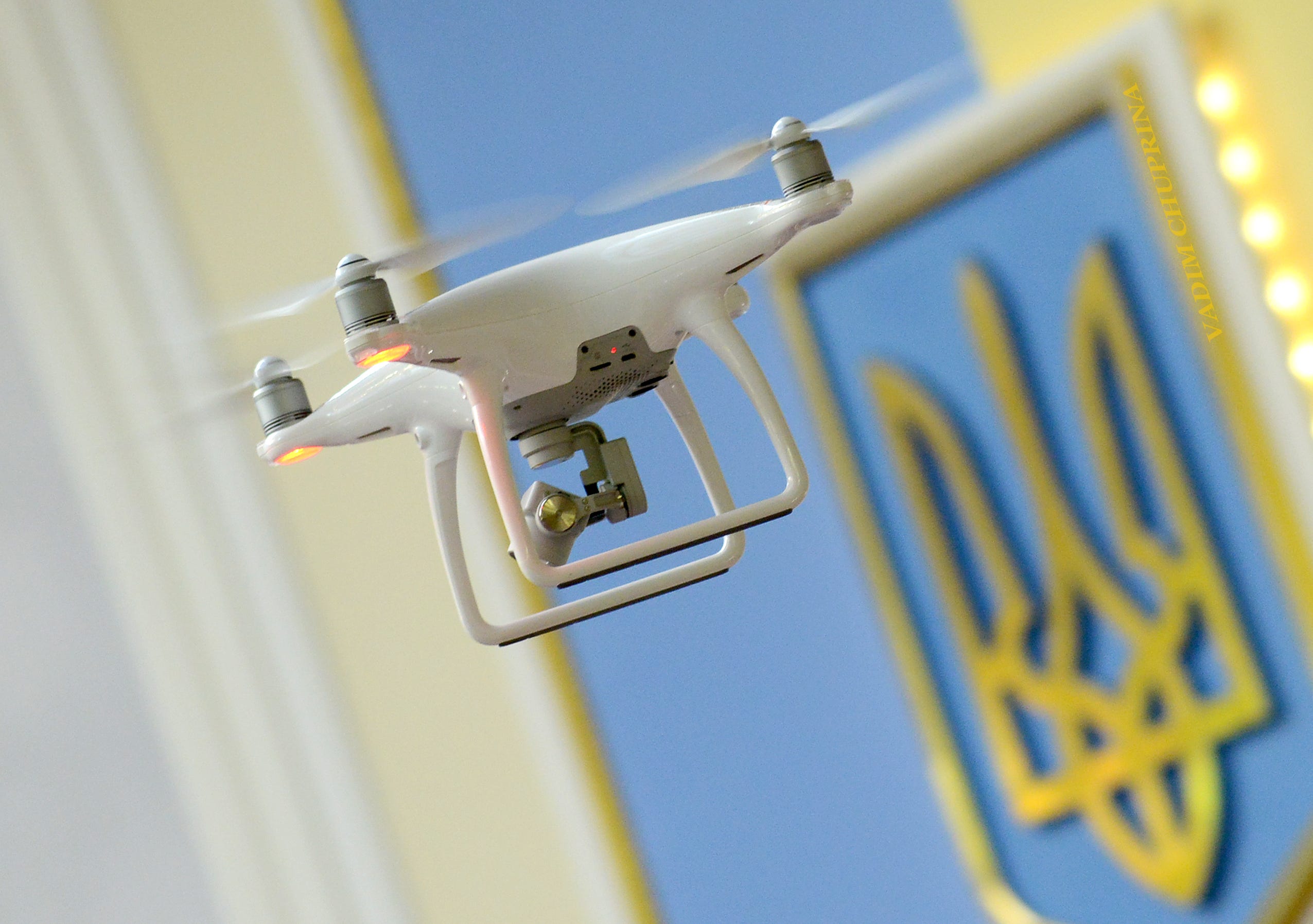

"2025 will be the year of fiber-optic drones," said the commander of one of the elite UAV-operating units, K-2. The priority task set for Ukraine’s Armed Forces for April 2025 is to increase the number of fiber-optic drones that are resistant to enemy electronic warfare. Ukrainians are currently testing not only FPV drones but also ground robotic systems with fiber-optic cables.
In this edition, I will focus specifically on those tests, but will also discuss the important issue of the gamification of war and why gamers make the best drone operators.
The number of developments and interesting articles is so large that this week, I’ve decided to break my newsletter into two parts—this one focuses on Ukraine. On Saturday, I will publish the second part about Russia.
Thank you for reading and supporting my work!
Russia’s new defense thwarts Ukraine’s naval drone strikes
Russia has developed a sophisticated, multi-layered defense system to counter Ukraine’s naval drone attacks in the Black Sea - the commander of the Ukrainian Navy, Neizhpapa said. Russia’s new “echeloned” defense, as he described it, relies on a tiered approach: long-range detection to spot drones early, mid-range systems to track them, and close-range weapons to shoot them down. This layered shield has turned what was once a vulnerable coastline into a fortified zone, pushing Ukraine to rethink its tactics.
Neizhpapa stated that Ukrainian defenders need to act flexibly, and stay ahead of the enemy in technological development. He noted that modern naval drones should be equipped with a variety of weapons and different application options to enhance their effectiveness. The Russian side is also trying to create analogs of such drones, and several instances of their use have already been recorded.
Estimates suggest Ukraine has sunk around one-third of Russia’s Black Sea Fleet. Ukraine’s Navy combines small groups of longer-range assets—including Neptune antiship missiles and sea drones such as the 2,000 pound MaguraV5—with a thorough intelligence, surveillance, and reconnaissance regime to tailor strike packages over weeks and months.
Ukrainian naval units destroyed over 37,000 Russian drones in the year 2024, the Navy reported on Jan. 1 2025. This includes Russian strike drones, operational and tactical unmanned aerial vehicles (UAVs), first-person-view (FPV) drones, strike UAVs, and Shahed-type attack drones. Ukrainian naval forces also destroyed five Russian ships and 458 watercraft. A Ukrainian-made Magura V5 naval strike drone on Dec. 31 destroyed a Russian Mi-8 helicopter for the first time.
In previous editions of Drone Warfare in Ukraine, I have focused more specifically on Ukraine’s naval drones—for example, in the following pieces: “Ukraine used unmanned torpedo boats in the Black Sea” and “Ukraine’s Large-Scale Drone Attack on Russian Military Targets in Crimea: Details and Systems Used”.
Ukraine’s first fiber-optic ground robotic systems: advantages and challenges
Zelenskyy announced significant progress in Ukraine’s drone production capabilities, citing the addition of over 20 new certified fiber-optic-controlled drone models since the beginning of the year.
Recently, the governmental Brave1 platform conducted trials of fiber-optic FPV drones, and most interestingly, of ground robotic systems - Defense Express reported.
In total, the tests brought together over 15 FPV manufacturers and 7 producers of ground robotic platforms. The FPV drones completed a 20 km route and successfully hit their target, while the ground systems navigated a designated test course.
One of the main challenges for ground drones is communication. Direct radio contact with a ground-based system faces numerous obstacles—terrain features, trees, buildings, and more. In addition, the operation of enemy electronic warfare (EW) systems can result in the loss of an expensive unit.
Moreover, the radio horizon for such drones is very limited, which restricts their operational range without additional equipment like relay stations. In contrast, fiber-optic cable eliminates these drawbacks.
As for concerns about breakage, the idea that fiber-optic cable is fragile has long been debunked. The tensile strength of a thin, unsheathed fiber-optic strand is around 30–40 kg.
One of the challenges of using fiber-optic cable with drones is its weight. FPV drones have a limited capacity, so sometimes, in order to install fiber-optic cables, the weight of the explosive has to be reduced. 10 km of fiber-optic cable weighs around 2.1 kg.
Unlike FPV drones, the ground robotic systems can carry much heavier payloads. This makes it possible to equip them with spools containing tens of kilometers of cable. Still, it’s important to remember that while fiber-optic cables can transmit signals over long distances, they are not limitless. In the event of a cable break—due to an explosion or shrapnel, for example—a backup antenna could be used to maintain signal transmission.
Overall, integrating fiber-optic cable into unmanned ground systems enables the transmission of high-quality, stable visuals over considerable distances. These systems could even be used to set up ambushes deep behind enemy lines, significantly reducing risk to personnel.
In February, it was announced that Unmanned Systems Forces are testing domestic fiber optic modules called Silkworm, which are designed for installation on air, ground, and sea drones.
The cost of fiber-optic drones has dropped significantly due to increased localization of production. Previously, the cheapest models cost UAH 60,000–80,000 (approximately US$1,400–1,800), but now they are around 30,000 UAH (approximately US$700).
In the previous edition of Drone Warfare in Ukraine, I provided additional details on the current state of ground drone production and operational efficiency in Ukraine: Ukraine is Robotizing Its Military: How an Army of 15,000 Ground Drones Will Replace Soldiers on the Frontline.
Gamification of War: Point Systems for Shooting Targets and Gamers as the Best Drone Operators
Recently, Kate Bondar and Sam Bennett from the Center for Strategic and International Studies discussed the new developments in drone warfare and mentioned the growing trend of gamification of war, which emerged from the increasing role of unmanned systems. In this context, a soldier no longer needs to be physically present on the battlefield and can inflict damage from a distance.
Building on this discussion, I would like to highlight several reports on the matter.
In August 2024, the Ministry of Digital Transformation of Ukraine announced the creation of a system that records every video-documented destruction of Russian targets by drones. Units receive points for each destroyed target, which can be exchanged for additional UAVs or electronic warfare (EW) equipment. Each enemy target is assigned a fixed number of points. For example, the highest score—60 points—is awarded for destroying air defense systems or electronic warfare equipment. Points accumulate over the course of a month, and the unit can choose what to 'purchase' with them.
The 'prices' vary, but a basic FPV drone typically costs 2 points.
The project is integrated with Ukraine's situational awareness system, "Delta." A similar mechanism is planned for artillery with 152mm and 155mm calibers.
When the project first launched, only a few dozen units joined. Today, their number has grown to nearly 400.
All videos undergo verification, enabling the collection of data to calculate the effectiveness of combat operations and identify the most successful units. This also helps select the best drones for specific needs, as explained by the Minister of Digital Transformation.
Last week, Le Monde published an article discussing how Ukraine is focusing on training and recruiting the best pilots: gamers. It has become clear that, in combat, video game players possess the best joystick skills. The journalist (Ariane Chemin) reported on the Drone Fight Club (a school that teaches Ukrainians how to fly drones in combat), created in the spring of 2022 by engineers and enthusiasts. The school's founder has a background in video games. Before the war, he developed Fight Drone Simulator, an ultra-realistic combat game aimed at military personnel and FPV drone enthusiasts. He joined forces with a company in the sector and now supplies more than 70 brigades with graduates. The club has also trained commanders and soldiers for the first 40 unmanned aerial vehicle attack system companies.
"Drones are the new Kalashnikovs. And gamers' fingers are inevitably better than fingers used to tightening bolts. Flying fast is easy, but controlling your movements and hovering is more difficult."
Flight simulators and joysticks imported from other countries could potentially serve the enemy. Sony, Microsoft, and Nintendo suspended console sales in Russia in March 2022. The European Union's high representative for foreign affairs wanted to include a ban on European sales of joysticks and controllers to Russia in a new round of sanctions.
Business Insider also recently published an interview with the CEO of Drone Fight Club, stating that only a third of the candidates who come to this school make it all the way to certification. Fine motor skills are very important because drone controls are sensitive. Knowing how to play music is a strong indicator that someone will be a successful drone pilot. Women who excel at sewing are also often great combat drone pilots.
“At Drone Fight Club, basic courses last a minimum of three weeks, with an exam each week. If you fail one exam, you are dropped from the class and advised to repeat the course.” Lessons at this school are split between the simulator, theory lessons, and both indoor and outdoor practice ranges.
For both Ukrainian and Russian drone operators, the war has become similar to a video game, where the goal is simply to destroy the target. This development carries significant psychological implications. The instructors of the Drone Fight Club warn against the dangerous feeling of all-powerfulness produced by uneven battles in which fighting back is impossible.
Additional developments:
Russians capture Ukrainian drones that infect their systems with malware (Vikram Mittal for Forbes). The recently posted video, which appears to be of Russian origin, warns about various malware recently discovered on Ukrainian drones that have infected Russian systems. The variants of malware on the Ukrainian drones are "burning out the USB port, preventing reflashing, or hijacking the repurposed FPV and revealing the operator's location." These measures would hinder Russian updates to their counter-drone technology, which requires extensively studying the internal workings of an enemy drone to find its vulnerabilities.
Drones have transformed mine warfare in Ukraine (David Hambling for Forbes). Surveillance drones spy out movements behind enemy lines, then drone mine layers leave explosives where they will do the most damage. Drone mining puts mines exactly where they are needed and can be used to block an opponent’s advance or retreat, or cut their supply lines. Drones may quickly ring any static opponent with mines, penning them in. Ukraine’s ‘Baba Yaga’ multicopter bombers started dropping modified TM-62s as bombs. Then the operators experimented with laying TM-62s as mines. They could be placed on the trails left by tracked vehicles, or on roads miles behind enemy lines, giving a very high chance of a hit. Last summer, Ukraine’s elite Birds of Magyar drone unit started placing mines on roads behind enemy lines at night. Birds of Magyar were highly satisfied with their mining and launched a fundraising campaign for a Ukrainian-made version called PPTM.
European AI-driven drone powerhouse TEKEVER is establishing a physical presence in Ukraine. The company, a recognized leader in Unmanned Aerial Systems (UAS) for maritime surveillance, has announced plans to open a local office and begin recruiting a dedicated technical team within the next two months. Since 2022, the company has been actively collaborating with the Ukrainian military in reconnaissance, surveillance, detection, and targeting.
An article in the independent Russian news site Inside Stories says that as much as 75% of Moscow’s battlefield casualties, along with considerable destruction of its heavy weapons systems, have been caused by Ukrainian attack drones. In addition, it found that around 20% were injured by artillery strikes, with only 4% injured by small arms fire.
German company Helsing is to supply Ukrainian forces with 10,000 HF-1 drones, which, despite their crude design, prove their worth by destroying targets hidden behind enemy lines. 1,000 such drones have already been delivered to Ukraine. The HF-1 drones are used against a variety of targets, from armored vehicles and air defense systems to logistics and warehouses. Reportedly, the optimal operating distance of HF-1 is between 45 and 50 km. The drone is equipped with a homing system that helps to capture a target and lock until it's hit.
Ukrainian drone forces destroyed three Russian Buk air defense systems in 12 hours.