

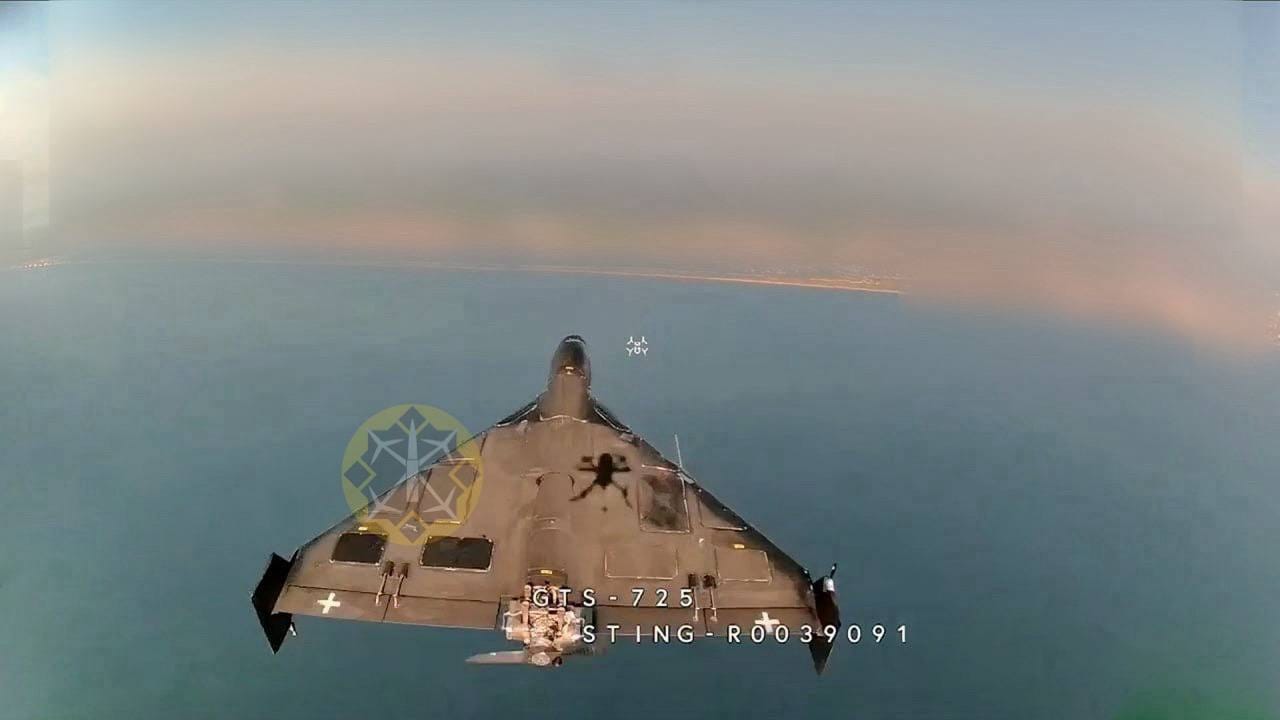
Over the past year, there has been less activity involving Ukraine’s naval drones — perhaps because all the large targets have been destroyed, disabled, or moved out of their reach. Now, Ukraine is demonstrating a novel use for this technology: air defence, with interceptor drones launched from maritime platforms. We already saw the first such case in April, and now there is a plan to create an entire defensive line of these systems along the sea coast.
In this edition:
Ukraine to Create Sea-Based Interceptor Drone Defence Line;
Latest Updates in Russian Drones;
Ukraine’s Deep-Strike and Middle-Strike Missions: Who Chooses the Targets?
Ground Drones Also Need Evacuation.
Thank you for reading and supporting my work!
Three months ago, I started the weekly Ukraine Drone Brief — a two-page list of the latest drone-related developments, published every Saturday. It is available to VIP subscribers and can be accessed here. And here is an example of a free edition.
Also, I recently joined Patrick Tucker, the science and technology editor at Defense One, to discuss some of Ukraine’s most notable UGV operations to date. Watch his story:
If you represent a Ukrainian defence-related company or a foreign company operating in Ukraine and are open to commenting on your work and technologies, you can reach out to me at Olena.uamonitor@gmail.com. Together we can try to find an angle that I could cover in my publication.
I never ask for or accept any payment, but my work is not PR material either. I always try to prepare balanced publications. That said, so far, I have never published anything harsh or negative about any company operating in Ukraine or helping Ukraine win this war.
And with that, let’s move on to the most recent developments in drone warfare in Ukraine.
Ukraine to Create Sea-Based Interceptor Drone Defence Line
On July 4 in Odesa, President Zelensky said that Ukraine needs to establish a defensive line at sea using interceptor drones to protect Odesa from the air.
The president added that Ukraine has developed a fleet of naval drones unlike any other country's: it can deploy 100–200 naval drones in a single operation and even use them to shoot down helicopters.
An example of such integration was already seen in April 2026, when Ukraine’s Unmanned Systems Forces intercepted a Russian Shahed-type drone with an interceptor drone launched from an unmanned surface platform. The operation was carried out by the naval drone division of the 412th Nemesis Brigade.
In his April article for Oboronka (which I summarized here), Bohdan Miroshnychenko wrote that Russian forces often try to overwhelm Ukrainian air defences by launching large numbers of Shahed-type drones toward the same target. Since they cannot launch all drones at once, the Shaheds are released in smaller batches and may gather outside the reach of Ukrainian air defences — including over the Black Sea — before attacking as a concentrated group.
Ukraine’s challenge is to prevent this buildup before the drones reach its cities. To do this, Ukrainian forces have been developing technology to launch interceptor drones from maritime platforms. This work took more than a year.
The concept required solving three main challenges: detecting targets at sea with a combined network of radars and sensors; creating a reusable naval platform capable of carrying launch containers, EW-resistant communications, interceptor drones, and self-defence systems; and developing a new-generation interceptor drone with improved communications and remote launch capability.
The Shahed was reportedly shot down by a STING interceptor drone produced by Wild Hornets. (My recent material about them: Inside Ukraine’s Interceptor Drone Race: A Pilot’s View).
Russian analyst Leviev said that this air defence model could be particularly relevant for the conditions of the Gulf countries, where interceptor drones can be launched from maritime platforms.
“What kind of air defence can you build if you are surrounded by water?” he noted, explaining that there had already been discussions about paying more attention to this configuration.
In his view, the war in the Middle East gave an additional push to the development of sea-based interceptor drone technologies, and President Zelensky, during his spring tour of the region, likely promoted this solution to partners.
Ukraine recently opened its arms exports, and naval drones have been among the first items made available, as Ukrainian producers can fully meet domestic demand. According to Zelensky, Ukraine has already reached agreements with Gulf countries on the supply of naval drones. (Check out my earlier articles on the topic: Maritime and River Drones.)
Ukraine is also developing a new concept for the use of naval drones, under which they would detain commercial vessels belonging to Russia’s shadow fleet in the Black Sea rather than destroy them.
But naval drones are not the only systems able to operate in the Black Sea and Sea of Azov regions.
Ukraine’s Unmanned Systems Forces struck nine tankers from Russia’s shadow fleet in the Sea of Azov overnight on July 8. Commander Robert “Madyar” Brovdi said that 21 vessels had been hit over 72 hours: 19 shadow-fleet tankers, one dry cargo vessel, and one ferry in Kerch.
According to Russian sources, the tankers were moving in a characteristically vulnerable formation: a dense, defenseless mass of ships in the middle of the sea, effectively creating a shooting range for Ukrainian FP-2 drone operators. There was no cover from Black Sea Fleet vessels, which have long struggled to protect even themselves, and no fire teams on board the ships.
Latest Updates in Russian Drones
Not only Ukrainian, but also Russian drones get updates and changes into the tactics of their use almost on a daily basis. I’ve summarized some of the recent trends.