

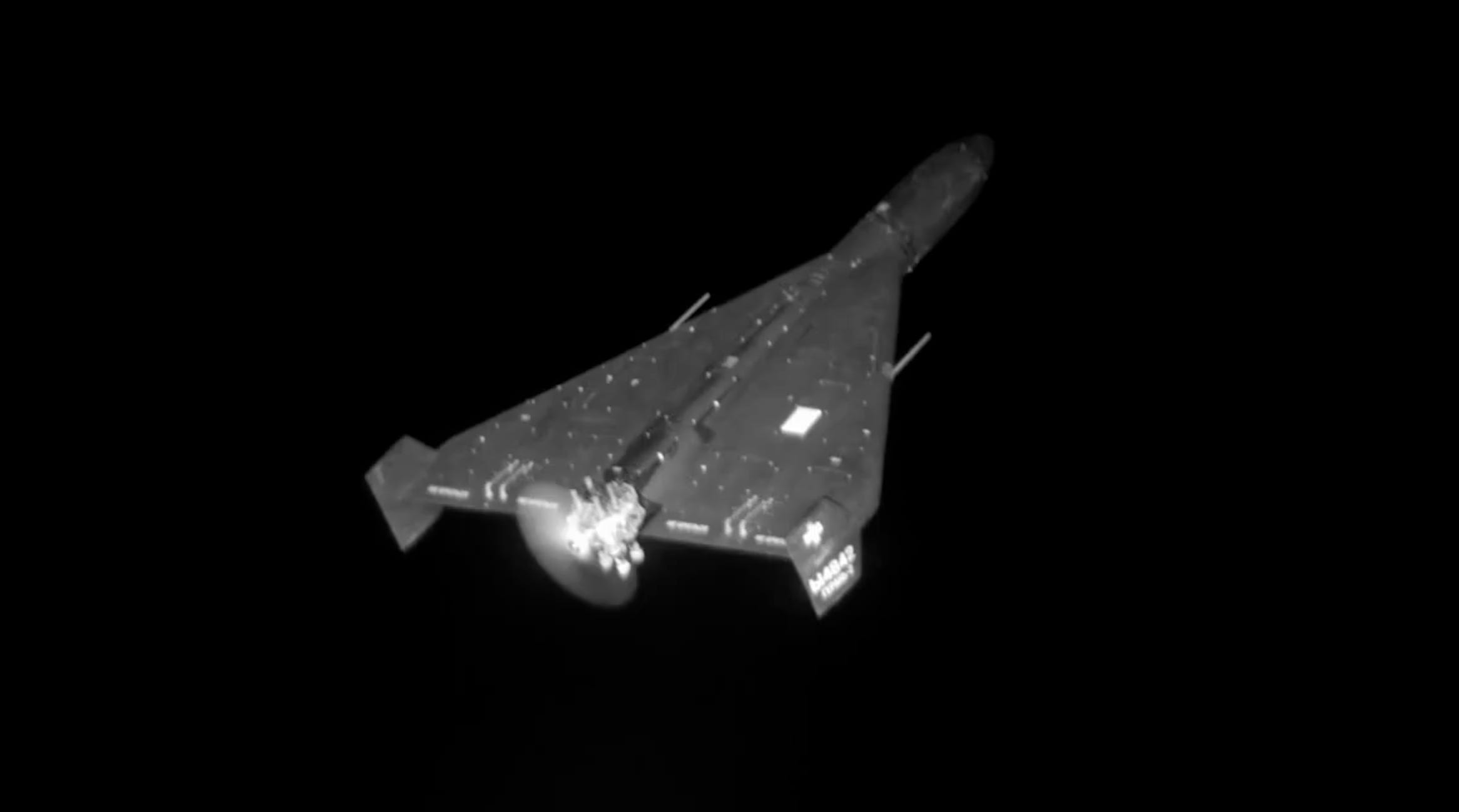
Russians have increased Shahed-type drone production to 2,700 per month. While the world was shocked to see 20 of them entering NATO airspace, Ukraine faces 500–800 drones every night, on top of ballistic and cruise missiles.
This mix includes decoys, turbojet-powered Shaheds packed with explosives, and AI-enabled systems — good luck trying to sort them out! The Gerberas that reached Poland had an extra fuel tank. Coincidence?
Separately, just last week, Russia unveiled its fibre-optic–guided naval drones, with a current operating range likely no more than 100 km, but this is only the beginning.
In this edition:
“Iron Brothers-in-Arms”: Key Trends in Ukraine’s Ground Robotics;
Ukraine’s Interceptor Drones Reach New Milestones;
Russian Fibre-Optic Naval Drone: What We Know So Far;
and 10+ additional developments in drone warfare in Ukraine and Russia.
Thank you for reading and supporting my work!
“Iron Brothers-in-Arms”: Key Trends in Ukraine’s Ground Robotics
The primary purpose of using ground robots is to save human lives. Today, the “kill zone” — a stretch of several kilometers along the line of contact remains under constant surveillance and fire control. Ukrainian sources report that the kill zone now extends up to 10 kilometers from the frontline, complicating Ukrainian movements in the immediate rear, troop rotations, and medical evacuations.
This is where ground robotic systems come into play — taking over functions such as logistics, demining, and mining hazardous areas, and direct combat operations. Among them are kamikaze UGVs, packed with explosives, that break through to enemy positions and detonate on target.
I spoke with one of Ukraine’s leading ground drone producers, Robotic Complexes — the company behind systems such as Murakha, Pliushch, Bohomol, and now also Tryminer. I asked them to tell me about the key trends and roles in the use of ground systems in Ukraine. Here is what they shared in an exclusive commentary for Ukraine’s Arms Monitor.
Key trends:
The most noticeable trend in Ukraine’s ground robotics is cost reduction to enable faster scaling without sacrificing reliability. This remains a constant challenge for manufacturers.
Demand for digital communications is growing. Users increasingly expect multiple communication options integrated into the basic configuration, allowing for rapid adjustment to each mission.
Another pressing requirement is an extended operational range.
In the segment of combat UGVs, there is a clear trend toward larger calibres and the use of heavy weaponry — from grenade launchers to mortars.
And finally, a separate priority is protection against FPV drones. Here, a variety of solutions are emerging: from electronic warfare systems to active protection, including the physical interception of enemy drones.
Priority functions of ground drones:
Logistics remains the core and most widespread function. Most manufacturers — including Robotic Complexes — are focused on this need. A good examples are “Murakha” and “Murakha Mini.”
Beyond logistics, RC is also investing in several other areas:
Mining. “Tryminer” is a reusable drone-minelayer designed for TM-62 mines. It is a simple and affordable solution. While many other manufacturers emphasize “kamikaze” options, Robotic Complexes are prioritizing reusability for now.
Combat UGVs. “Bohomol” is a heavy platform with a turret for a Browning 12.7 mm machine gun. The goal is to create a high-precision weapon, which requires solving complex challenges: from developing a ballistic computer and stabilizing recoil to integrating detection and targeting systems. In parallel, the producers are also working on “Soroka”, a platform for mortar fire.
Communications and reconnaissance. “Pliushch” has a 10-meter mobile mast that provides communications and can detect enemy drones — a unique product on the market.
In this way, the company covers both the basic and specialized needs of the front. “While most companies focus on a single niche, we remain committed to logistics while also developing other solutions”.
Here is a video shared by the founder of Robotix Complexes, featuring the “Pliushch” ground drone, which is greatly needed at the front.
Answering the question of whether it is possible to integrate ground platforms produced by RC with aerial drones or other robotic systems, the representative of the company explained that yes, such integration is possible and has already been implemented.
“But our approach is broader — we are working on integration with situational awareness systems. This should become the standard for all manufacturers. Our goal is to give the commander a complete picture of the battlefield: from operational planning and friend-or-foe identification to coordination of actions and rapid response. The task is not only to connect multiple platforms, but to manage them effectively within a single system,” he added.
Recommendations for investors and developers:
Robotic Complexes advises international investors to focus on the development of Ukraine’s defence industry, especially the private sector. For developers, the most practical and effective path is to establish partnerships with Ukrainian companies.
According to the recent survey by Tech Force in UA, Ukrainian producers prioritize joint ventures and partnerships while continuing to seek new expertise and attract investment. Financing preferences vary: most companies select one or two instruments that fit their strategy rather than accepting all available options. Survey results show 50% prefer debt instruments, 46% joint ventures, 42% minority shares, and 38% convertible debt/SAFE loans.
Ukraine has an army with unique combat experience and miltech companies operating under real wartime conditions. “Here, we can devise a solution today, implement it tomorrow, and test it on the battlefield the day after. This cycle enables rapid technological improvement and the scaling of effective solutions,” the representative of Robotic Complexes said.
Read my first article on the ground drones developed by Robotic Complexes here.
Ukraine’s Interceptor Drones Reach New Milestones
During the latest largest Russia attack against Ukraine involving 805 drones, a fifth of all downed Russian strike and decoy UAVS were destroyed by interceptor drones. They accounted for over 150 enemy drones shot down.
Additionally, experts suggest that interceptor drones have the potential to protect valuable military equipment from FPV drone attacks.