

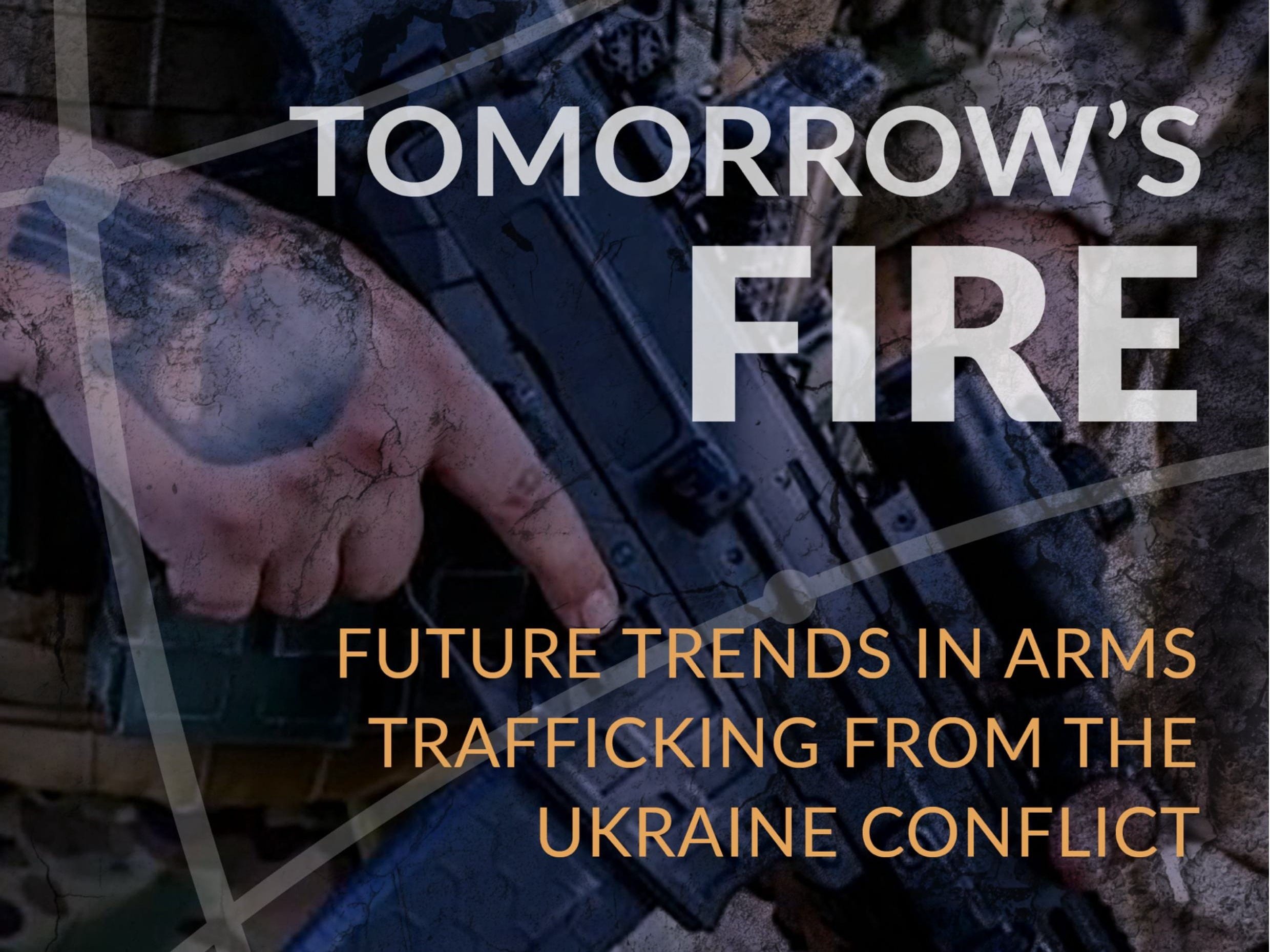
“Arms trafficking resulting from the Russian-Ukrianian war is a long-term issue that will require long-term collaboration to address. The pace of negotiations may bring a rapid end to the fighting, but early indications suggest they will leave many underlying issues unresolved”.
On 20–21 January 2025, the Global Initiative Against Transnational Organized Crime hosted a conference in Brussels to discuss three potential trajectories of the Russo-Ukrainian conflict and the ramifications of each on arms trafficking dynamics in Europe. More than 60 high-level stakeholders attended from a range of organizations focusing on arms trafficking.
The organization has published a report with a detailed account of these discussions, offering actionable policy recommendations for audiences in Europe, NATO, and Ukraine.
I believe that reports like this should be widely shared, so feel free to distribute them to your audience!
The conference gamed three scenarios – a peace agreement, a stalemate conflict, and a decisive victory for Ukraine or Russia.
Key conclusions of these discussions:
Understanding of the risks of arms trafficking arising from the conflict has improved since the Russian invasion in February 2022. However criminal groups are establishing more organized arms trafficking markets, routes and supply chains, and the scale of the problem is much larger than past occurrences of large-scale diversion, such as the Balkans and Afghanistan. The criminal groups are innovating rapidly.
Organized criminals are likely to be the fastest movers in any scenario, but they have also built resilient networks over a long period. Organized crime will be quick to find loopholes and opportunities.
Ukraine has been making strenuous efforts to prevent weapons diversion. Soldiers recover Western weapons left on the battlefield and there are frequent seizures of illegal stockpiles and sting operations against would-be sellers.
Arms trafficking from Ukraine will certainly happen in some shape or form, at some point. Understanding this reality should persuade policymakers to act sooner rather than wait for a trigger event in a European city.
The arms trafficking trade is likely to be multifaceted: a small-scale trade to European organized crime, and a larger volume trade to other regions (Africa, Latin America, Middle East, Central Asia), potentially to conflict actors. Criminals in Europe prefer handguns and explosives, while heavier weaponry, such as assault rifles, machine guns and RPGs, may be sent to other markets. These preferences will shape the development of the post-conflict illicit arms market.
Türkiye may become a key hub for the arms trade, due to the prevalence of transnational organized crime, logistics links and strong smuggling capacity
In a peace agreement scenario, the end of martial law in Ukraine would reduce the degree of oversight the state has over internal security and criminal dynamics, while handling a large number of weapons, many undeclared, in the civilian population would prove a major challenge to law and order.
The most significant risk will be how to manage trophy weapons.
According to official data, it is estimated there could be anywhere between 1 and 5 million such weapons in Ukraine. To date, registering such weapons has been sluggish, with only 2,000 weapons registered in Ukraine’s new Unified Registry in December 2024. Some civilians may look to sell their trophy weapons to organized crime groups and arms traffickers. In territory ceded to either side, the state will struggle to impose arms control mechanisms immediately after hostilities cease.
Another major risk will be the demobilization of soldiers, who will also in many cases hold (undeclared) trophy weapons and be returning to struggling economies, particularly in Ukraine.
To bolster institutional resilience in a peace agreement scenario, ongoing coordination between Ukraine and European partners is essential to maintain pressure on arms traffickers. Creating a single NATO database of weapons supplied to Ukraine from various Western partners would also facilitate the tracing effort. Even an incomplete database would be more useful than none.
Preventing large-scale exports of weapons from Ukraine will be critical and entail tightening security at Ukraine’s maritime and riverine ports, including enhancing the Danube Project. If Ukrainian weapons are used in criminal activities or armed conflicts globally, it could damage the perception of Ukraine as a responsible global partner.
In the scenario of a stalemate conflict, the desire for weapons would also grow among civilians in adjacent countries, including the Baltics and Poland. Criminal creativity will seek new opportunities, routes, and connections. Tackling corruption is seen as the principal concern in this scenario. In Europe, greater information sharing about the supply of weapons to Ukraine is needed to determine likely points of diversion and identify those involved.
A decisive Russian victory scenario would have a profound impact on organized crime in general and arms trafficking in particular.
The defeat of Ukraine would be catastrophic for arms flows.
Managing the fallout of a decisive Russian victory will pose a serious challenge for European policymakers.
A Ukrainian victory may be a shallow one, with an exhausted society and the problem of how to reassert control over occupied territories. As with the peace agreement, martial law would come to an end and both sides would then face DDR challenges.
I encourage you to read the full publication and explore its in-depth analysis of the subject.
Additionally, I’m including a summary of their previous report, Smoke on the Horizon: Trends in Arms Trafficking from the Conflict in Ukraine, published in June 2024. The summary of this report gained significant attention on my LinkedIn, and I highly recommend reviewing it for a deeper understanding of the challenges related to weapons diversion and the illicit trafficking of military materiel in the context of the Russian-Ukrainian war.
Key findings from the report:
✔️The efforts of the Ukrainian authorities to prioritize weapons control must be acknowledged. Soldiers emphasized the severity with which loss of weapons was treated, to the point where it would be impossible to demobilize without your weapon.
✔️Prices of the weapons are low, especially close to the front line, and the risks high, with Ukraine having made weapons control a top political priority. Compared to drugs, arms trafficking is an unenticing prospect.
✔️The market for weapons on the dark web (as it is structured in Europe) is almost entirely a scammer’s market, or a stalking ground for law enforcement. In all likelihood, the bulk of the illegal weapons trade conducted online is done through messaging platforms such as Telegram. More research is required to understand the extent and operations of this business.
✔️Unlike the Western Balkans, in Ukraine, criminals have minimal impact on the prosecution of the war. They are highly unlikely to translate front line service into political power (although corruption remains another story).
✔️Weapons are likely to diffuse even further through Ukrainian society, among civilians worried about the threat of Russia and through ex-soldiers bringing back trophy weapons. This poses great risk to Ukrainian society, particularly in a population with a high number of traumatized ex-military personnel.
✔️Its core finding is that the profusion of illegal weapons has thus far been limited to Ukraine, and that there has been no verified incident of organized arms trafficking from Ukraine to EU countries.