

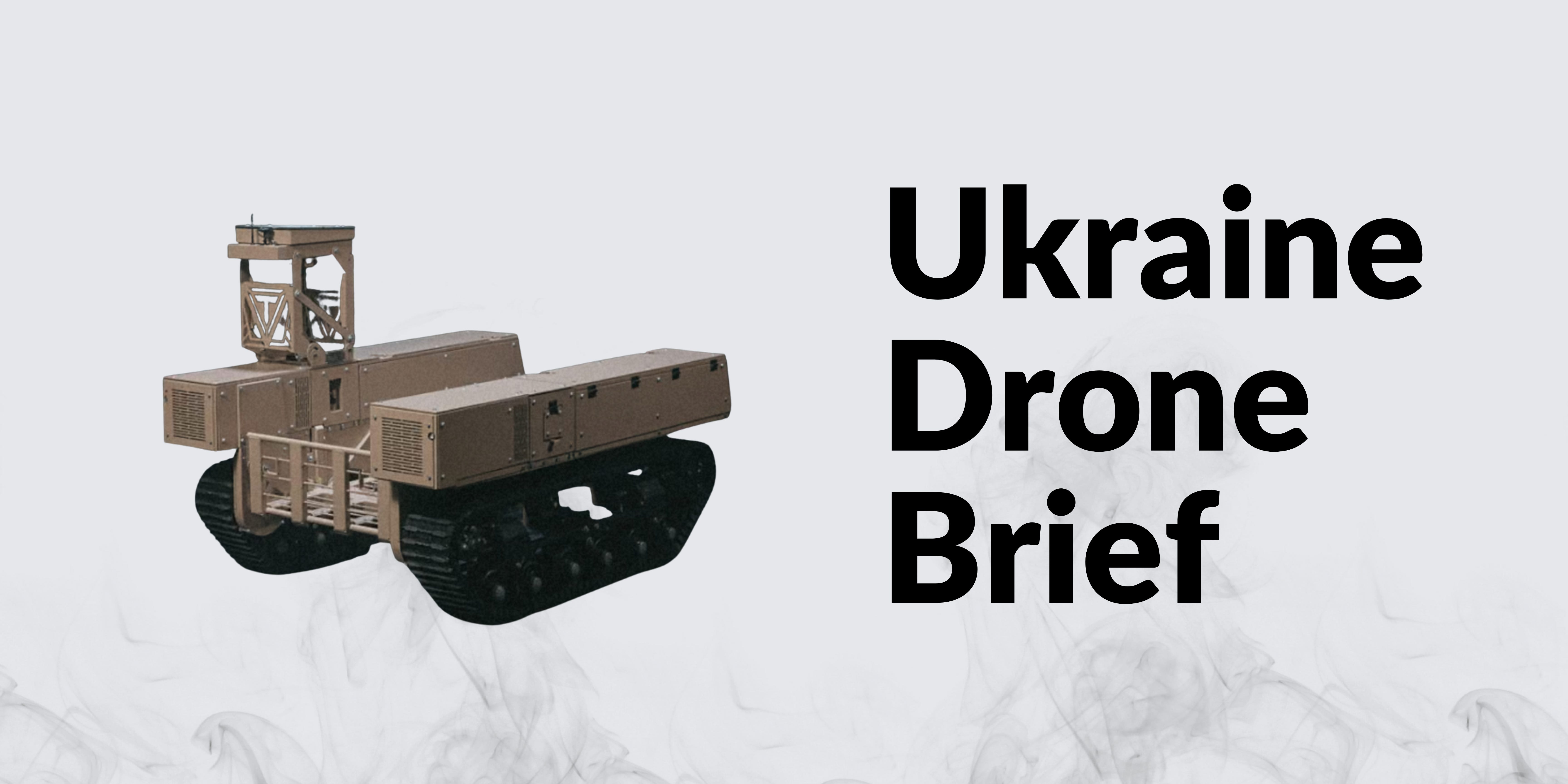
Ukraine has significantly increased its use of unmanned ground vehicles (UGVs) this year. In 2026 alone, UGVs have carried out more than 100,000 evacuation and logistics missions. They are also increasingly being used for strike operations.
This time, I’ve highlighted the UGV section of my newsletter, which also features six other sections covering the latest developments in drone warfare.
Check out the free edition here, and consider subscribing for weekly updates on drone developments in Ukraine and Russia.
Ground Drones (UGVs)
During Operation Vivaldi, a Ukrainian UGV equipped with a machine gun positioned itself between two tree lines occupied by Russian troops. The UGV opened fire on one Russian position and then the other. Believing they were being attacked by Ukrainian forces from opposite directions, the Russian soldiers began firing at each other.
A Ukrainian defence startup has developed an amphibious UGV, Toni. It is designed for logistics, evacuation, and special missions on both land and water. Toni can carry payloads of up to 380 kg on land and 280 kg on water. It reaches a maximum speed of 13 km/h on land and 2–4 km/h on water. It has an operational range of up to 50 km on land and 5 km on water at 50% battery charge. The development team is working to increase both speed and range.
Ukrainian company ARMOLAB tested its Robonoshi UGV with a 170 kg load, successfully transporting a man weighing 170 kg. Robonoshi is designed for medical evacuation, replacing the manual carrying of wounded personnel, and can also support missions.
The Tencore Ecosystem, a system of UGVs and related technologies, has been unveiled in Ukraine. It consists of four classes of robotic platforms and an AI-powered autonomous navigation module. The Tencore Ecosystem includes the tracked TerMIT UGV, equipped with modules for logistics, medical evacuation, mine-laying, and combat missions. It also features the TOR 4×4 wheeled UGV with armoured wheels, the MAT1LDA 8×8 amphibious unmanned platform capable of crossing water obstacles, and the TRAX UTILITY firefighting and rescue robot.
In Ukraine, a heavy-lift drone transported a UGV-kamikaze behind Russian positions. The UGV was able to cross a route littered with mines and unexploded ordnance and reach a shelter occupied by Russian troops.
The mission was successful: the shelter was destroyed along with the Russian personnel inside.
Aerial Drones