

Russia’s non-stop drone and missile attacks against Ukraine’s civilian population continue, now targeting bridges and energy infrastructure. Russia is not preparing to stop its war against Ukraine; instead, it plans to spend $12 billion next year solely on the production of jet-powered drones and loitering munitions.
This edition of the Ukraine Drone Brief is particularly rich in developments. As always, one edition each month is free for all subscribers and followers. Subscribe so you don’t miss the next editions.
This is my birthday week, so much of my content is free.
Please don’t forget about my fundraising campaign for a drone. A donation of 150 CAD or more will give you complimentary one-year access to all newsletters in Ukraine’s Arms Monitor, including this one, which is normally available to VIP subscribers and costs more. Donate here: PayPal.
Aerial Drones
For the first time, Russia used a specialized cumulative-cutting warhead, known as KRSN, on a jet-powered UAV. The warhead was reportedly designed specifically to damage high-voltage transmission towers and steel bridge structures. The KRSN consists of a 40 kg main warhead and four additional effect modules. Russia may be planning attacks against critical high-voltage power transmission lines.
In the first two days of October, Russia has targeted two bridges over the Dnipro River in Kyiv.
According to Ukraine, Russian forces are increasing the resolution of cameras on their drones and using higher-quality materials in their construction. This lets them get a more detailed view of the situation on the ground and use the UAV for different missions. A single platform could serve multiple roles: reconnaissance, strike, and communications relay.
Long-range weapons remain the leading cause of civilian casualties in Ukraine, accounting for 47% of the total (194 killed; 1,077 injured). Most casualties from these weapons occurred far from the frontline in urban centres. Short-range drones were the main cause of civilian casualties near the frontline (91 killed; 727 injured), accounting for 30% of all civilian casualties in August.
Ukraine’s Operation Vivaldi underscored the importance of fuel in sustaining drone and counter-drone operations, as well as the strategic vulnerabilities associated with fuel dependence. The operation’s success was facilitated by Ukraine’s intermediate-range drone strike campaign targeting Russian fuel supplies, which reduced the availability of diesel needed to power generators supporting Russian electronic warfare systems. At the same time, Ukrainian electronic warfare systems reportedly neutralized around 20,000 Russian drones.
President Zelenskyy said that Ukraine has approved long-range operations for October.
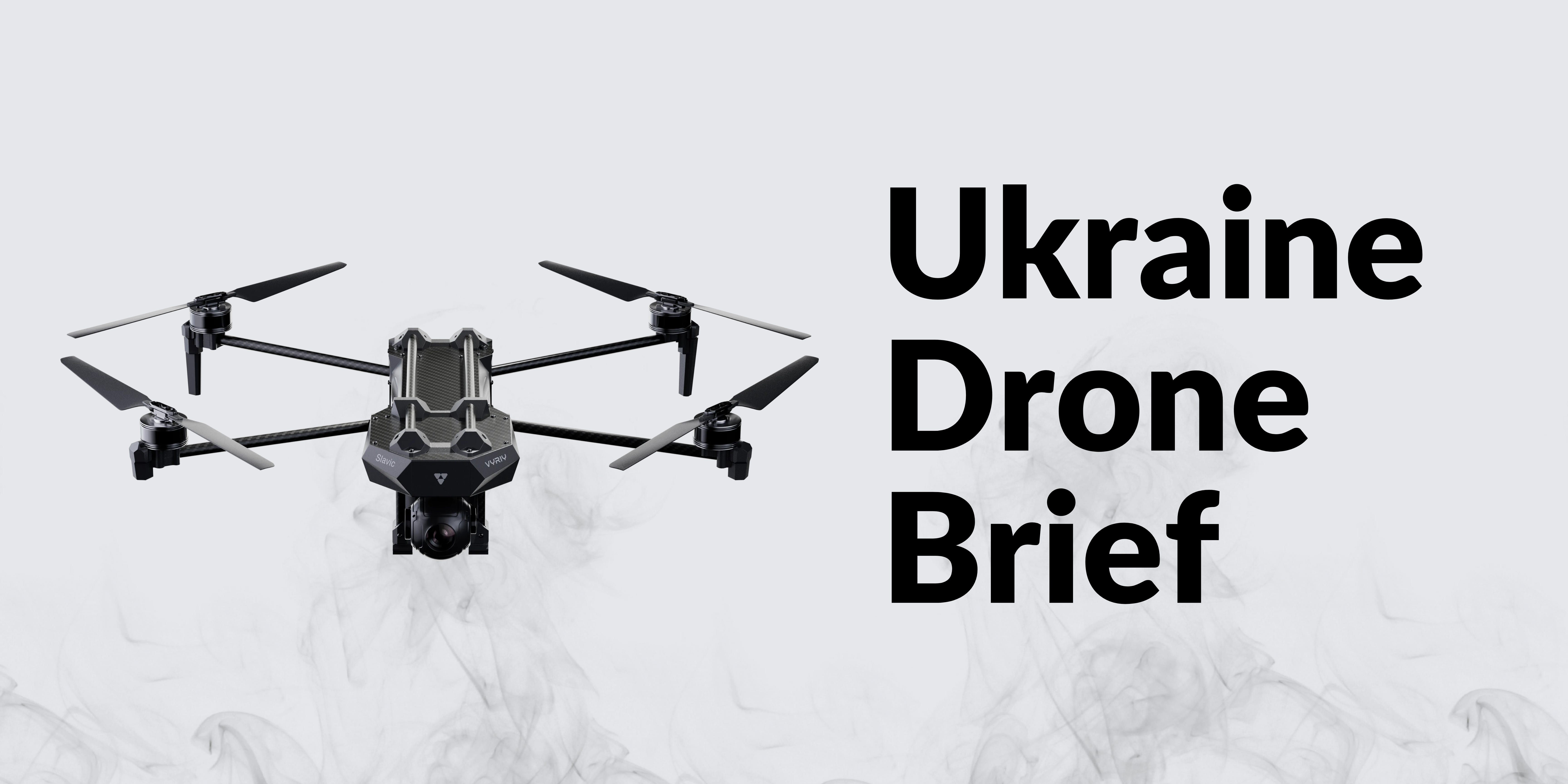
Ukrainian Vyriy Industries unveiled its new Slavic reconnaissance drone, pitching the aircraft as an alternative to Chinese commercial drones (DJI Mavic) amid domestic efforts to reduce dependence on Chinese technology.
Russia is promoting an export version of the Garpiya-A1 strike UAV, designated Garpiya-A1E, to international customers. The drone reportedly has a range of up to 1,000 km. The export variant is expected to be showcased to potential foreign buyers at defence exhibitions in Vietnam and China.
Ground Drones (UGVs)
Ukraine has conducted its first logistics mission using an amphibious UGV. The platform covered more than 40 km during the mission. On land, it retained the mobility of a conventional UGV; upon reaching water, it switched to amphibious mode within seconds and continued moving. The system delivered ammunition and supplies to frontline positions. Water obstacles remain a major challenge for frontline logistics.
Ukraine’s Ministry of Defence and Brave1 are continuing to develop amphibious UGV capabilities and support the scaling of such solutions.
Demand from foreign businesses for Ukrainian UGVs has grown significantly over the past year, although a fully developed market has yet to emerge. The strongest interest has come from Germany, France, Norway, and Northern European countries more broadly.
The Italian Army tested the Ukrainian Droid TW 7.62 and Droid TW 12.7 combat UGVs developed by DevDroid. Ukrainian UGVs operated alongside the Italian ULISSE platform developed by ABET HTS. They supported infantry assaults on enemy positions, evacuated wounded personnel, and facilitated further advances. The exercise also included coordination with artillery and the simultaneous employment of multiple unmanned platforms within a single tactical scenario.
Ukrainian Frontline Robotics unveiled the versatile six-wheeled Frodo UGV designed for logistics, strike, and evacuation missions. The robot can carry up to 400 kg in total, including up to 200 kg of payload. Its maximum speed is 40 km/h, with an operational range of up to 150 km.
Naval Drones
Ukrainian-British UFORCE participated in NATO’s international REPMUS 26 exercise in Portugal. This year, UFORCE significantly increased its participation, deploying 11 unmanned surface vessels (USVs) and 8 unmanned aerial vehicles (UAVs).
AI
“Drones are the plague of the third millennium,” says Robert “Madyar” Brovdi, Commander of Ukraine’s Unmanned Systems Forces.
In his view, AI is becoming a kind of digital panopticon capable of influencing nearly every aspect of modern life. Combined with the rapid development of unmanned systems, AI could give humanity access to increasingly difficult-to-control weapons—not only as instruments of warfare, but also as tools that can shape the future of society. For now, AI-enabled drone technologies are primarily being developed in support of military objectives. What comes next is much harder to predict.
His broader concern is that humanity may gradually be losing control over the technologies it is creating.
British-Ukrainian Occam Industries has raised €3.8 million to develop autonomous drone-control software.
Ukraine is developing SPECTR, an AI-powered system for analyzing battlefield data and supporting operational planning. The system is being developed by the A1 Artificial Intelligence Center under Ukraine’s Ministry of Defence. Several combat units are already testing it.
C-UAS
Zelenskyy said that Ukraine is currently neutralizing around 70% of drones overall, while the interception rate for jet-powered drones stands at 57%.
Zelenskyy said that Ukraine would have 400 interceptors for jet-powered drones in October. However, their effectiveness remains inconsistent: on some days, it reaches around 70%, while on others it can fall to 30%. Currently, F-16 fighter jets destroy about 50–60% of jet-powered drones.
The Ukrainian P1-SUN JetKiller interceptor drone, produced by SkyFall, destroyed a Russian Geran-5 small cruise missile for the second time.
Components and Software
In 2026, the estimated initial budget for building an FPV drone ranges from approximately USD 445 for a basic setup to around USD 1,560 for a more complete setup with a digital system. The most expensive components are typically the set of four motors, the electronic speed controller (ESC), the flight controller, and the video transmission system (VTX/Air Unit).
Drones and Humans
The Drone Warfare Applications Course (DWAC) at the International Peacekeeping and Security Centre has received NATO Selected status.
The program was developed by Ukrainian officer-instructors from the Partnership for Peace Training Centre, drawing on the combat experience of the Armed Forces of Ukraine. In 2026, the course was piloted with the participation of officers from more than ten countries.
Beginning on September 1, 2026, Russia introduced a unified basic course on unmanned transport systems across its network of transport universities, making drone-related instruction mandatory for students at 19 universities and their affiliated campuses.
Ukraine’s military leadership has tracked the growth of Russia’s Unmanned Systems Forces, formally established in mid-November 2025, from roughly 80,000 personnel in January 2026 to an estimated 114,000 by early May. Moscow’s own targets call for 165,000 by the end of 2026 and 210,000 across 277 units by 2030.
Ukrainian soldiers are developing a condition described as “drone phobia,” linked to the constant threat and sound of drones on the battlefield. Ukrainian and U.S. researchers are now examining whether the condition is distinct from conventional PTSD and could eventually warrant separate clinical recognition.
The Guardian reported on Chinese volunteers working in a drone workshop within a Ukrainian military unit focused on reconnaissance.
One volunteer was primarily responsible for repairing drones. In a single week, he reportedly repaired around 10 Mavic drones and 15 first-person-view (FPV) drones.
Cooperation Deals
Lithuania is testing SkyFortress, a Ukrainian-developed airspace monitoring system designed to detect low-flying drones and other threats by analysing acoustic and radio signals. It uses AI to detect and track low-flying drones and cruise missiles based on acoustic or electromagnetic signatures.
The Danish Ministry of Defence Acquisition and Logistics Organization (DALO) has purchased nine Dropla 4×4 UGVs by Danish-Ukrainian defense startup Dropla Tech to train conscript operators at the Danish Defence Drone Center.
Japanese corporation Terra Drone Corporation, through its European structure Terra Defense Europe, has acquired a 50% stake in Ukrainian company Kurin Technologies. The acquisition was worth approximately $3.5 million. Kurin Technologies is a manufacturer of FPV multirotor interceptors designed to counter Russian UAVs in the combat zone.
Ukrainian TAF Industries and Luxembourg-based LUXUAV have signed an MoU to jointly develop new unmanned solutions and establish industrial-scale production in the Benelux countries.
Related Global Developments
Hero drones developed by Israel’s UVision will be manufactured in the United States for the U.S. military and equipped with advanced autonomy technologies from Estonia’s Lendurai, which also operates in Ukraine. The Estonian company maintains a presence in Ukraine, where it can test and validate its technologies, including its Neocortex autonomy system. The system provides unmanned platforms with navigation capabilities, as well as target detection, acquisition, tracking, and engagement in environments affected by electronic warfare and jamming.
The Defense Ministry plans to introduce a new contract system to support startups in developing UAVs and other products. The ministry will examine participating companies at each stage, such as development planning and demonstration, making payments for necessary expenses at each step.
Work with Ukraine
Ukrainian company RVN CLAW is developing a system for intercepting analog signals from drones. It is a passive system operating in the 1080–8260 MHz frequency range. The company is currently exploring international cooperation in several areas, including integration with C-UAS and C2 systems, GEOINT and visual geolocation, technology and manufacturing partnerships, and strategic investment to scale production and support further product development. Contact them here.
Other Updates
Russia has offered a US$20 million reward through post-Soviet criminal networks for information that could help locate Robert "Magyar" Brovdi, commander of Ukraine's Unmanned Systems Forces.
Ukrainian units have ordered more than 590,000 drones through Brave1 Market in the first nine months of 2026.
Read other relevant reports:
Excellent brief, Olena. What stands out is how quickly the drone ecosystem is expanding beyond individual platforms.
Aerial systems, UGVs, electronic warfare, logistics and even fuel resilience are increasingly interconnected parts of the same operational architecture.
The next advantage may come not from the best individual drone, but from the force that can integrate, adapt and scale the entire system fastest.
It’s amazing how quickly the technology has changed and how many countries are involved now
This has been predicted by others but it’s important that Ukraine stay in front of the world in research and development and production especially for interception of high speed things jet power and cruise missle especially NOW before the major cities are destroyed which is Russias goal over the immediate future
Olena a big thank you again for gifting all of us on this free report
Again I wish you a happy birthday and many many more to come 💛💙🇺🇦👏
Sincerely
Rick KOMINICK