

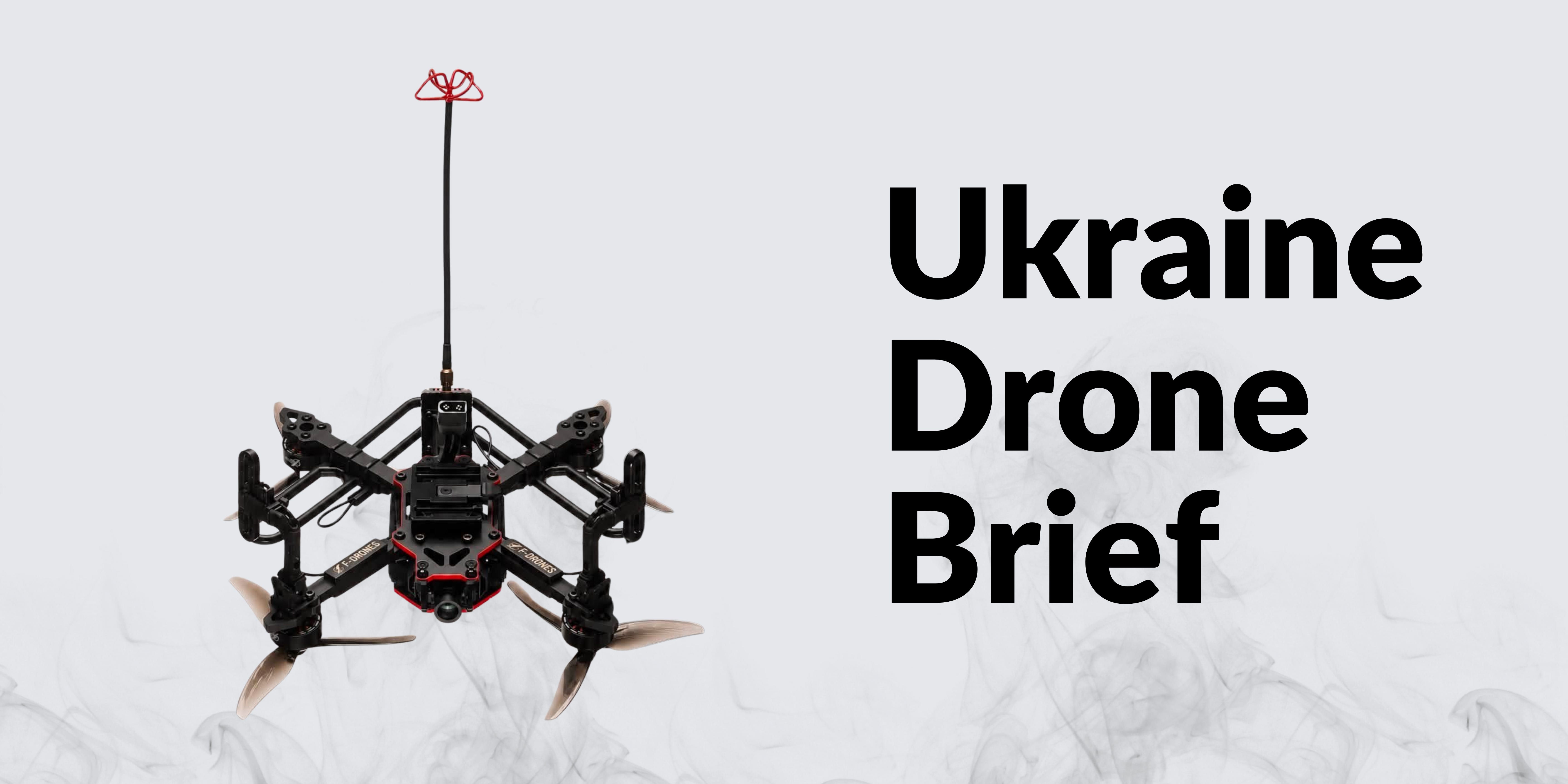
Ukraine’s largest private delivery company is now shooting down Russian Shaheds. Nova Poshta is just one sign of how far Ukraine has decentralized its response to aerial threats, with the private sector carrying a growing share of air defence.
That and 25+ more drone developments in the new Ukraine Drone Brief. This week’s brief features a particularly rich section on UGVs moving toward greater autonomy, plus new details on our favourite American drone, the Hornet.
Read my earlier long-form reports:
Aerial Drones
According to Ukraine, Russian forces have begun deploying a new drone called Koshchei on the battlefield. It is highly maneuverable and capable of conducting reconnaissance at high speeds. Russian forces have equipped it with AI capabilities, cameras, and obstacle-avoidance systems.
Russia is expected to begin using the “Susanin” optical navigation module at scale on the Geran-5 and other UAVs and missiles at night. If it does, Ukraine may need to revisit its approach to blackout and light discipline, especially the lighting of roads and highway sections. The module compares images captured by the drone’s optical sensor with reference images of the terrain preloaded into its onboard computer. This allows the drone to verify its route from the launch point to the target and navigate even when satellite navigation signals are actively jammed by EW systems.
Russia has equipped its Geran attack drones with magnetometers to improve navigation. They measure the strength and direction of the Earth’s natural magnetic field, functioning as an electronic compass.