

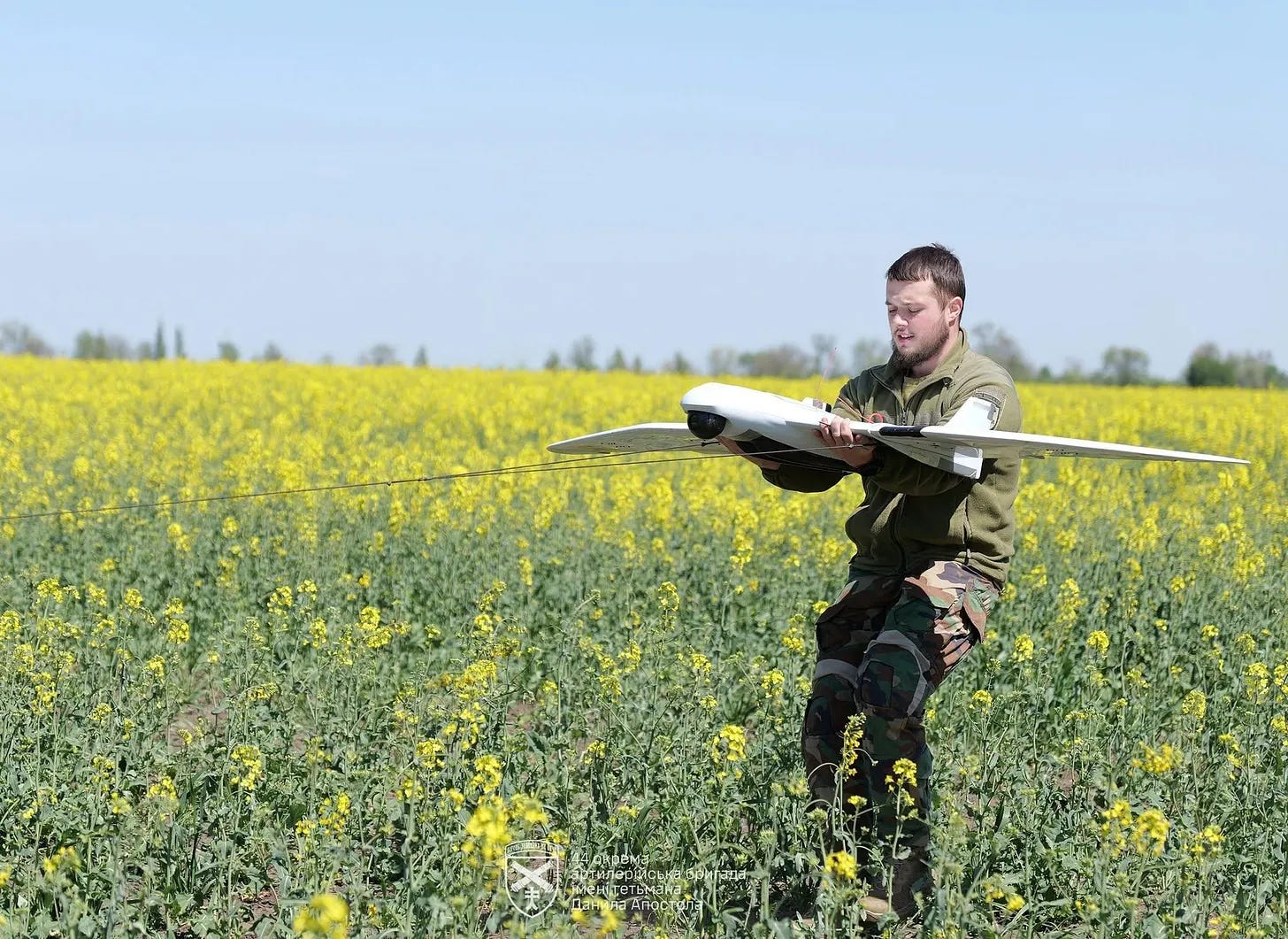
Amid the wave of headlines about AI drones and “killer robots,” the reality is that most drone operations are still conducted by humans, and this is changing only gradually. That is why operator training remains critical and will continue to be so in the coming years. Ukrainian company Athlon Avia, in addition to producing drones, also invests in training operators for its platforms, recognizing that the reputation and effectiveness of a system depend to a significant extent on the people who use it.
In the hands of skilled and well-trained personnel, even relatively simple systems can achieve exceptional results. In Ukraine, experienced operators routinely conduct FPV drone missions at ranges of 15, 20, or even 25 kilometers, while an inexperienced soldier may struggle to fly the same type of drone even a few kilometers.
Looking back at a recent example: when I first heard about the highly successful American-made Hornet drones equipped with AI technologies, what caught my attention was not only the drone itself, but the unit operating it: the Azov Corps, one of Ukraine’s most capable military formations, with highly experienced drone operators. So, the drone’s effectiveness can be attributed not only to its technical characteristics, but also to the skill of its users.
In a conversation with Serhii Mokreniuk, representative of Ukrainian company Athlon Avia, I learned about several areas of their work that are unusual for a drone manufacturer. The company trains drone operators, invests in motivating and developing pilots, and works to ensure that battlefield lessons are captured, shared, and integrated into military practice. The company believes that more industry representatives should adopt this approach.
Reconnaissance UAV Furia
The flagship product of Athlon Avia is Furia, one of the first fixed-wing reconnaissance drones used by the Ukrainian military and employed for artillery fire correction. It was first used during the liberation of Sloviansk in 2014.
The drone is designed for aerial reconnaissance by day and night. Its low radar signature, achieved through the use of composite materials, and its low-noise electric motor with a two-bladed propeller help reduce its detectability. The drone uses a combined navigation system based on inertial navigation with GPS correction. The system can determine target coordinates with high accuracy and supports automatic target tracking.
Ukrainian media Oboronka reported that the Ukrainian military had to develop tactics and operational requirements for the Furia almost from scratch. Before that, artillery firing manuals included procedures for ranging and fire correction using helicopters.
Currently, more than 100 brigades of the Ukrainian Defence Forces use Furia drones for reconnaissance and artillery fire correction. There are pilots with more than 1,000 flight hours who can operate for months without losing a single aircraft.
Today, the Furia can remain airborne for more than four hours, operate at altitudes of up to 3 km, and fly more than 50 km from its launch point. Earlier versions had an endurance of approximately two hours.
There is an expectation that the UAVs will soon move toward greater autonomy and wider use of artificial intelligence.
Russian sources describe the Furia as one of the main “workhorses” of Ukrainian aerial reconnaissance and have sought to study both its design and tactics of employment. For example, the Russian KCPN Analytical Center obtained and translated three versions of the Furia flight operations manual from 2022, 2023, and 2024, stating that comparing them could reveal how the system has evolved and the direction of Ukrainian design development.
Before the full-scale invasion, Athlon Avia produced around 25 Furia A1-SM systems per year. Since each system includes three aircraft, this amounted to roughly 75 drones annually. As of March 2025, the manufacturer was producing at least 200 Furia drones per month. The situation has now changed, and demand from the military for the product has increased significantly.
Importance of Training Operators
For Athlon Avia, increasing drone production is only one part of the challenge. The company argues that manufacturers also need to invest in the people, training systems, and mechanisms for transferring combat experience that determine how effectively their equipment is ultimately used on the battlefield.
“Any system needs a properly trained crew,” Serhii Mokreniuk explained. “A piece of equipment does not work without a person, but simply having a person is not enough either. It should be a highly trained person. A trained specialist is an extremely valuable resource.”
For this reason, the company has developed several initiatives that go beyond conventional manufacturing. One of them is recruitment. The company works both with serving military personnel who want to transfer into UAV-related positions and with civilians interested in joining the Armed Forces as drone pilots.
Potential recruits receive advice on selecting a military unit and navigating the process of entering or transferring into an appropriate position. The company then trains them to operate its systems. According to the producer, this work is largely managed by veterans and people with direct knowledge of how the Ukrainian military functions.
Training is mandatory for personnel who will operate the company’s systems. From scratch, the basic course takes at least four weeks and can take longer depending on factors such as weather conditions. The curriculum follows requirements established by Ukraine’s military aviation authorities and combines theoretical and practical flight training.
The company deliberately provides a broader theoretical foundation rather than teaching pilots only the mechanics of operating a particular drone. Students study areas such as meteorology and communications so that they understand the wider operational environment in which the UAV will be employed.
The manufacturer also operates two training schools and works with other educational institutions, such as training centres for pilots and higher military educational institutions that train commanders, including the Hetman Petro Sahaidachnyi National Army Academy, the S. P. Koroliov Zhytomyr Military Institute, the National Defence University of Ukraine, the Odesa Military Academy, among others.
This is particularly important because knowledge in drone warfare becomes obsolete extremely quickly. “We are developing at such a fast pace that knowledge from 2019 is no longer relevant at all, while some knowledge from early 2026 is already outdated today,” Serhii said. “The military simply cannot always update everything quickly enough because institutional procedures are inevitably more bureaucratic.”
When the company facilitates the transfer of knowledge from experienced pilots to less experienced pilots, it also obtains high-quality data about the system itself and how it performs under specific combat conditions. This then becomes valuable input for its R&D directorate.
That is why it is important for manufacturers to develop and support the broader user community around their products. “We call ours Furia Family — an environment where everyone is constantly learning and where anyone can receive support both from the company and from fellow service members. The motto of our Furia Family community is: ‘I have a mission!’” Serhii told me.
Turning Combat Experience into Institutional Knowledge
Another major focus of Athlon Avia is ensuring that battlefield experience does not remain confined to individual pilots or units.
The company has created a mechanism through which some of the most experienced and motivated pilots can transfer their knowledge to less experienced operators. The formats can be relatively simple. For example, when the company identifies a particular knowledge gap among crews, it may organize a webinar for 20–40 pilots and invite experienced operators to explain how they approach the problem.
“In many cases, they are essentially teaching each other,” the representative said. “We simply help them organize the process.”
The company has also experimented with much more systematic methods of capturing combat experience.
Last year, it organized a competition in which drone pilots were asked to describe one of their combat missions according to a structured template. The template was based on established approaches to analysing lessons learned and was designed to encourage pilots and crews to assess how a mission had been prepared and conducted.
The submissions were then reviewed by six judges, including instructors, university faculty members and military specialists. Each evaluator used their own criteria, producing an assessment framework that collectively included more than 120 parameters.
The purpose was not simply to select the best submission. The process allowed the company to identify recurring gaps in the pilots’ knowledge and determine what operators themselves were failing to analyse after missions.
The results eventually developed into a much greater effort. Serving military personnel were invited to jointly produce practical guidance on the employment of reconnaissance UAVs. Around 20 authors contributed to a manual covering 30 topics. The company subsequently brought instructors and service members together to develop five standardized operating procedures.
The producer says one of the most interesting outcomes was the pilots' reaction. Some participants who had helped write the documents said that the process of systematically describing and analysing their own experience had caused them to reconsider their role and place within the combat command-and-control system, as well as the approach to carrying out combat missions
Although none of this work directly changes the drone's physical characteristics, the manufacturer believes it has significantly improved the quality of its use in combat.
“This work is completely unrelated to manufacturing the product itself, but it strengthened the quality of combat missions so much that we could see the effect ourselves,” Serhii told me. “That is why we continue doing it.”
Why Drone Manufacturers Should Care About Educating Pilots
The company believes this model could and should be replicated by other defence manufacturers. Manufacturers have a direct interest in increasing the competence of the personnel operating their systems. A poorly trained crew can make an effective system appear ineffective, while experienced operators are better able to exploit the equipment’s full capabilities.
The difference between crews can already be enormous. Some operators may fly for a year without losing a single aircraft, while another crew can lose three UAVs within a week. That discrepancy cannot always be explained by the equipment itself.
A trained operator represents the accumulation of considerable time, money and institutional knowledge. Raising the average level of competence across the operator community makes both the military and the technology more effective.
There is another benefit as well: identifying, recording and “crystallizing” knowledge that would otherwise disappear when experienced personnel rotate, transfer or leave their positions.
The company says it has spoken publicly about its methodology and would be willing to share it with other manufacturers. So far, however, relatively few producers have adopted similar approaches. Some may not understand why this should be their responsibility, while others are simply overwhelmed by the immediate demands of production.
Yet the company believes even limited adoption could have a significant effect. “If even 10 percent of weapons manufacturers launched similar processes, the effectiveness of the military would increase,” the representative argued.
According to Serhii, the greatest value of Ukraine’s Defence Forces is its people, and that’s why the company invests in them. That is why Ukrainian pilots are better than Russian ones. “But we still have a problem with scaling unique combat expertise — transferring the best practices to other units, training centers, and military educational institutions,” he said.
In conclusion, I would like to emphasize that Ukraine offers a different model of defence production and acquisition from the traditional approach, in which manufacturers simply deliver equipment according to technical specifications set by the state authorities.
The Ukrainian model is very end-user-centric. Because military units have direct purchasing power, they assess not only equipment itself, but also the level of service that the company provides. Does the manufacturer provide a 24/7 support line? Can it quickly modify the product in response to battlefield needs? Is it ready to work directly with the unit after delivery?
Ukraine’s drone market is extremely competitive, and the strongest companies seek to distinguish themselves not only through technical characteristics, but also through the additional support they provide to military units using their products.
Some initiatives, such as the one described above, take this model a step further by introducing a broader sense of responsibility. In these cases, industry takes the lead in areas that remain underprioritized institutionally, such as capturing, systematizing, and disseminating battlefield lessons.
Some manufacturers in Ukraine invest not only in improving the effectiveness of their own products, but also in strengthening the effectiveness of the Defence Forces as a whole.
This is a model that Western industry representatives should aspire to: not simply producing equipment but taking greater responsibility for how effectively that equipment is used.
My publications are entirely independent and not sponsored. This digest is supported only by private individuals — readers and subscribers like you. Thank you for reading and supporting my work!
Check out other relevant reports:
Training Drone Operators in Wartime Ukraine: Dronarium Academy;
Heavy Bombers: A Pilot of “Vampire” Tells About His Daily Operations.
If you are looking for concise, 2-page weekly reports on drone warfare in Ukraine and Russia, here is my Ukraine Drone Brief (available to VIP subscribers).
Thanks for this edition covering the crucial pilot question. While some commenters might not get the gist of your article, it is clearly coordinated efforts that will produce the best results.
In the coming years? Does it mean you agree that this war is endless, until last Ukrainian?