

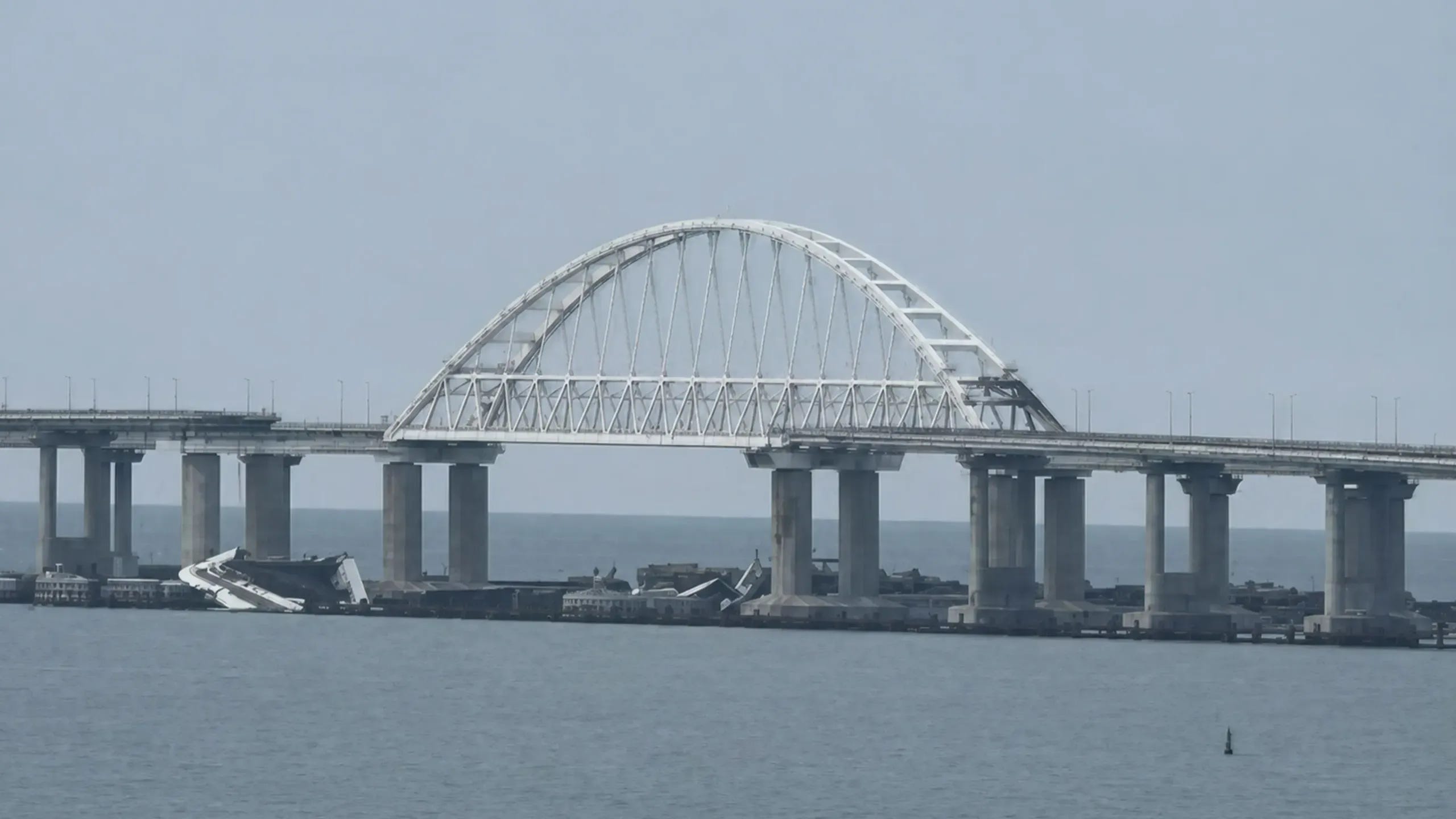
Two Ukrainian operations came to light last week. The first was a series of strikes on the Crimean Bridge, carried out mostly with Ukrainian-made weapons. The second was the Bear Trap counteroffensive, where tanks and armoured vehicles played a key role. That underscores how much these traditional capabilities still matter in modern warfare.
In this edition:
Ukraine Strikes the Crimean Bridge: How the Operation Developed
Ukraine’s Bear Trap Operation: Key Points of Success
The Russia-Ukraine War Expands to the Mediterranean
And 10+ additional developments in Ukraine and Russia.
Subscribe to Ukraine’s Arms Monitor for the week’s most important updates. If drones are your focus, consider the VIP tier, which gives you access to the Ukraine Drone Brief every Saturday.
I'm raising money for equipment for my friend, a Ukrainian soldier. We've already raised over 20% of our goal! Please consider donating: PayPal.
Ukraine Strikes the Crimean Bridge: How the Operation Developed
The Kerch Bridge, also known as the Crimean Bridge and a symbol of Russia’s occupation of Crimea, was hit in a series of strikes carried out almost entirely with Ukrainian-made missiles and drones. The campaign began with a preparatory phase that destroyed Russian air defences around the bridge. The operation shows how much Ukraine’s own long-range capabilities have evolved over the years of war.
Between November 16 and 19, Ukraine’s Defence Forces carried out a series of strikes on the Kerch Bridge, which links temporarily occupied Crimea to Russia. The bridge partly collapsed.
Russia built the bridge after it invaded Ukraine and illegally annexed Crimea in 2014. The $3.6 billion project is widely seen, in both Russia and Ukraine, as Putin’s personal prestige project.
The Ukrainian channel CyberBoroshno gives the following timeline of the strikes:
Before November 16: Drones worked to clear Russian air defence and electronic warfare systems across Crimea, on the approaches to the bridge and in Kerch itself. This took away Russia’s main way of defending the bridge against later strikes.
November 16: Jet-powered Palianytsia missile-drone struck the road arch and bent it out of shape. Dnipro OSINT believes the damage to this load-bearing structure made a second strike on the same spot much more effective.
November 17, 00:10: Palianytsia drones hit the road bridge again, and the span collapsed along with the arch. Air defences were still being drawn off by decoys and couldn’t switch to the incoming strike drones. Road traffic across the strait was cut.
Next: A wave of Flamingos, Neptunes, Rutas and An-197s hit the railway bridge. Mixing weapon types and flight profiles made them harder to intercept, and the wave came after the road crossing was already out of action. This suggests the goal was to cut both transport links across the strait.
According to The Times, Ukraine’s Defence Forces used their own communication system, not the American Starlink or Starshield, during the combined strike on the Crimean Bridge. “For the first time in history, we used all these drones to relay video signals to missiles so they could hit specific points on the bridge,” according to the source quoted in the report. The operation involved missile troops, drone operators from the 7th Deep Strike Center, known as Magyar's Birds, the 1st Special Operations Brigade of Unmanned Forces, Ukraine's Security Service (SBU), the navy and special operations units.
The attack on the Crimean Bridge involved 11 types of weapons (missiles and drones), with most of them Ukrainian-made weapons, including the Dovbush, Vendetta, Sichen, MICH 2000, Palianytsia, An-197, FP-1, FP-5 Flamingo and R-360 Neptune.
Ruta missiles and Da-Vinci drones were reportedly the only foreign systems used during this series of strikes. Both are created by the Dutch-based startup Destinus. According to the company, Ukraine launched nine Ruta Block 1 missiles and seven struck the bridge.
Russia claimed that “it is becoming increasingly difficult to regard the Netherlands as a mere bystander”. In the following days, a Russia-launched projectile struck behind the Dutch embassy in Kyiv.
Ukraine’s Defence Minister Yevhenii Khmara said the strike on the Kerch Bridge was a direct response to Russia’s systematic attacks on Ukrainian infrastructure, including bridges. Before Ukraine struck this bridge, according to President Zelenskyy, Russian forces had carried out 109 missile and drone attacks on Ukrainian bridges. Check out my report: Russia upgrades Iskander seekers to hit Kyiv bridges.
The strikes matter mainly because of the bridge’s military role. It is one of Russia’s main supply routes for moving fuel, ammunition, weapons and equipment into occupied Crimea and on to the southern front.
Chief designer and director general of Ukraine’s Luch Design Bureau told WSJ that in 2026, Ukraine will produce “hundreds” of Neptune missiles, though fewer than a thousand. Output could grow if more funding becomes available. Meanwhile, production of the small UAV-290 Palianytsia missile-drone has already exceeded 1,000 a year.
Ukraine’s Bear Trap Operation: Key Points of Success
Another successful Ukrainian operation has only now become public. According to reports, the counteroffensive, codenamed Bear Trap, relied not only on drones but also on Western armour. Ukrainian forces also had to find an alternative to Starlink — and they did.