

After a week of negotiations, Starshield speed restrictions remain in place. Ukraine is losing its battlefield initiative and a significant advantage over the enemy. Meanwhile, private companies and entire countries are beginning to reassess their dependence on Starlink amid concerns about its reliability.
In this newsletter, you’ll find about 30 updates on last week’s developments in drone warfare in Ukraine and Russia, and it will take just seven minutes to read them all.
Also, check out my latest free reports:
Aerial Drones
Reportedly, Elon Musk ordered the slowdown of the military-grade version of SpaceX’s Starlink satellite service, on which Ukraine relies.
Trump later claimed that Musk had removed the speed restrictions on Starlink in Ukraine, but Ukrainian sources have reported no evidence that the restrictions have been removed.
Occasional cases of terminals working above the limit are attributed to SpaceX’s algorithm or particular usage conditions rather than a policy change.
A senior Ukrainian commander reported losing more than $1 million worth of armed drones after a sudden disruption to Starshield connectivity during strikes against Russian military targets last week. The drones lost their video feeds and connection to operators, causing many to crash.
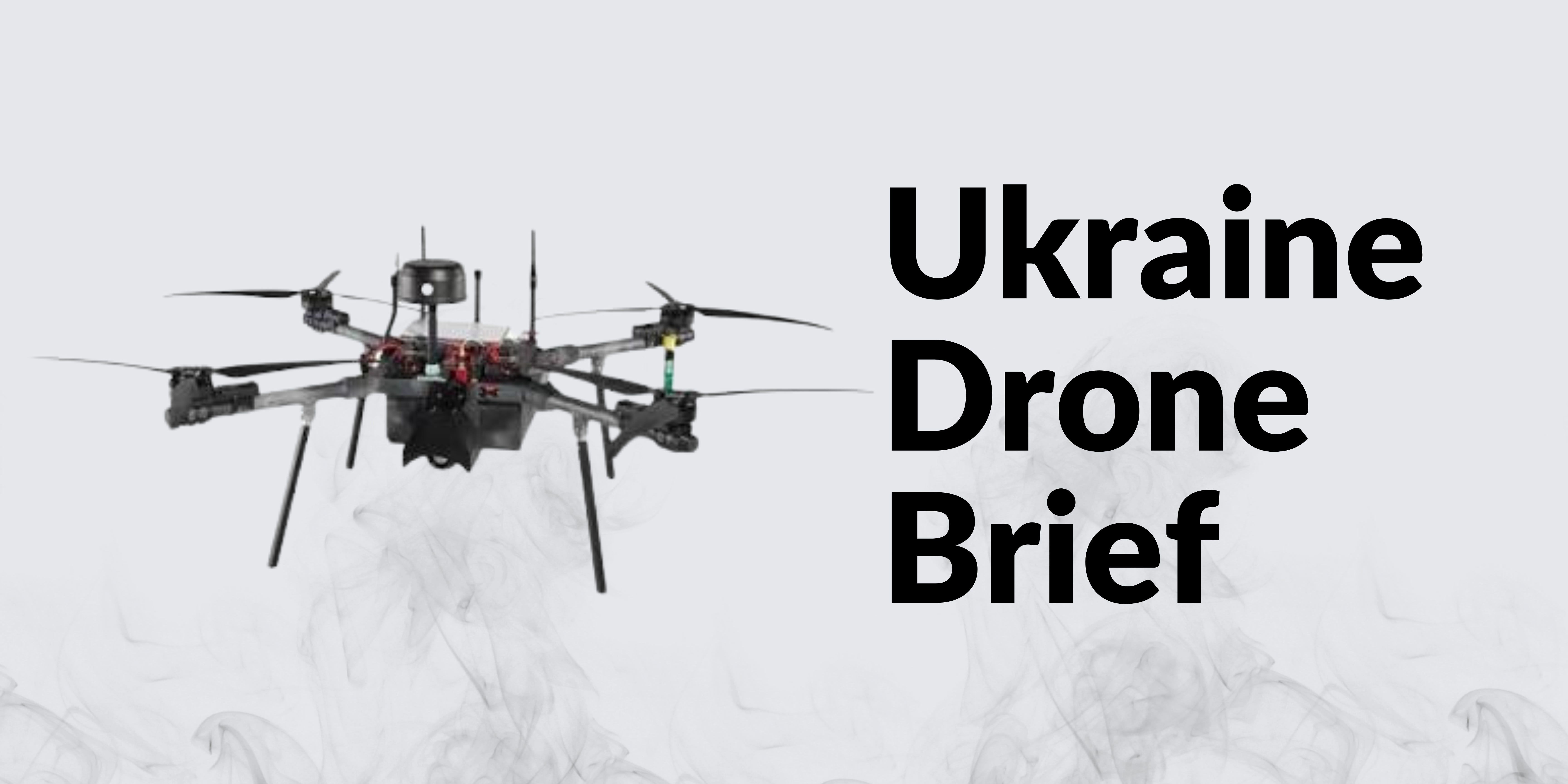
Ukraine conducted the first-ever battlefield evacuation of a wounded soldier using the heavy hexacopter, developed by Ukrainian Gurzuf Defence.
Russian military bloggers acknowledge that Russia also possesses heavy-lift drones, but their production remains limited, with communications being a major bottleneck. Connectivity problems have also hindered the development of Russian UGVs, which cannot operate over long distances following the loss of Starlink access.
The situation is expected to improve with the development of the Rassvet low-Earth-orbit satellite constellation.